Why Garage Door Springs Fail in Miami - It's Rarely the Cold
Miami's mild climate rarely snaps a spring from cold, but 1960s-70s housing stock here still fails on cycle count. What actually goes wrong and what to check first.
You've probably read that a garage door spring is more likely to snap in cold weather, and that's true in places with hard winters - steel contracts, gets brittle, and a spring already near the end of its life gives out on a cold morning. Miami sits in a mild temperate band, so that particular trigger just doesn't apply here the way it does up north. That doesn't mean springs here last forever. What actually takes them out in this area is cycle count and age. A torsion spring is rated for a set number of open-close cycles, usually somewhere around 10,000, and once a door hits that number the spring is done regardless of the thermometer. Given that a lot of the housing stock in the service area was built between 1953 and 2005, with the typical home going up around 1976, plenty of doors out there are still running original or near-original hardware. That spring has been doing its job for decades of Miami summers and rainy seasons, not enduring frost. When it lets go, it's wear, not weather, and the fix is the same either way: the spring gets replaced, not repaired.
How Local Conditions Play In
Across the 54 named communities we cover, from a mile or two out to further west, most of the housing dates to the 1960s and 70s. That matters more than any cold snap. A spring installed on a house built in that window has had fifty-plus years to accumulate cycles, and even if it was swapped once along the way, humidity and heat take a slower toll than people expect - moisture works into the coil finish over time and speeds up fatigue even without a hard freeze to blame. So the local story isn't ice on the tracks, it's decades of steady use in a climate that never really lets hardware rest. If you're in West Little River, or anywhere in that 4-to-9-mile ring around us, the age of your door is a better predictor of a coming spring failure than any weather forecast. We don't get the dramatic cold-morning snap stories you'd hear from a Midwest company, but we get plenty of calls from doors that have simply run out their years.
What to Look At First
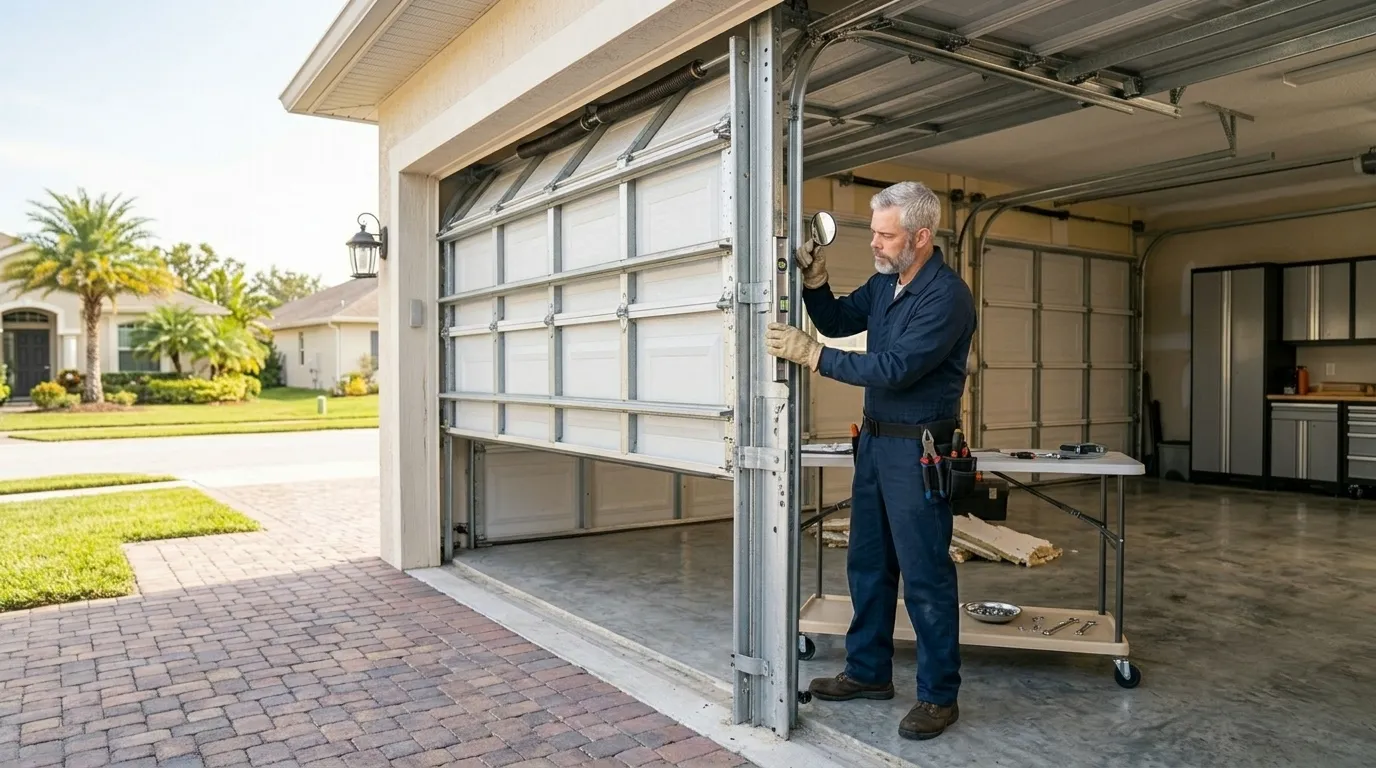
Before you assume a spring is about to go, look at the coil itself. A gap opening up between the coils, visible rust along the spring body, or a door that feels noticeably heavier to lift by hand than it used to are the real warning signs here - not temperature. Check the date on the door if you have paperwork or a permit sticker; if the house was built in the 1960s-70s window that makes up most of this area's stock and the spring looks original, treat it as due regardless of how it's performing today. Listen for the door struggling partway up, or the opener straining and reversing - that's the spring no longer carrying its share of the door's weight. One thing we won't do is talk you into replacing a spring that still has good life left just because the house is old; if the coil's tight, unrusted, and cycling smoothly, it can keep going. We'd rather tell you it's fine than sell you a job you don't need yet.
The Cost of This Job
We don't have a set number to hand you here - cost on a spring job depends on whether it's a single door or a double, one spring or a matched pair, and whether the drums or cables need attention at the same time, none of which we can guess without seeing the door. What we can say is that most homeowners in the service area, where the median household income runs around $71,020 across 616,237 households and 183,376 owner-occupied houses, are budgeting this as a planned repair rather than an emergency line item, which is fair - a spring failure doesn't usually damage anything else if you stop using the door and call. Waiting doesn't save you money either; a spring that's clearly failing tends to take the opener or a cable with it if it's ignored too long, which turns a single-part job into a bigger one.
How it works
From “it’s stuck” to “it’s fixed”
01
Tell us what’s wrong
Describe the symptom - won’t open, loud bang, opener runs but the door won’t move.
02
On-site diagnosis
A technician tests the door under power and by hand and finds what actually failed.
03
Clear, up-front plan
You get the fix that’s needed and what drives the cost - before any work starts.
04
Repaired & tested
The repair is done, the door is set true and tested, and the work area left clean.
Next step
Serving Miami, FL - tell us what your door’s doing and we’ll take it from there.
Does Miami's weather actually cause garage door springs to break?
Not in the way cold-climate failures work. Miami's mild temperate climate doesn't put springs through the hard freeze-thaw cycling that snaps brittle steel elsewhere. Here, springs fail from cycle count and age, not from a cold morning. If your spring is original to a house from the 1960s-70s stock common in this area, age is the bigger risk factor.
How do I know if my spring is original to the house?
Check any permit paperwork or a date sticker on the spring itself if one's still legible. Given that most homes in the service area were built between 1953 and 2005, with a lot dating to the 1960s and 70s, a spring with no replacement record and visible rust or coil gapping is worth treating as due.
Can I just lubricate the spring instead of replacing it?
Lubrication slows corrosion and quiets a squeaky coil, but it doesn't add cycles back to a spring that's near the end of its rated life. If the coil shows rust or spacing between winds, oil buys you a little time at best, not a fix.
Is a broken spring an emergency?
It's urgent but not dangerous if you leave the door alone. Don't force the opener to lift a door with a broken spring - that strains the opener and the cables. Stop using the door and call to get it scheduled.
Ready to get your garage door sorted?
Tell us what it’s doing and where you are in Miami - we’ll take it from there.