Why This Fails Locally
Two things drive most of the maintenance calls here: the age of the housing stock and the climate band this area sits in.
A lot of the garage doors on these streets were installed when the house was built, and across this service area that means anywhere from 1953 to 2005, with the bulk of it mid-1960s to 1970s construction. That's original steel track, original springs, sometimes an opener from a later retrofit bolted onto hardware that predates it. None of that is a defect - it's just old, and old steel hardware under daily tension needs attention that it usually doesn't get.
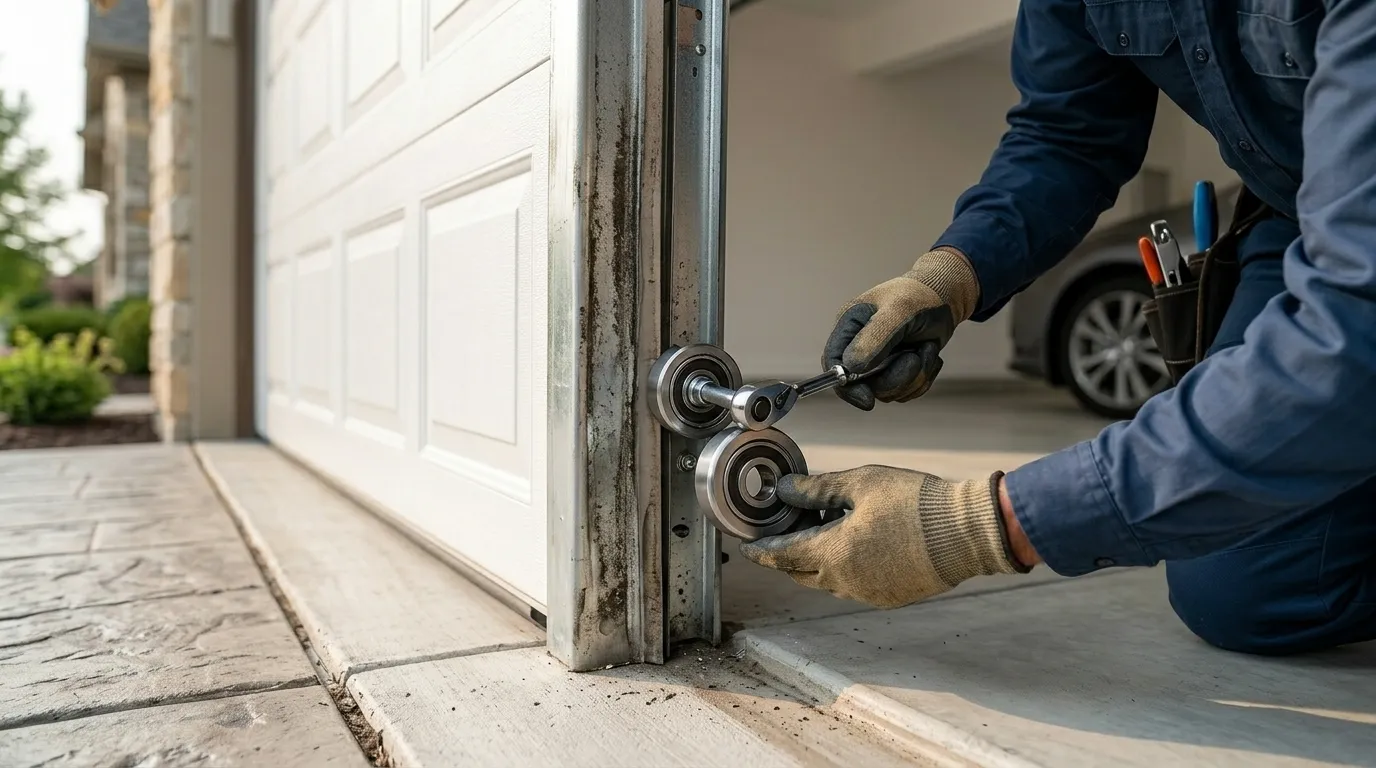
The second factor is the climate itself. This area sits in a mild temperate band, which sounds gentle, and mostly is - no hard freezes to worry about, no snow load on the door. But mild and humid also means moisture stays in the air most of the year instead of drying out in a cold snap. That moisture works into spring coils, track bolts, and hinge pins slowly and constantly. Rust doesn't need a storm to set in here - it just needs time, and most doors get plenty of it before anyone calls.
Put those two things together - original hardware plus year-round humidity - and you get springs that fatigue early and tracks that corrode from the inside of the bolt holes out, long before the door itself looks like it needs replacing.
What the Fix Involves
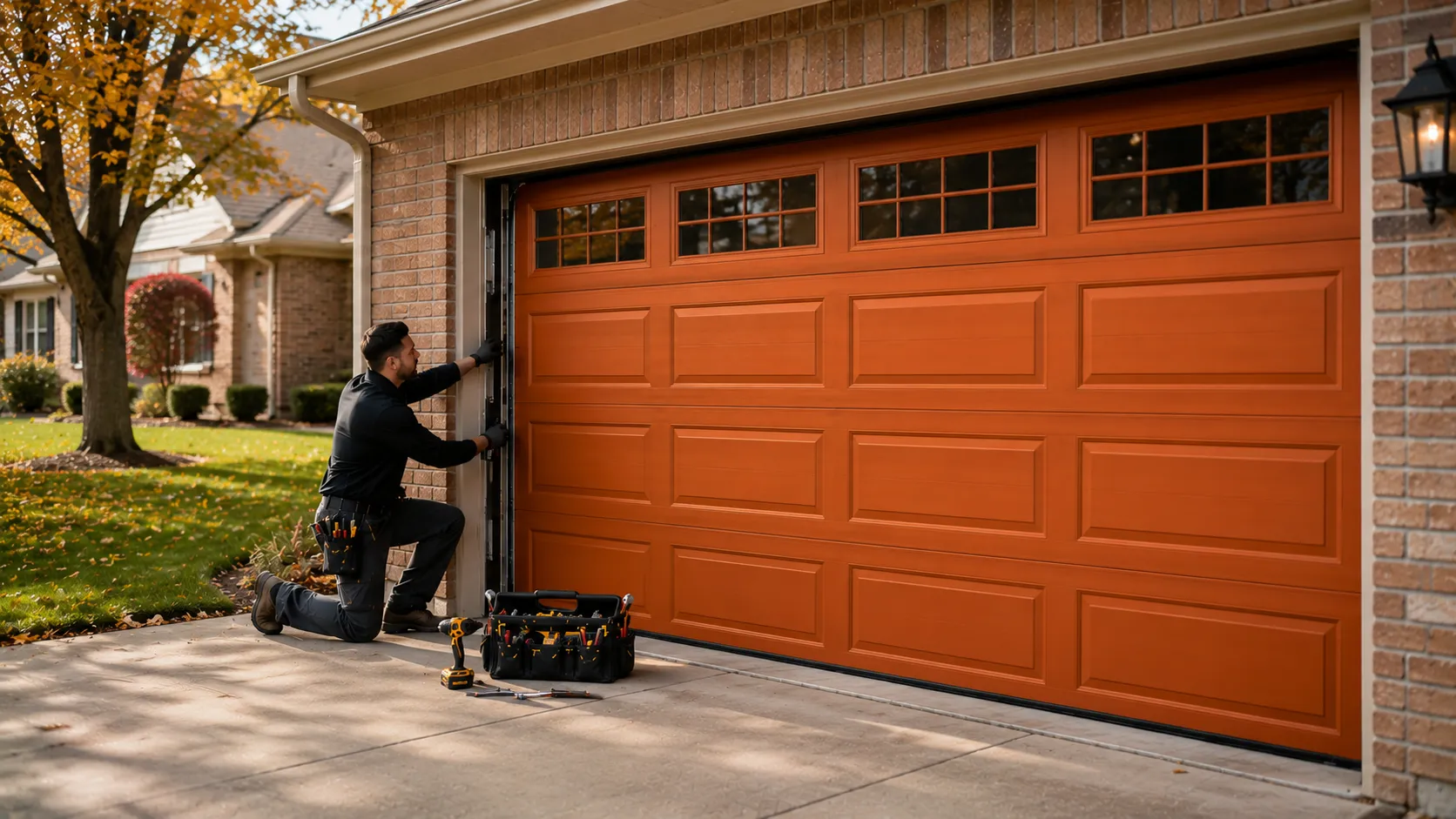
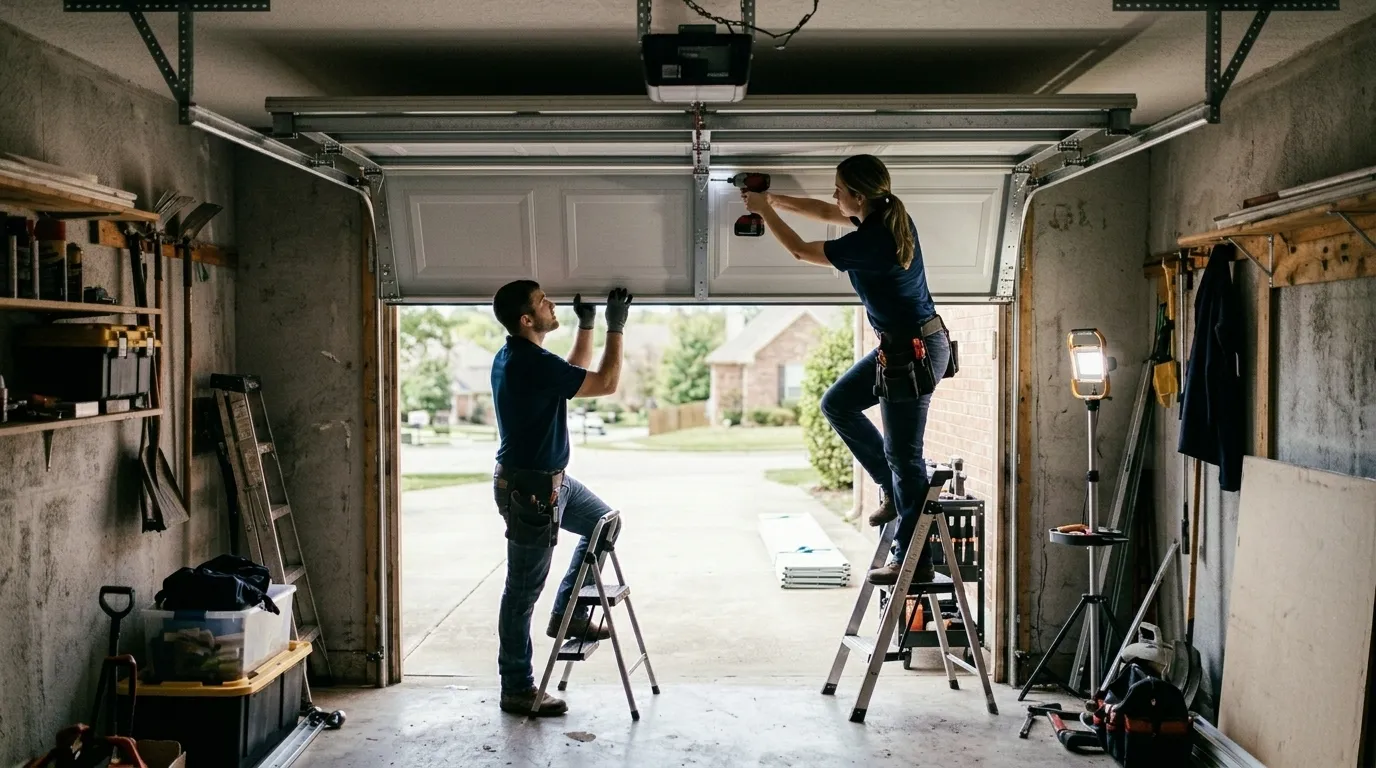
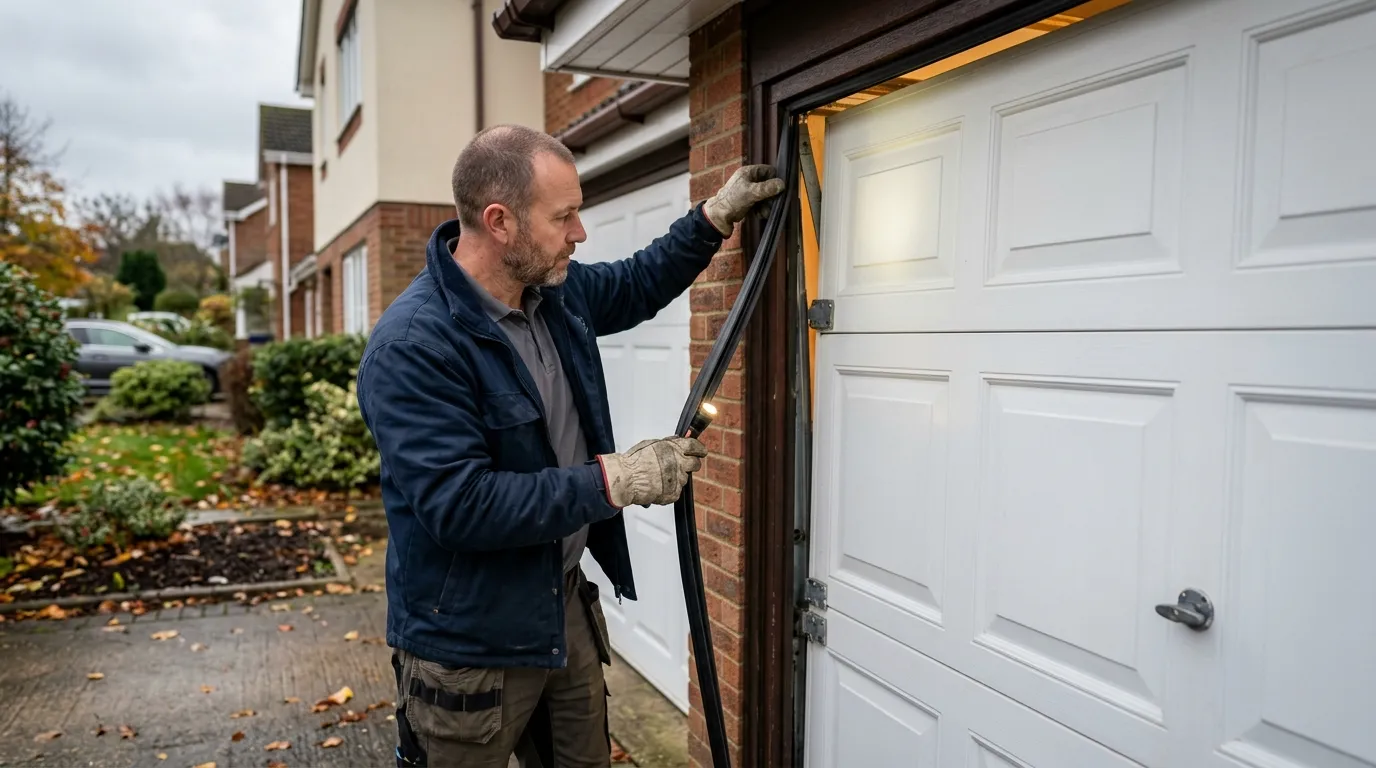
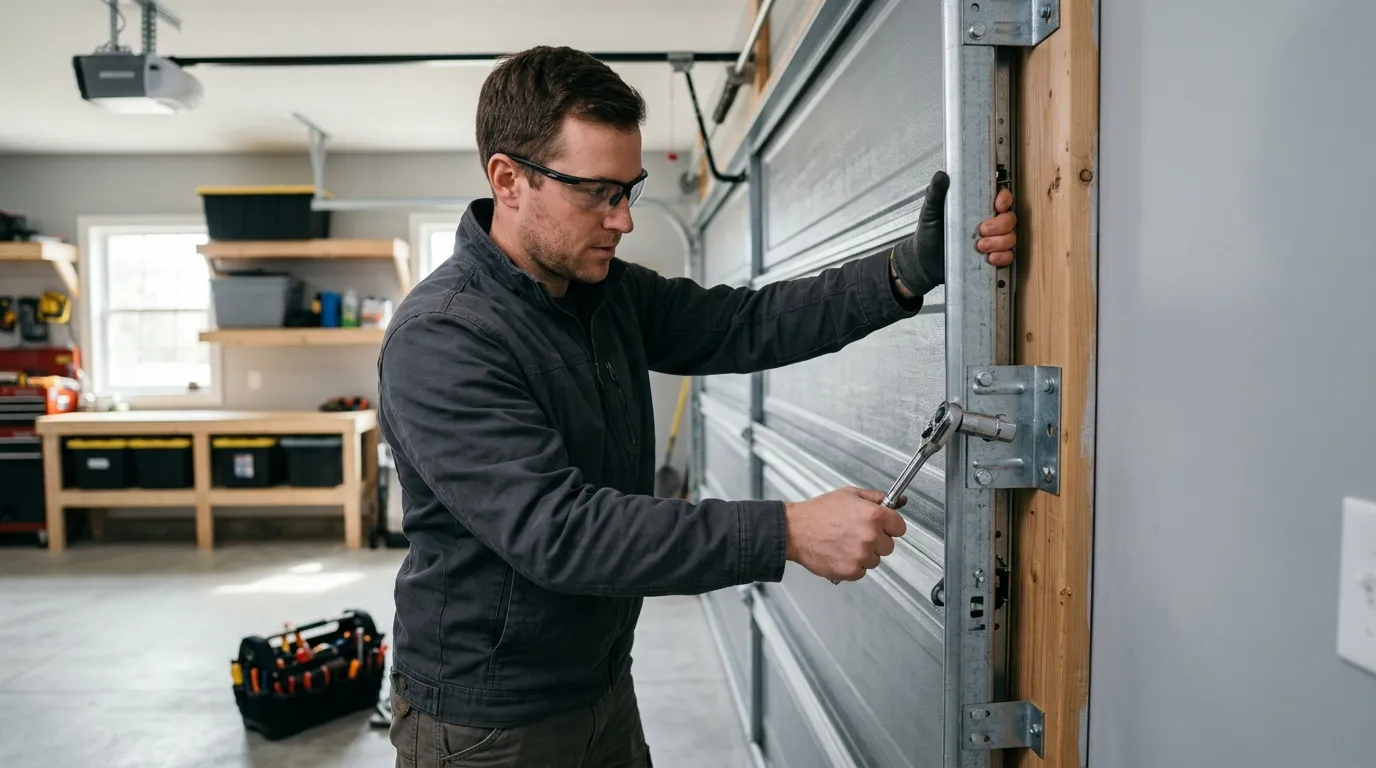
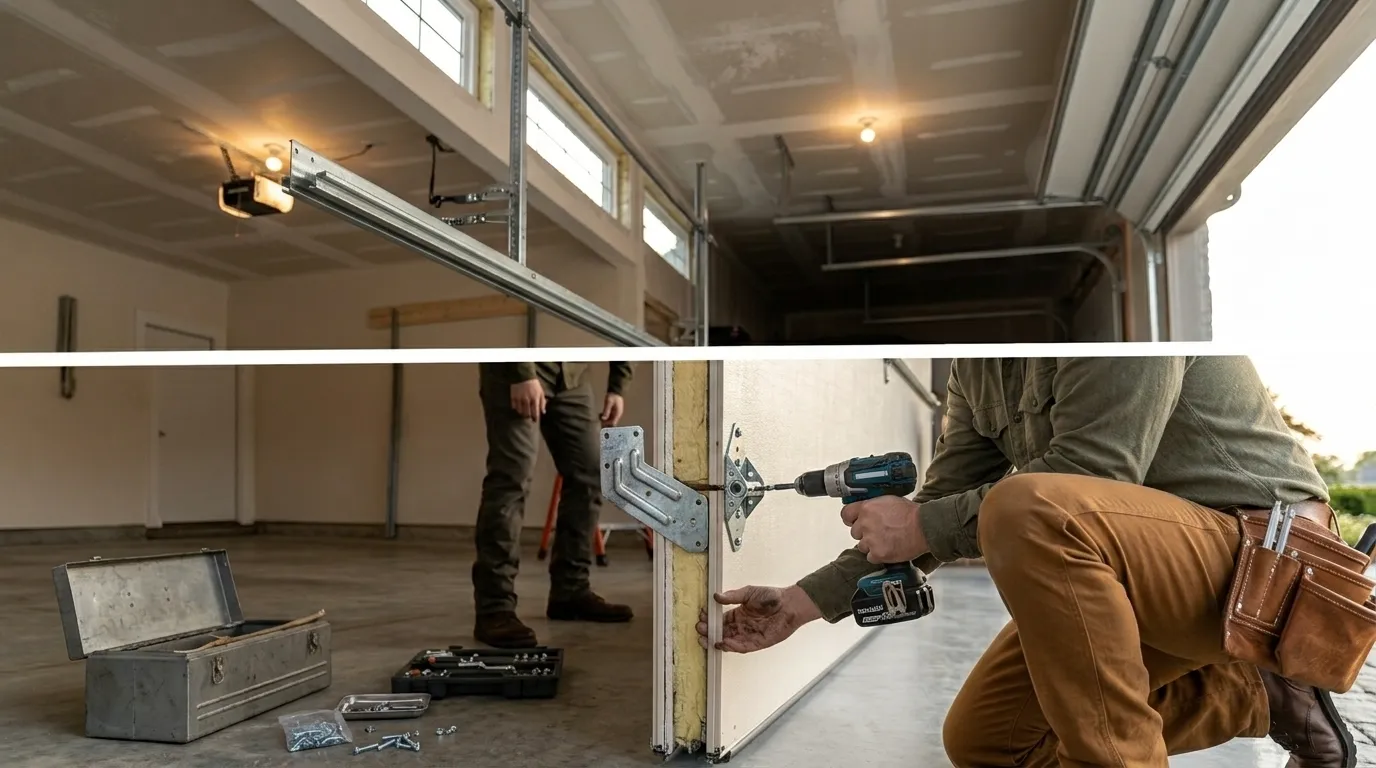
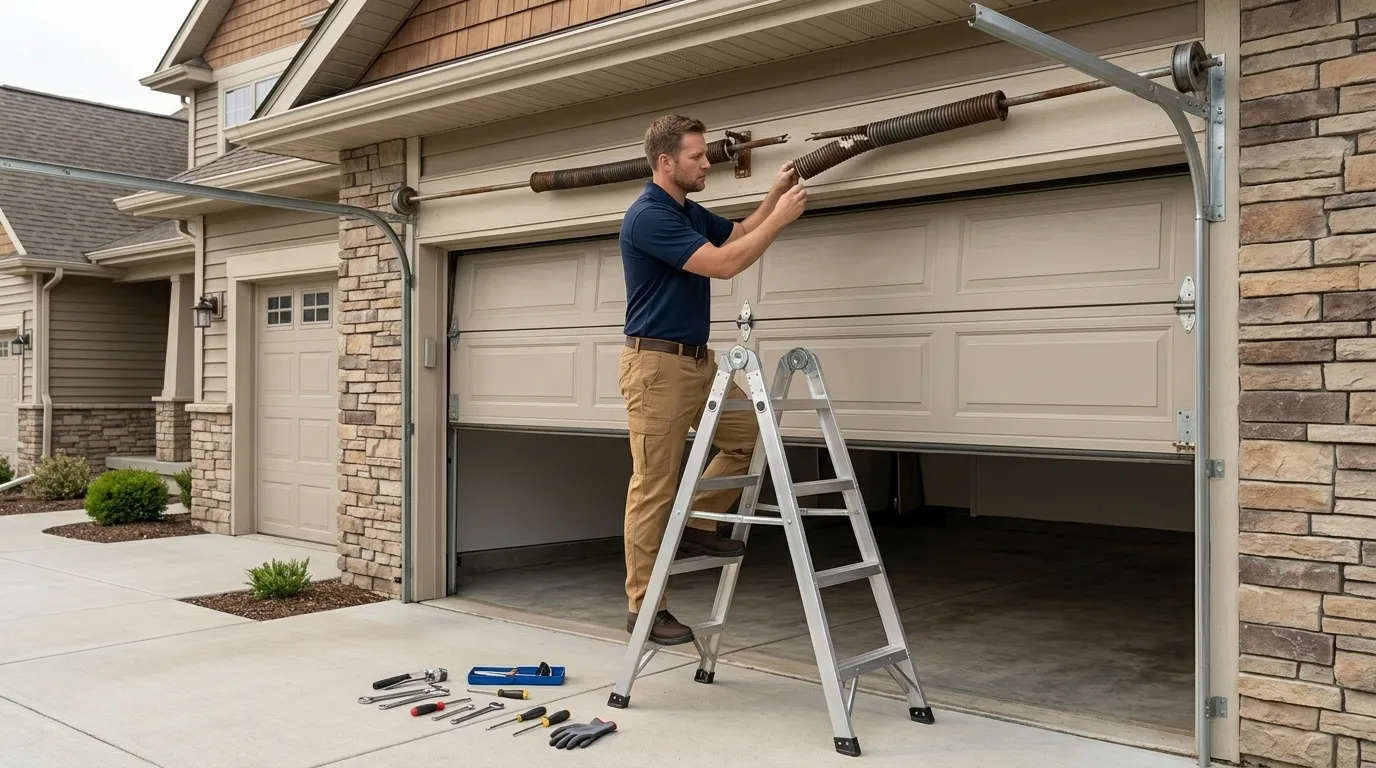
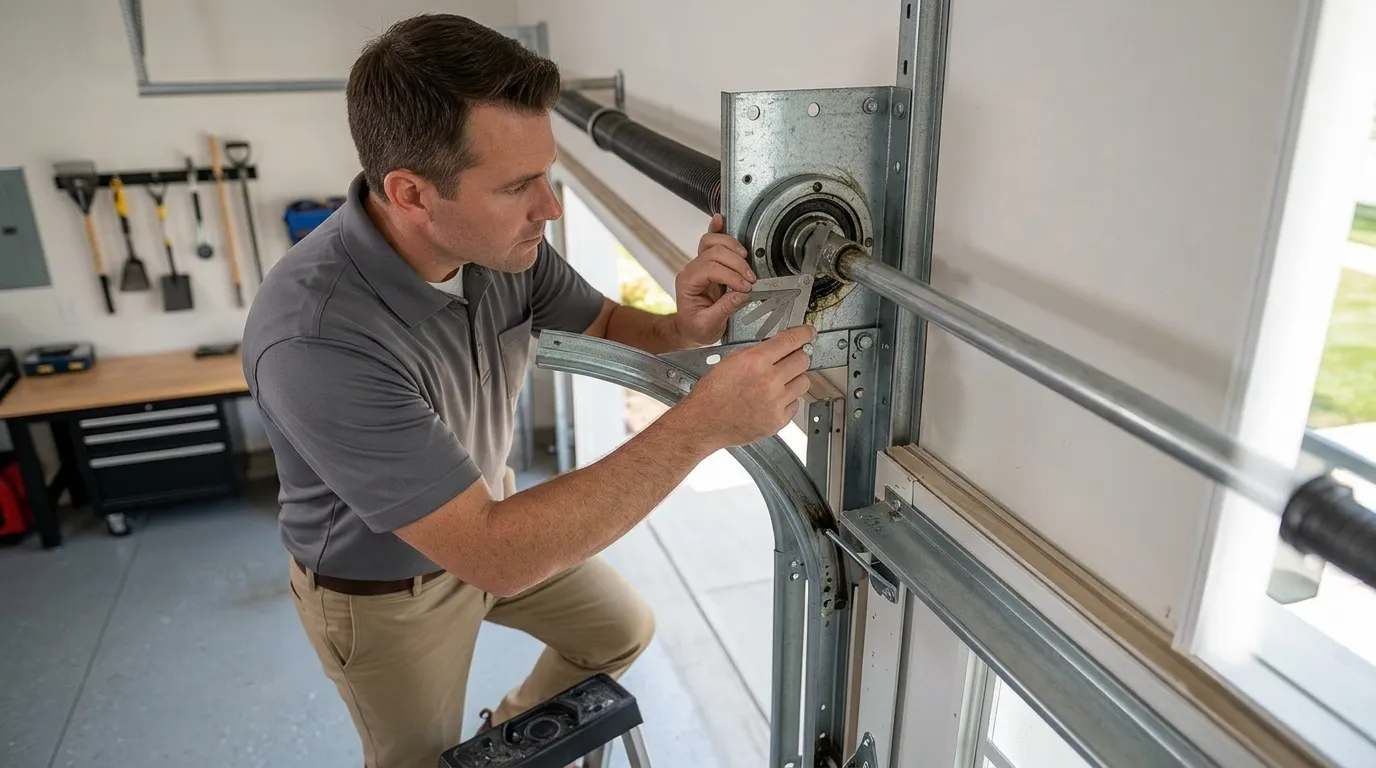
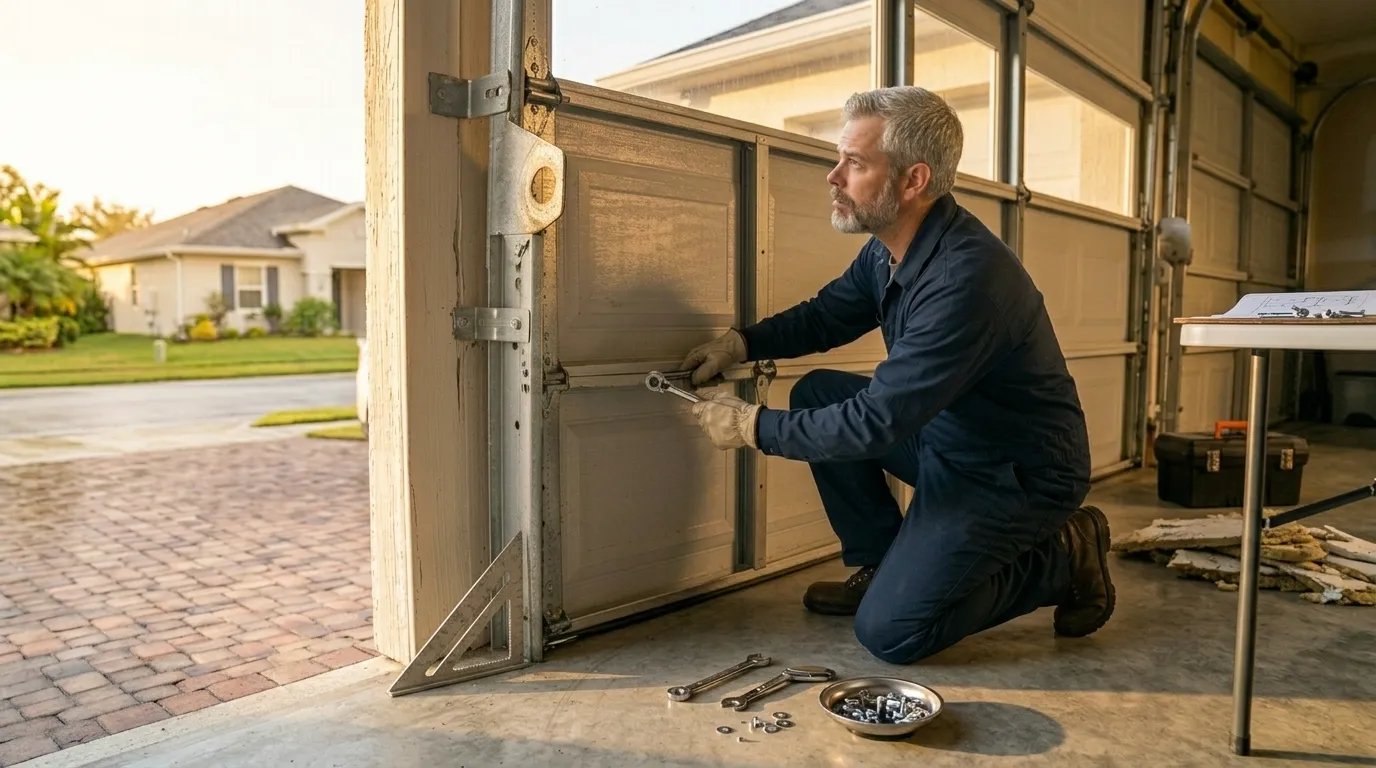
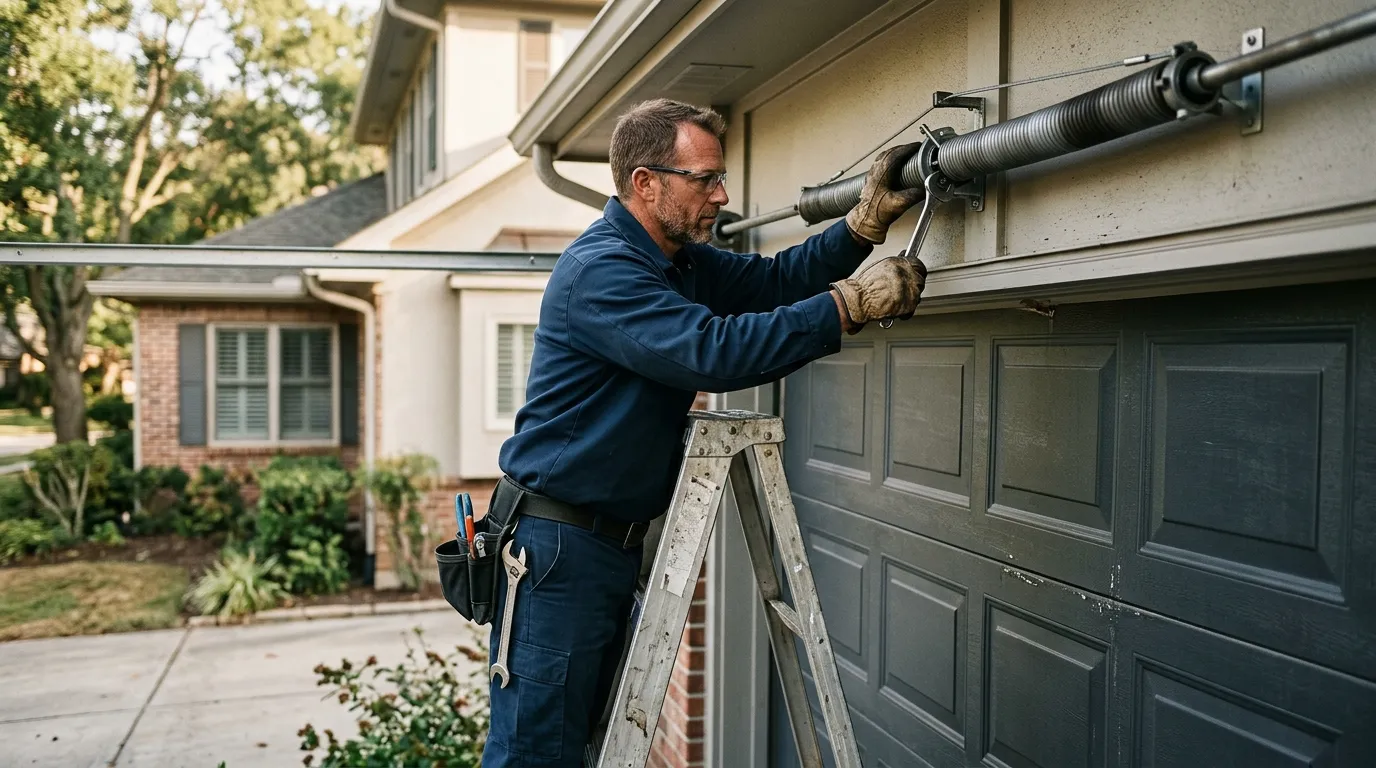
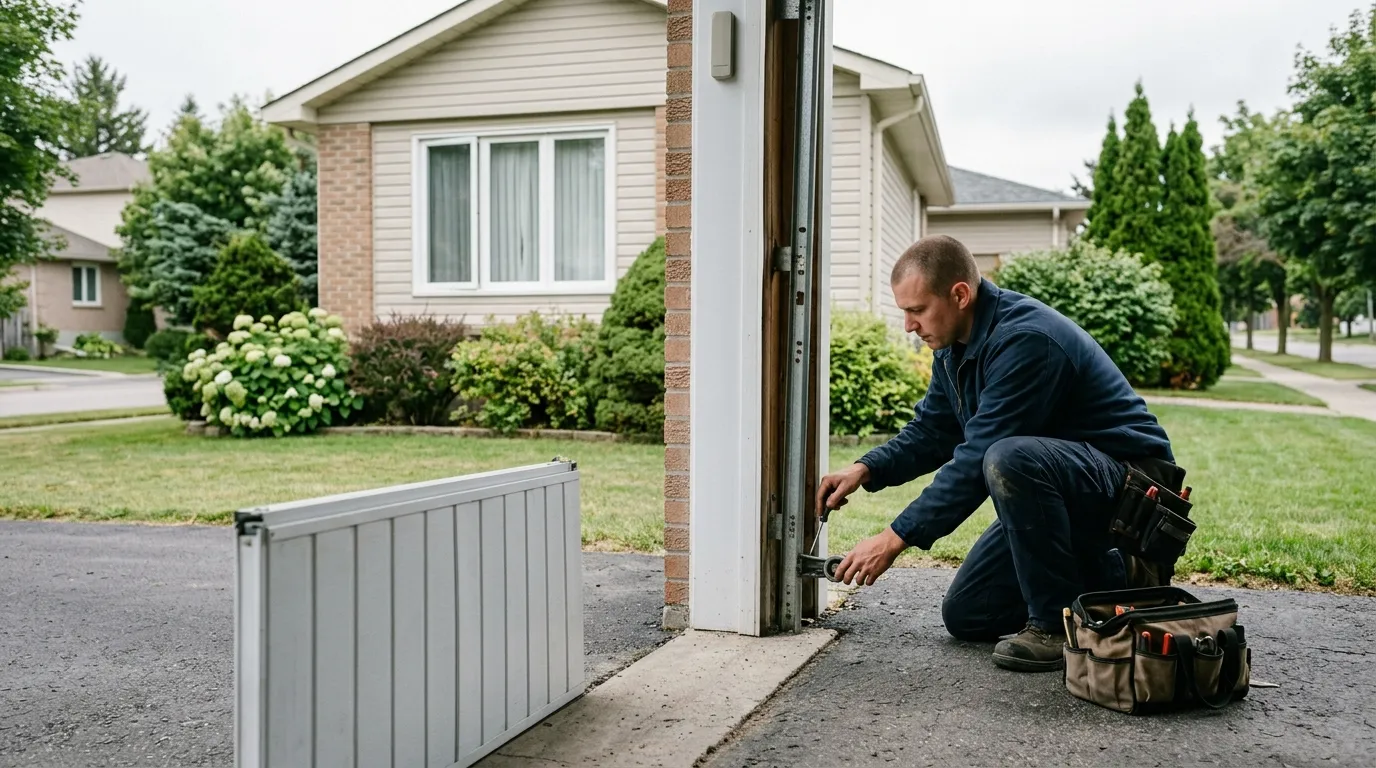
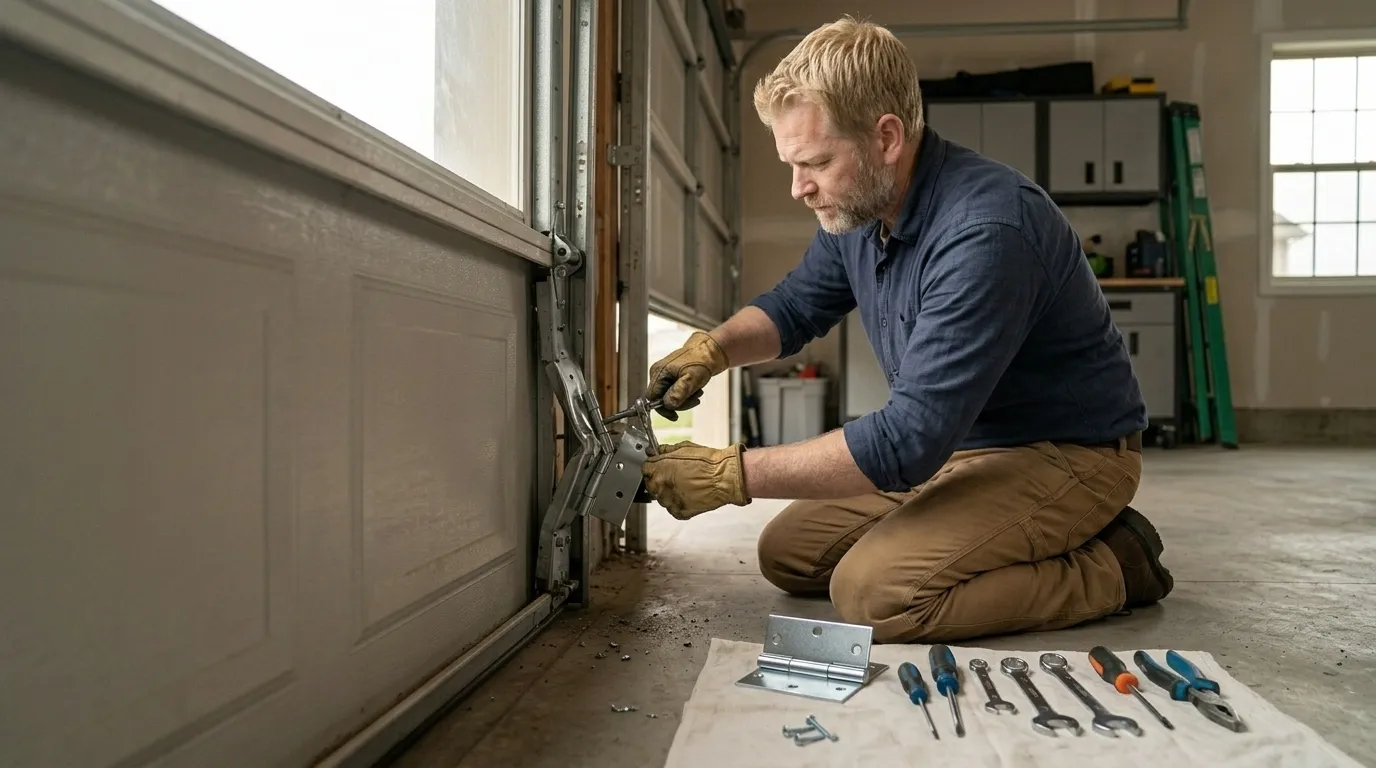
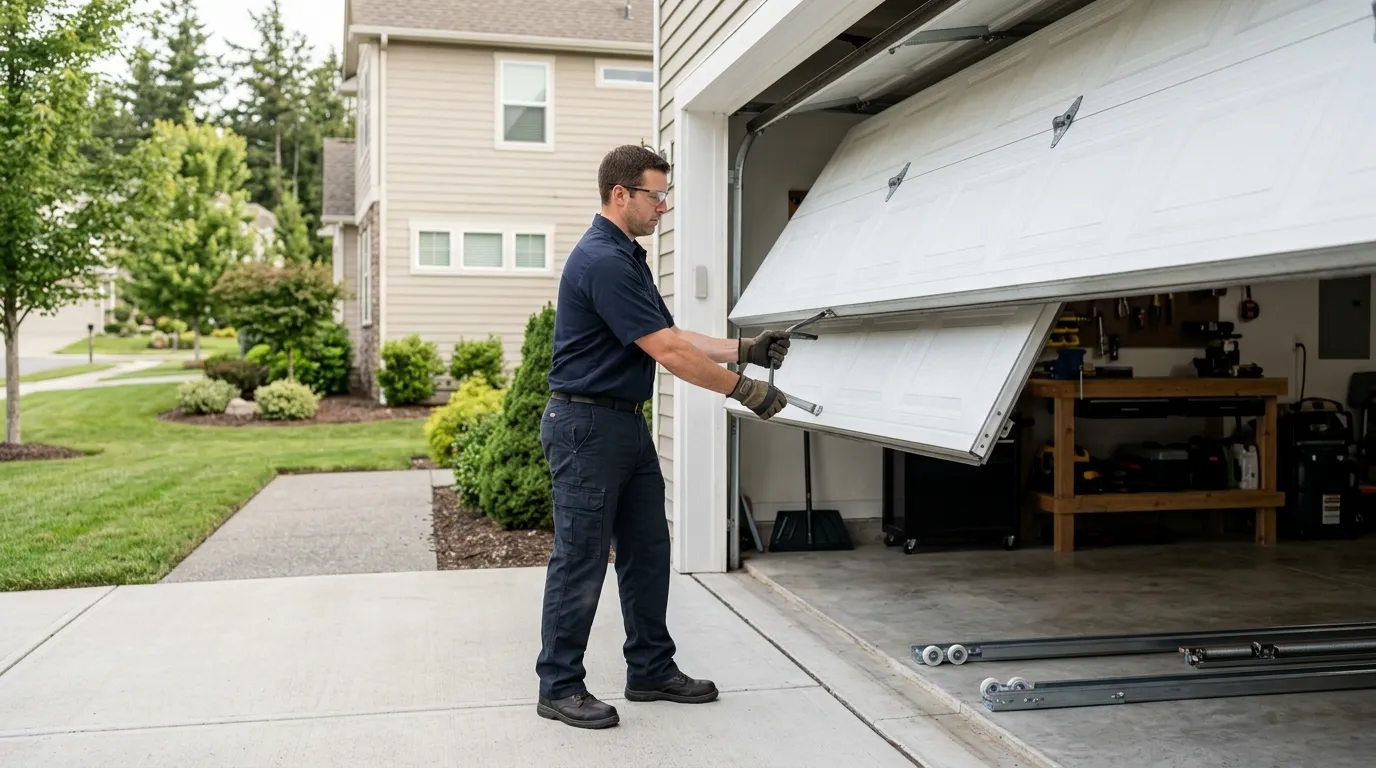
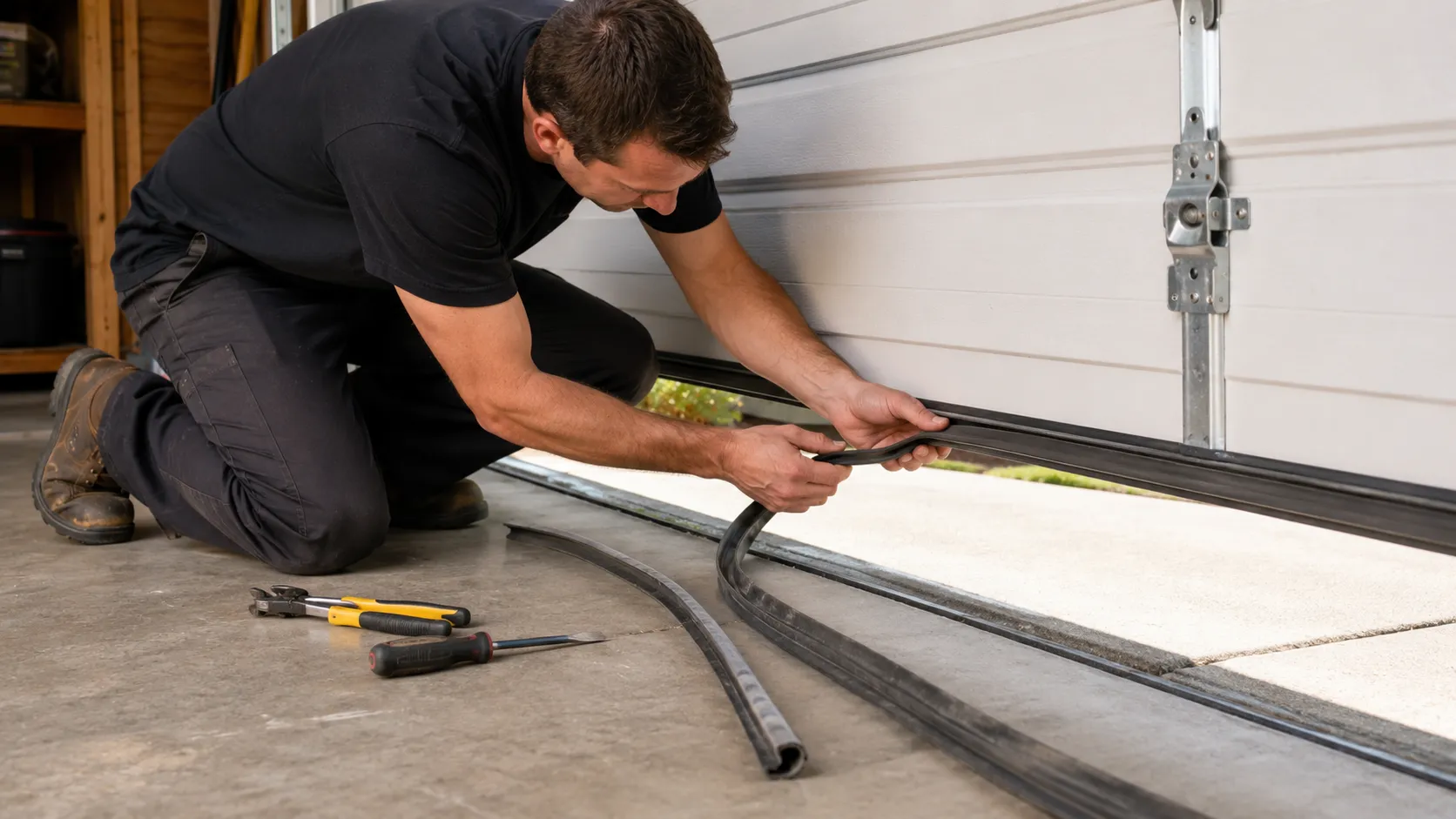
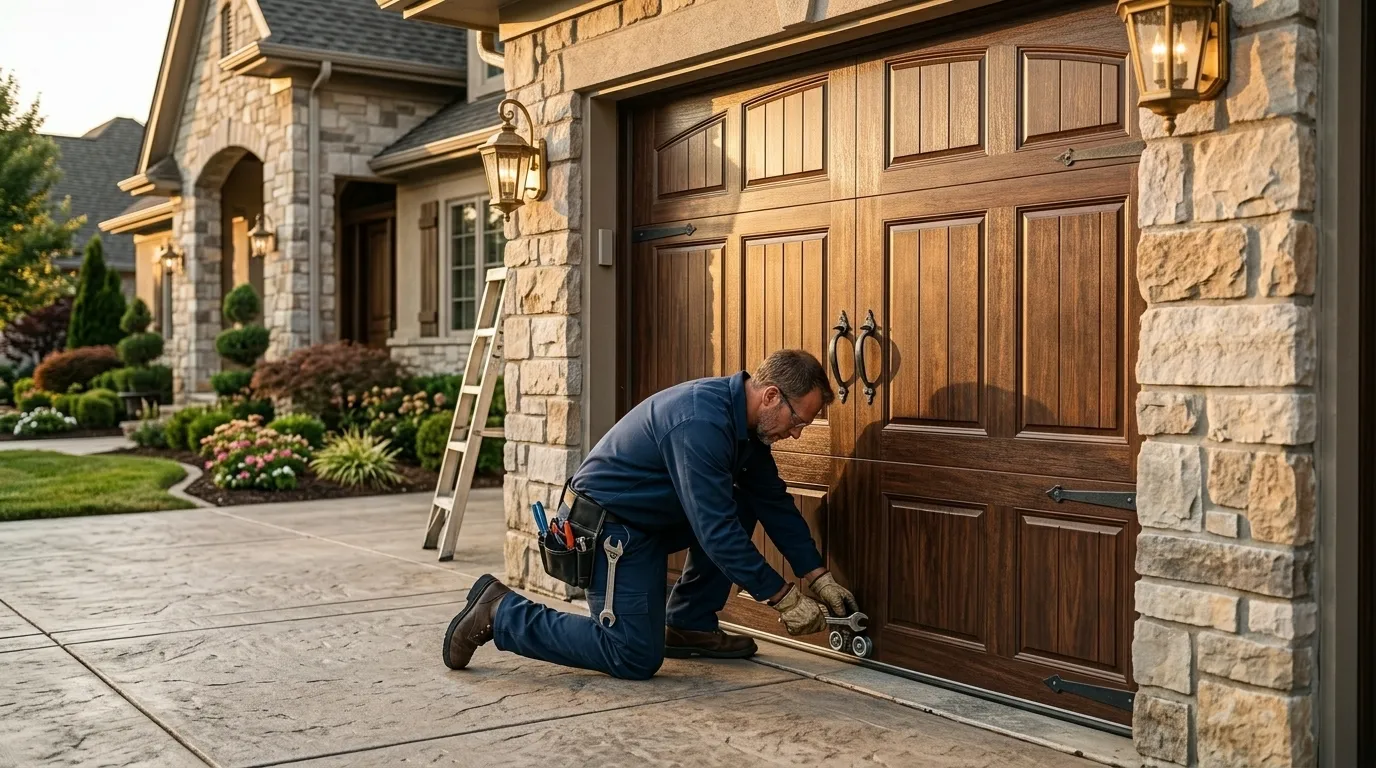
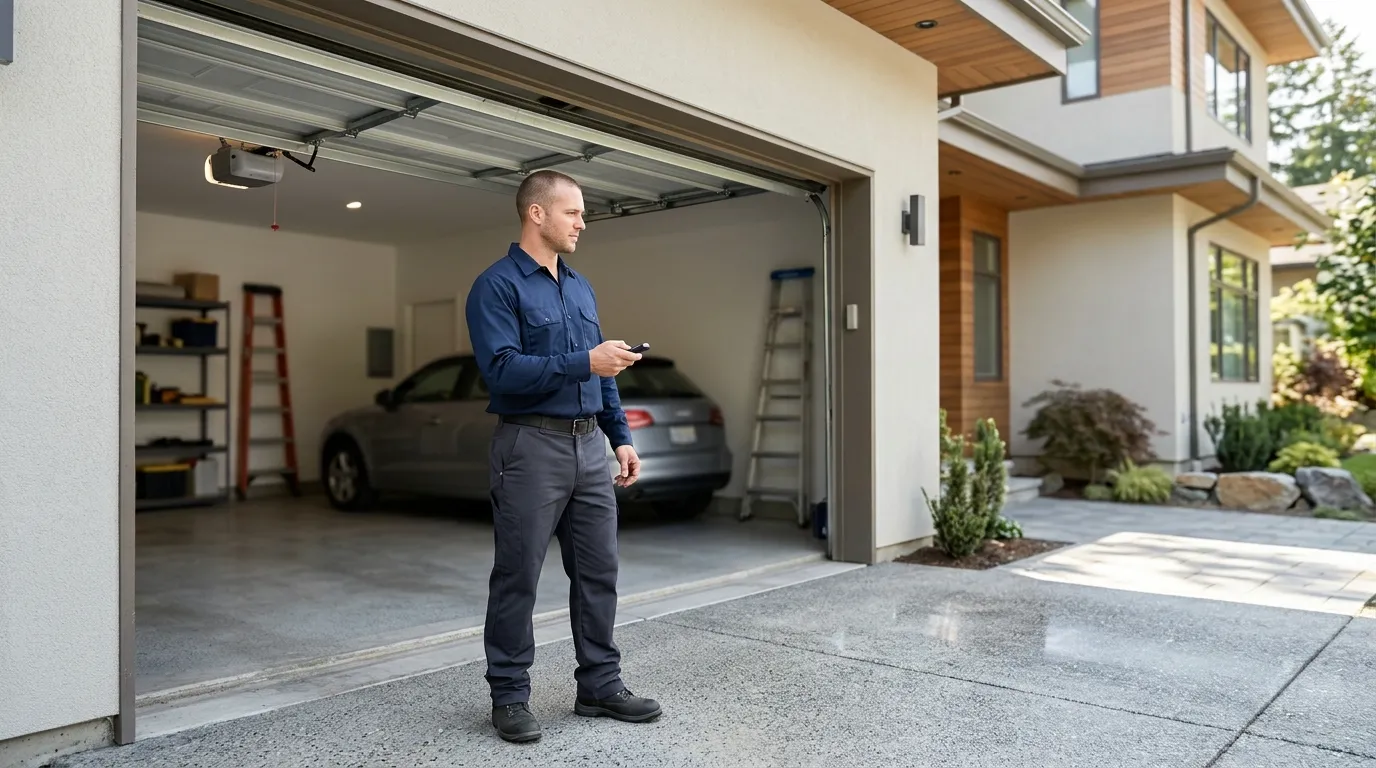
A real maintenance visit isn't a five-minute spray-and-go. We check spring tension and balance the door by hand, inspect cables and end bearing plates for fraying or corrosion, tighten track brackets, and replace rollers that have gone out of round. Opener sensors get cleaned and realigned - a lot of the "my door won't close" calls trace back to a sensor knocked a few degrees off, not the opener itself.
We lubricate hinges, rollers, and the spring itself with the right grease for steel hardware, not the general-purpose stuff that gums up in humidity. On older doors we're also checking for hairline cracks in the panels where the hardware attaches, since that's where stress shows up first on doors that have been running for decades.
Here's the honest limit on this: if the springs are original to a house built in the 1960s or 70s and they're still holding, we're not going to talk you into replacing them just because they're old. We service what's working and flag what's close to the end, so you can plan the spring or roller swap on your schedule instead of getting stuck doing it on a Sunday when the door won't budge. If a track is bent badly enough or a panel's rusted through, we'll tell you that's a repair job, not a maintenance one, rather than patch it and have you call us back in two months.