Why This Fails Locally
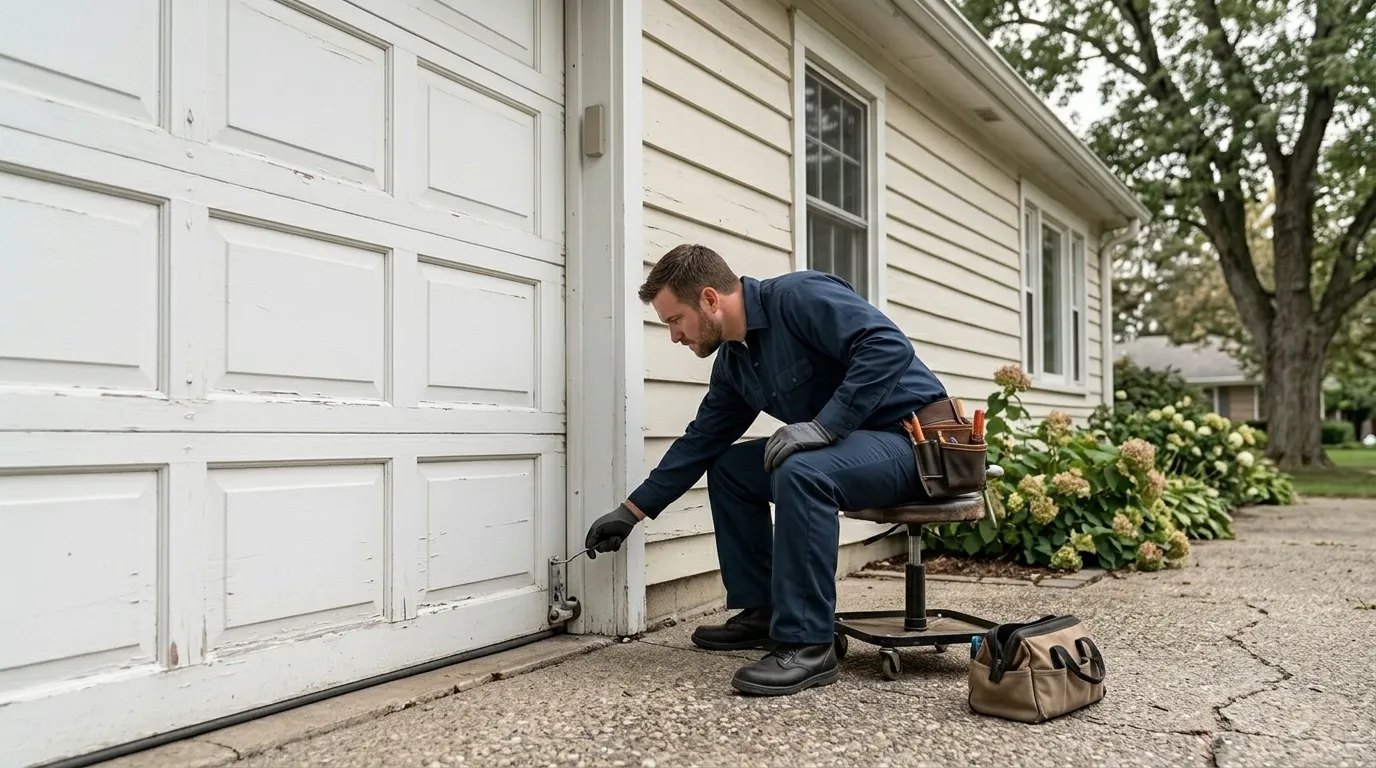
Miami's climate band is mild temperate, which sounds easy on a garage door, and in some ways it is - no freeze-thaw cracking, no snow load. But mild temperate here also means sustained humidity and heat cycling, day after day, year after year. Steel panels from the 1960s-70s stock that make up most of the area's garages were built for a drier climate than they got. The paint and galvanizing on a lot of that original steel has been absorbing moisture cycles for decades, and once corrosion starts at a seam or a ding, it spreads from the inside out - you often don't see it until the panel bows or a hole opens up.
Fiberglass and composite panels installed later in that build window (into the 1980s and 90s) handle humidity better but get brittle and yellow with UV exposure over enough years, and they crack instead of dent when something hits them. Either way, the age of the housing stock across this service area - median build year 1976 - means a huge share of doors are carrying panels well past the point where a dent just pops back out. The material has already been working against the climate for 40-plus years before anything hits it.
What the Fix Involves
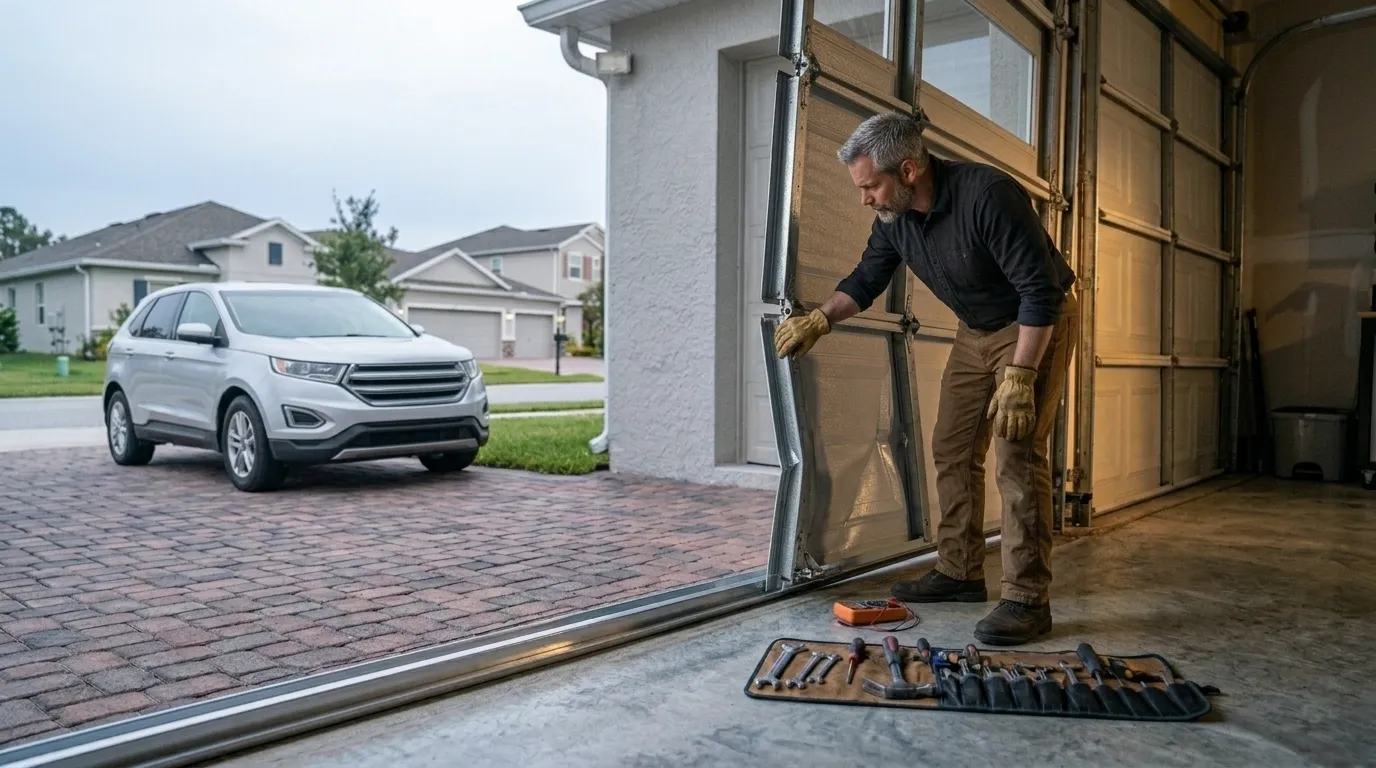
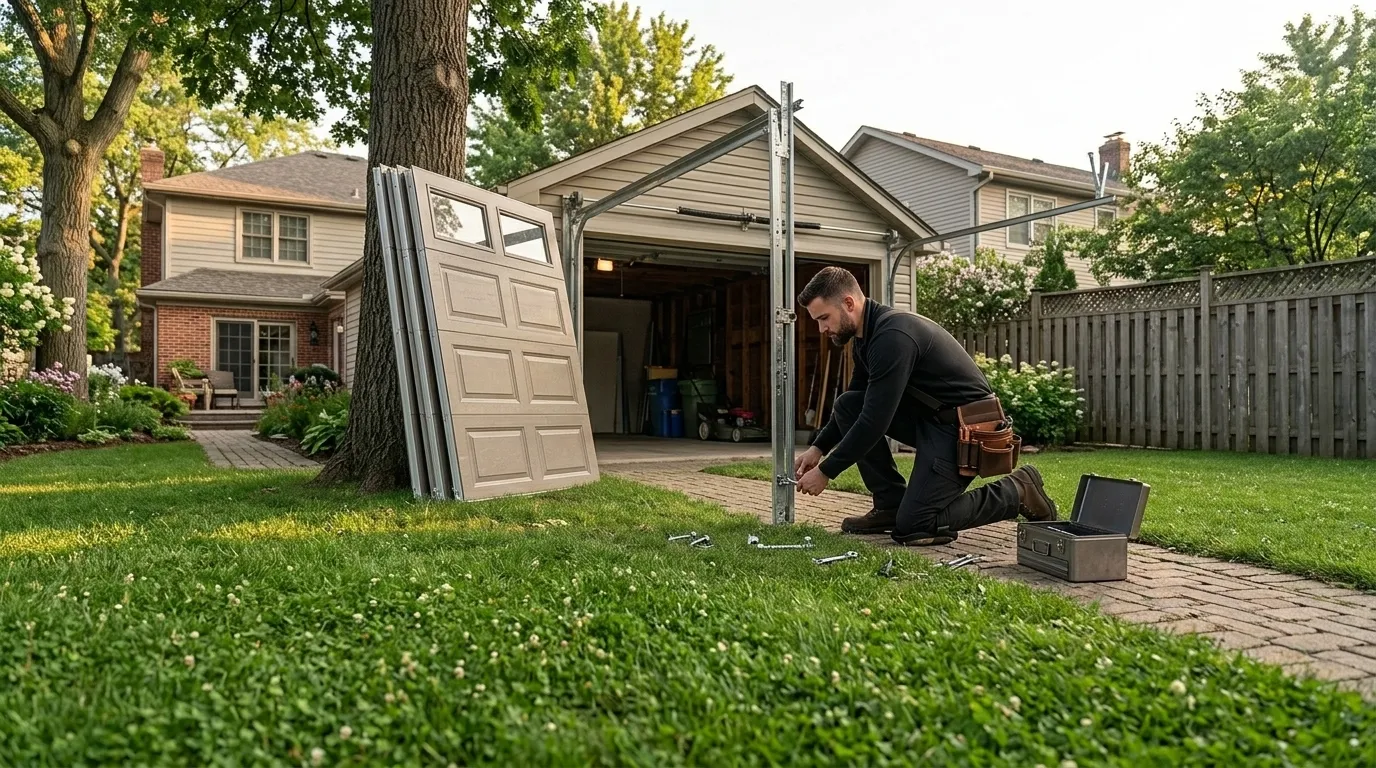
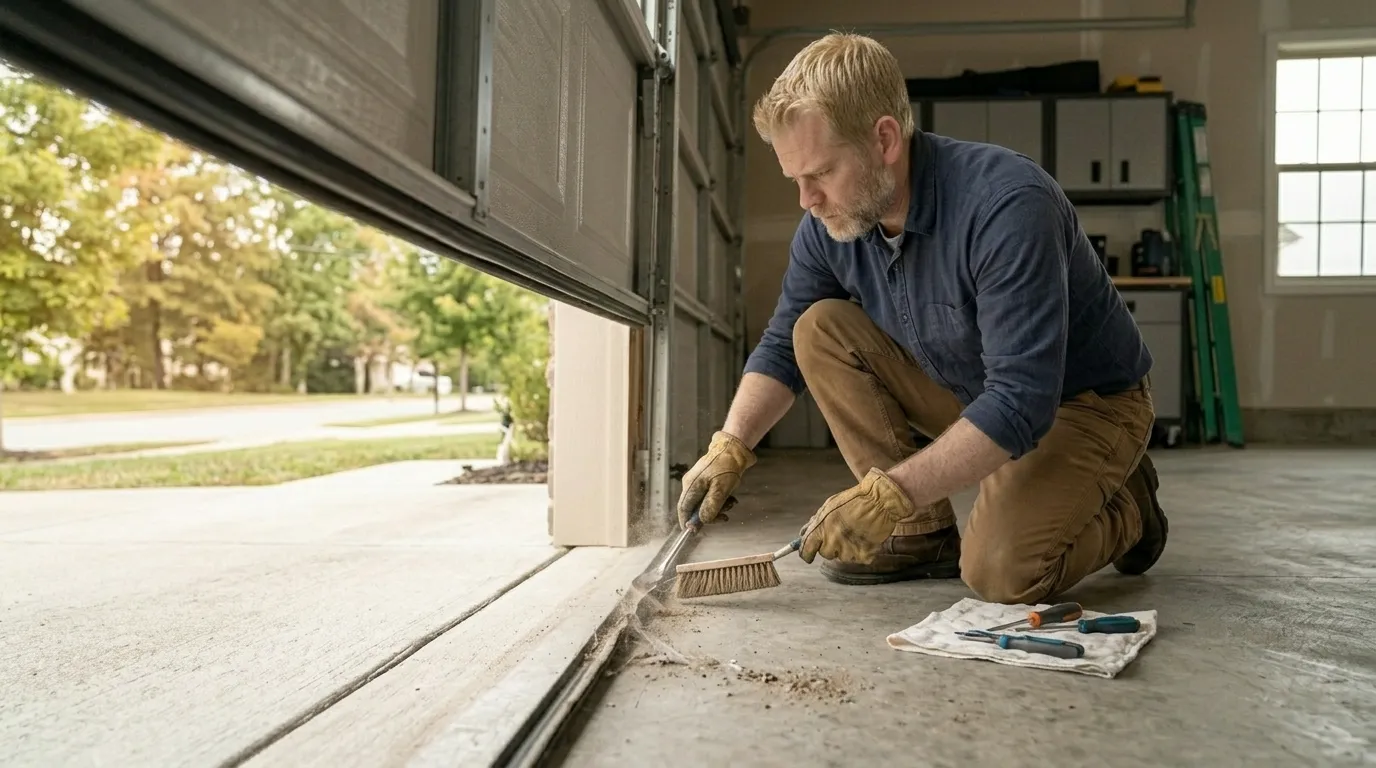
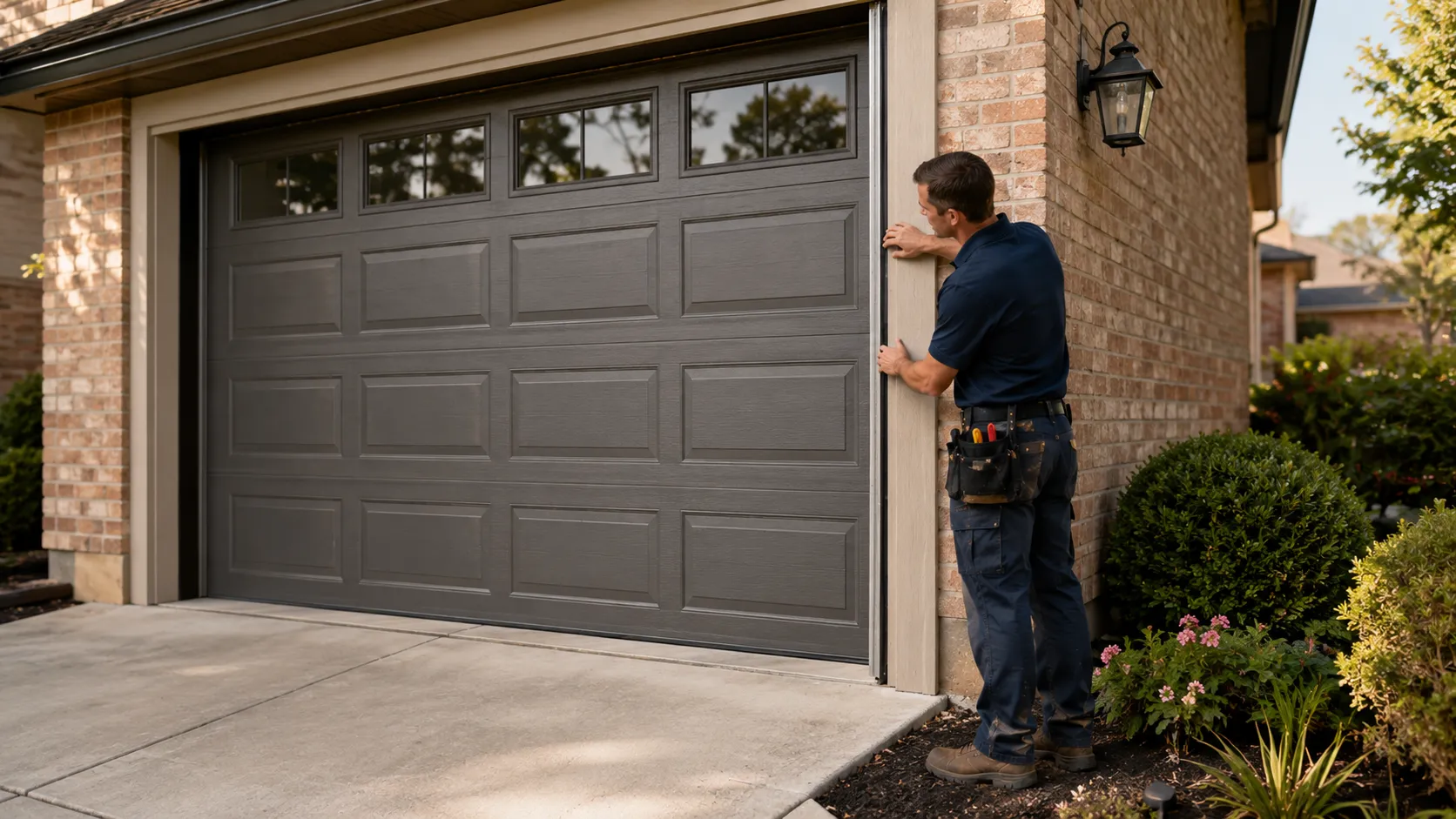
First step is figuring out if the panel can be replaced on its own or if the whole section needs to go. Sectional doors are built in panels stacked on a track, so in theory you replace just the damaged one. In practice, if your door is old enough that the exact panel profile is discontinued, we're matching color and rib pattern as close as we can, or replacing more than one panel so the mismatch isn't obvious from the street. Doors that are heavily corroded at more than one seam usually aren't worth patching panel by panel - at that point full door replacement is the better use of your money, and we'll say so instead of running up a bill.
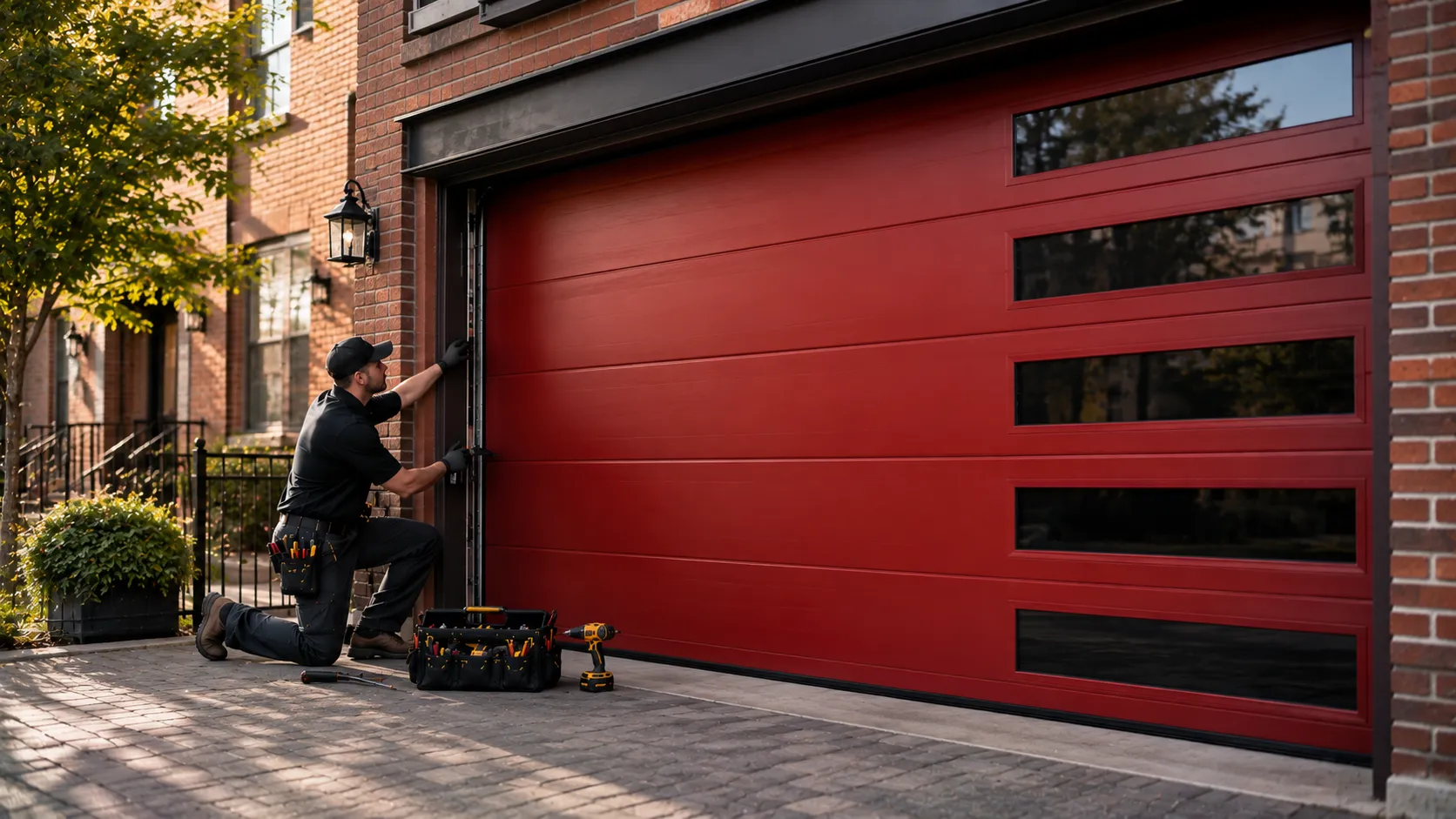
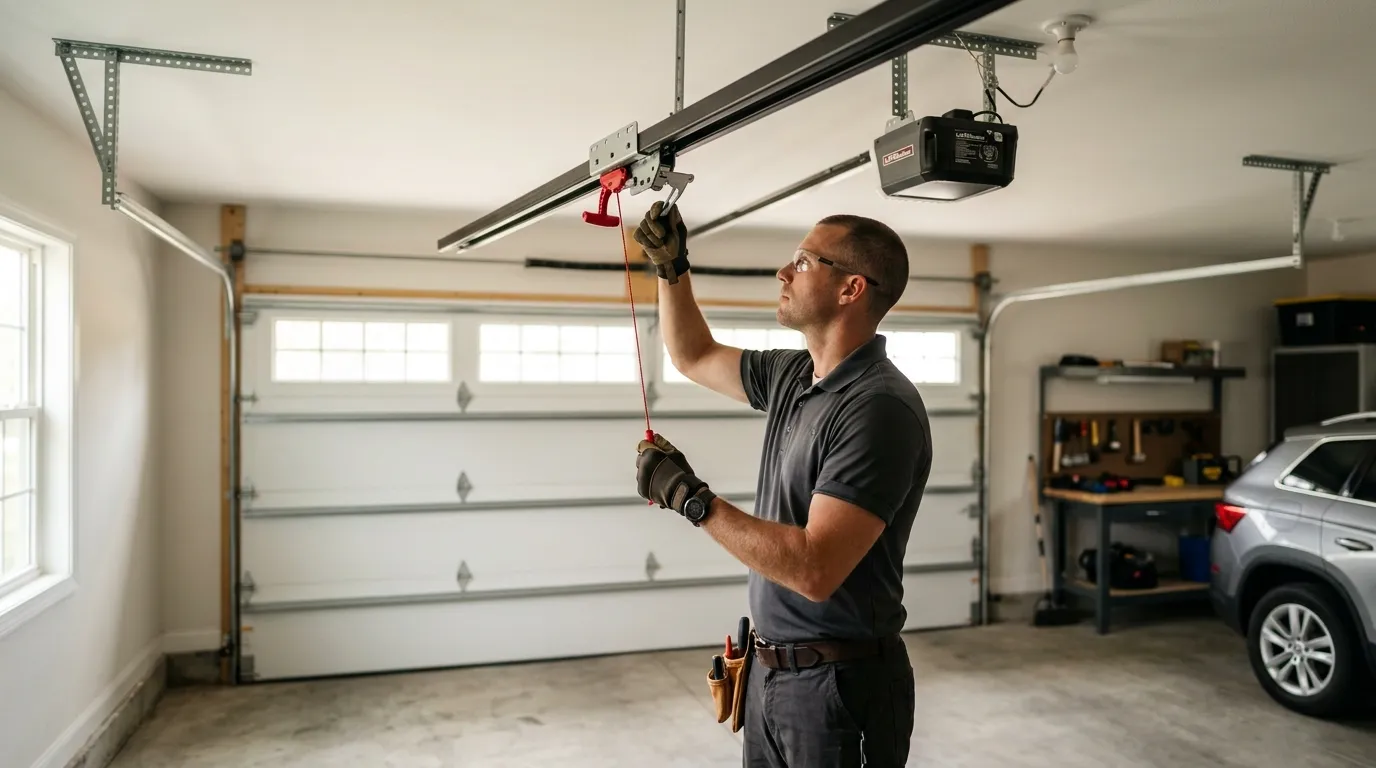
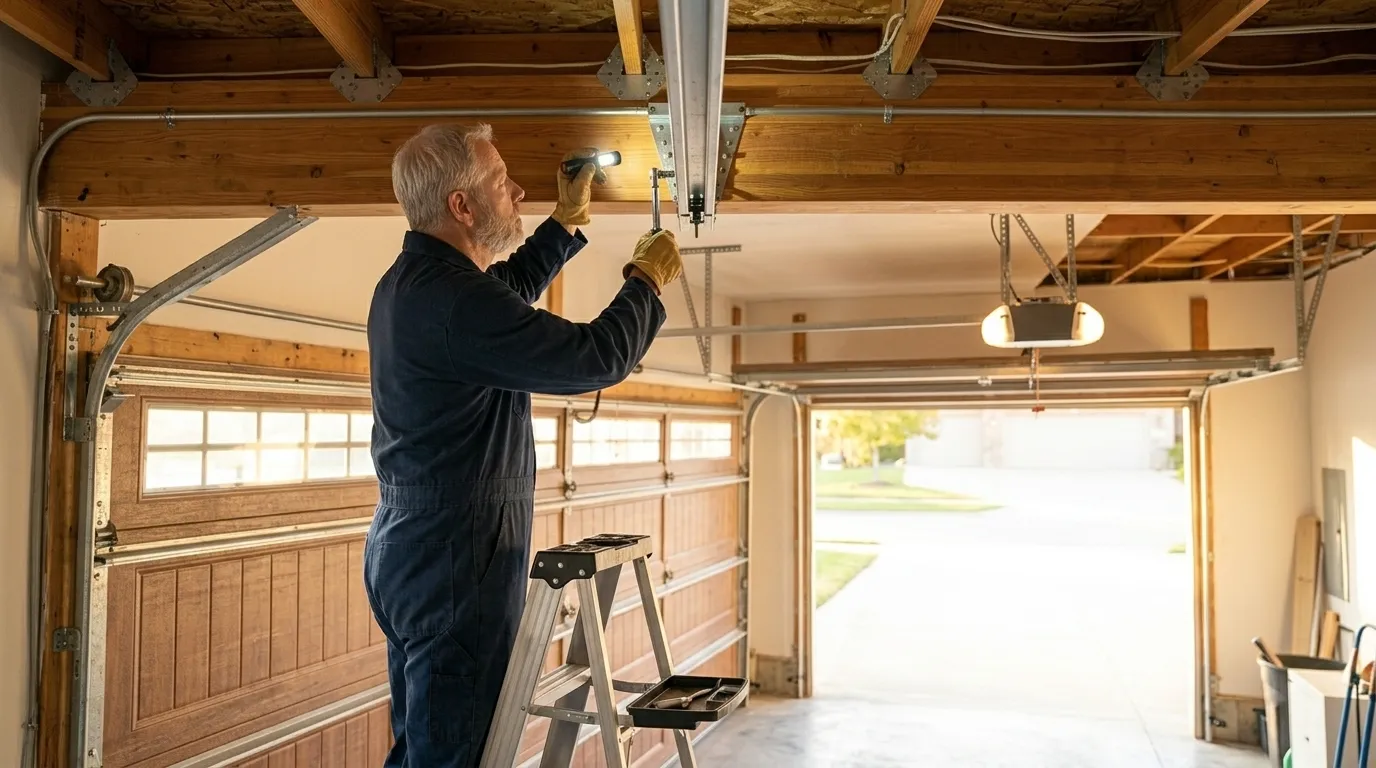
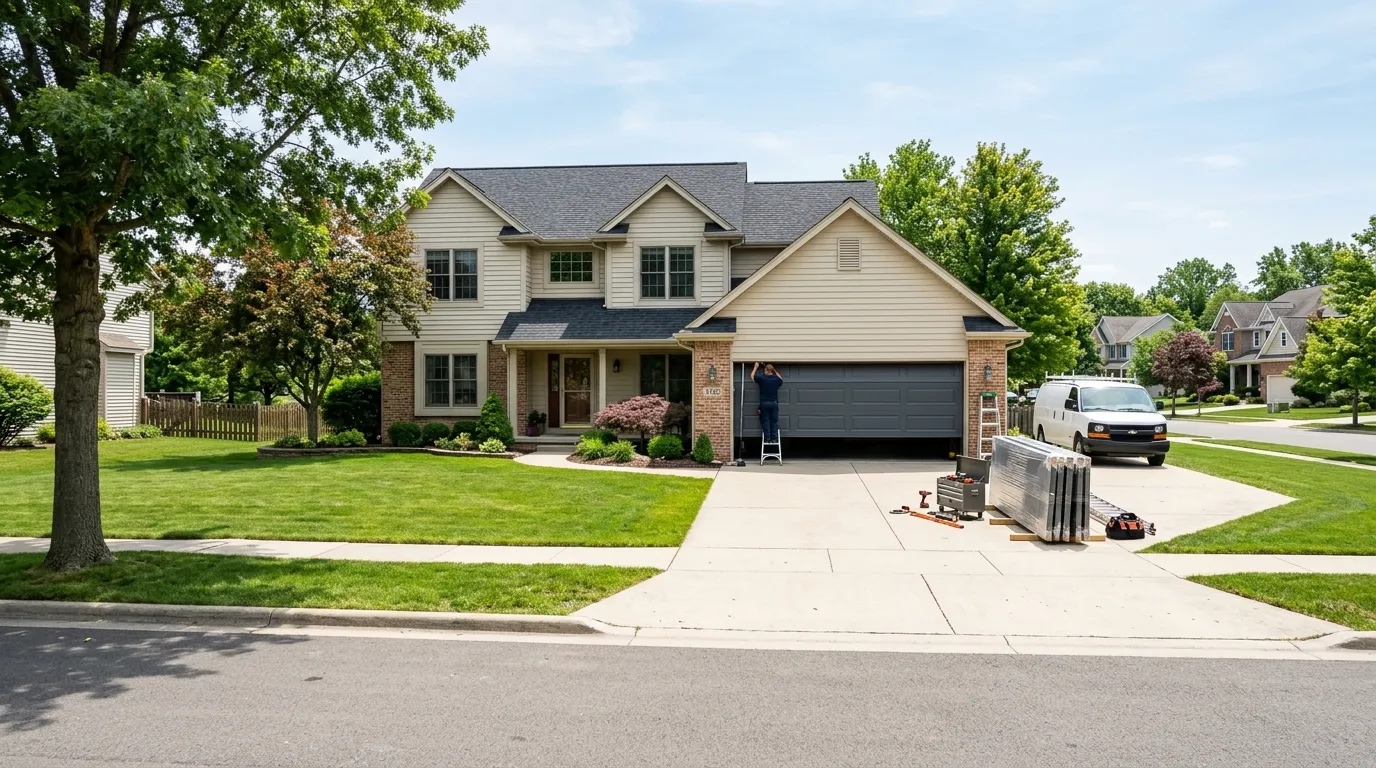
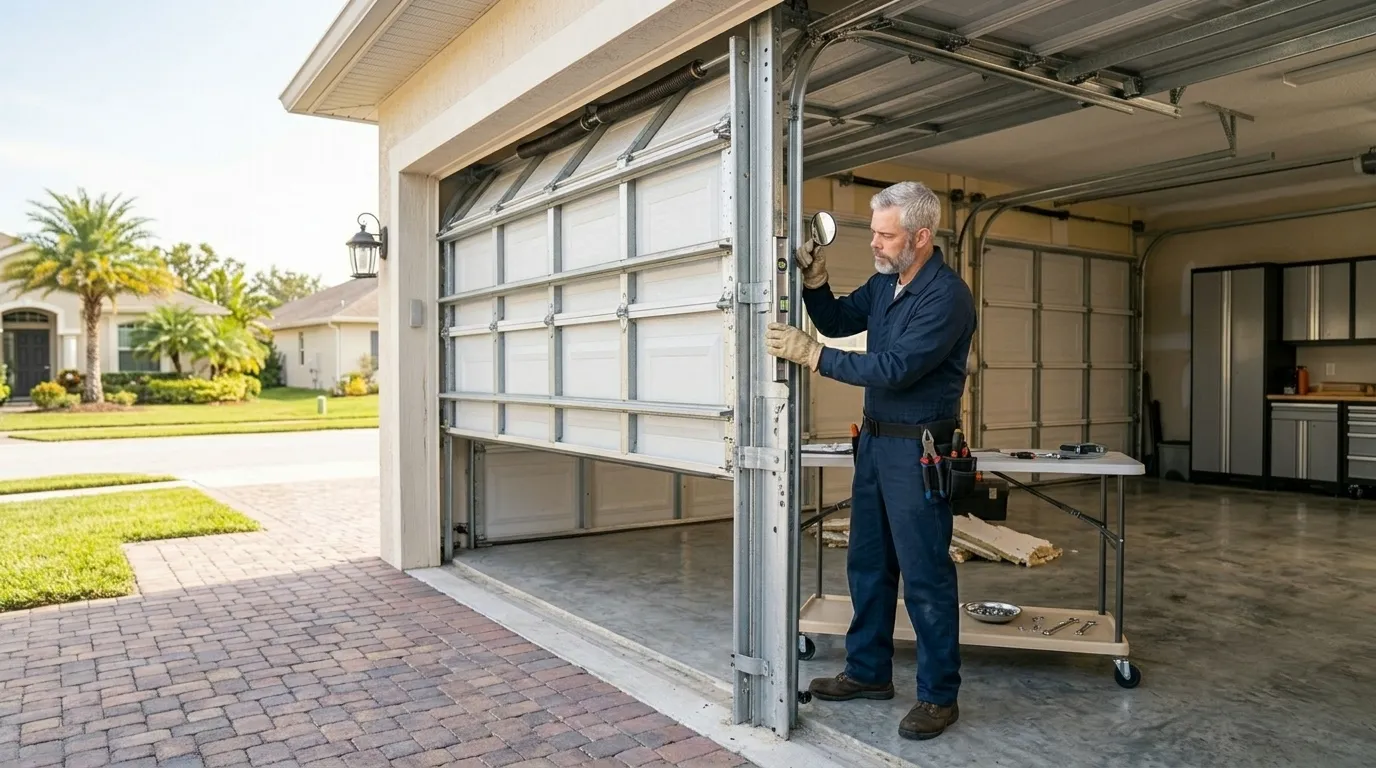
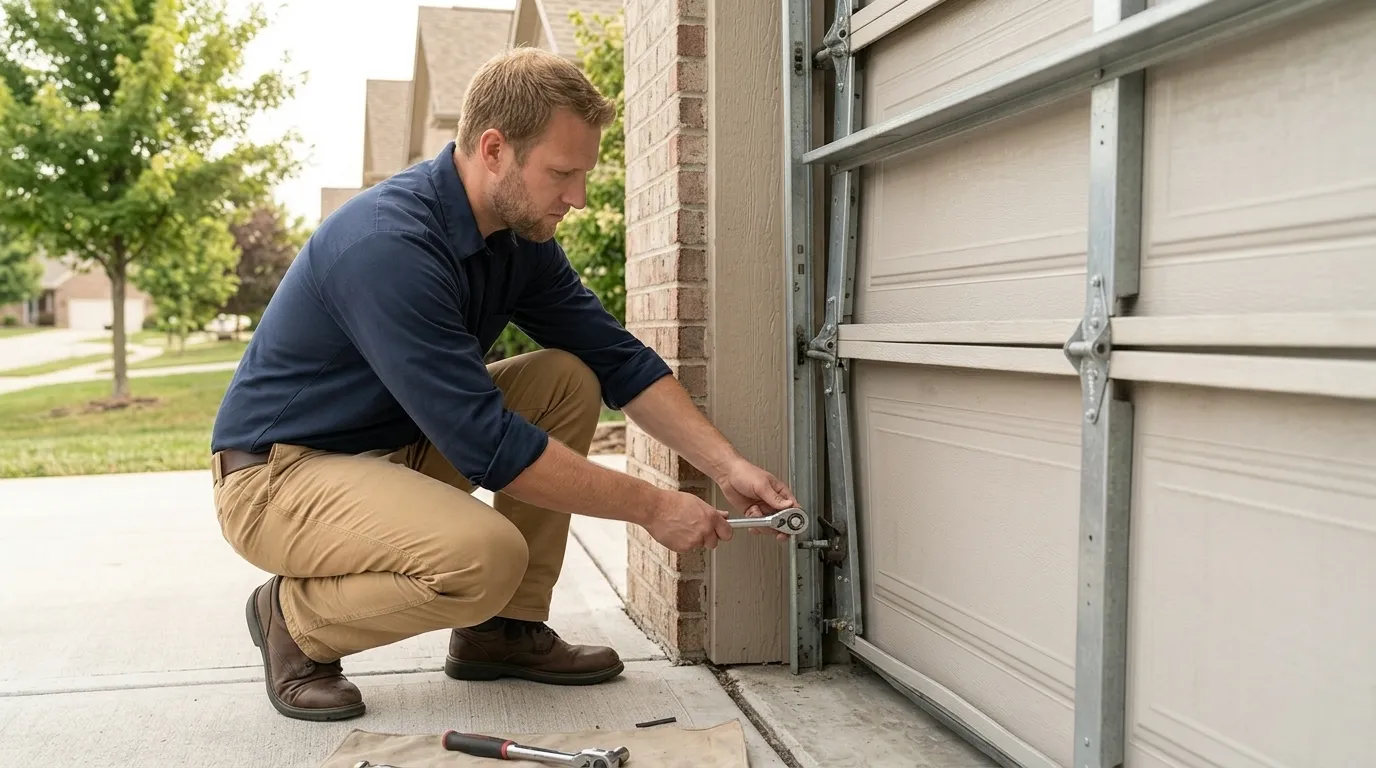
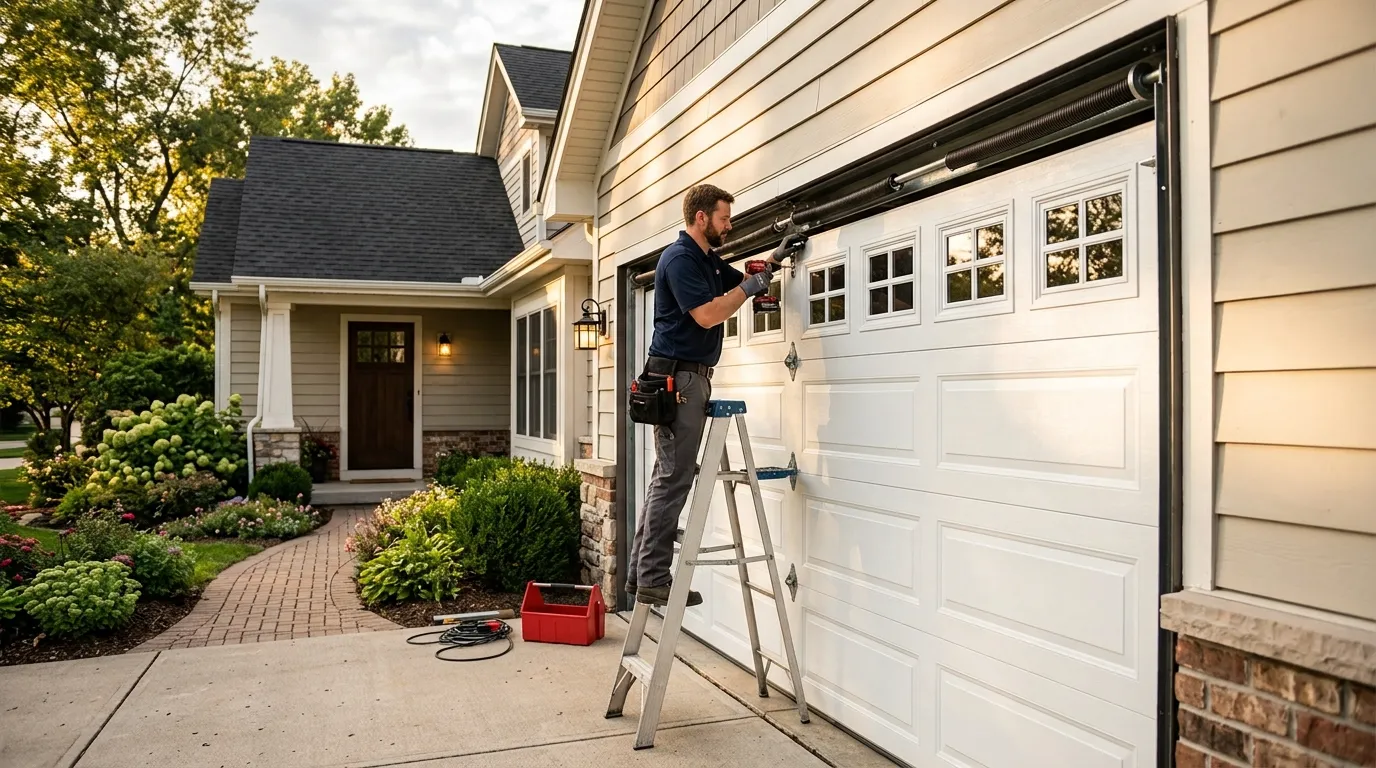
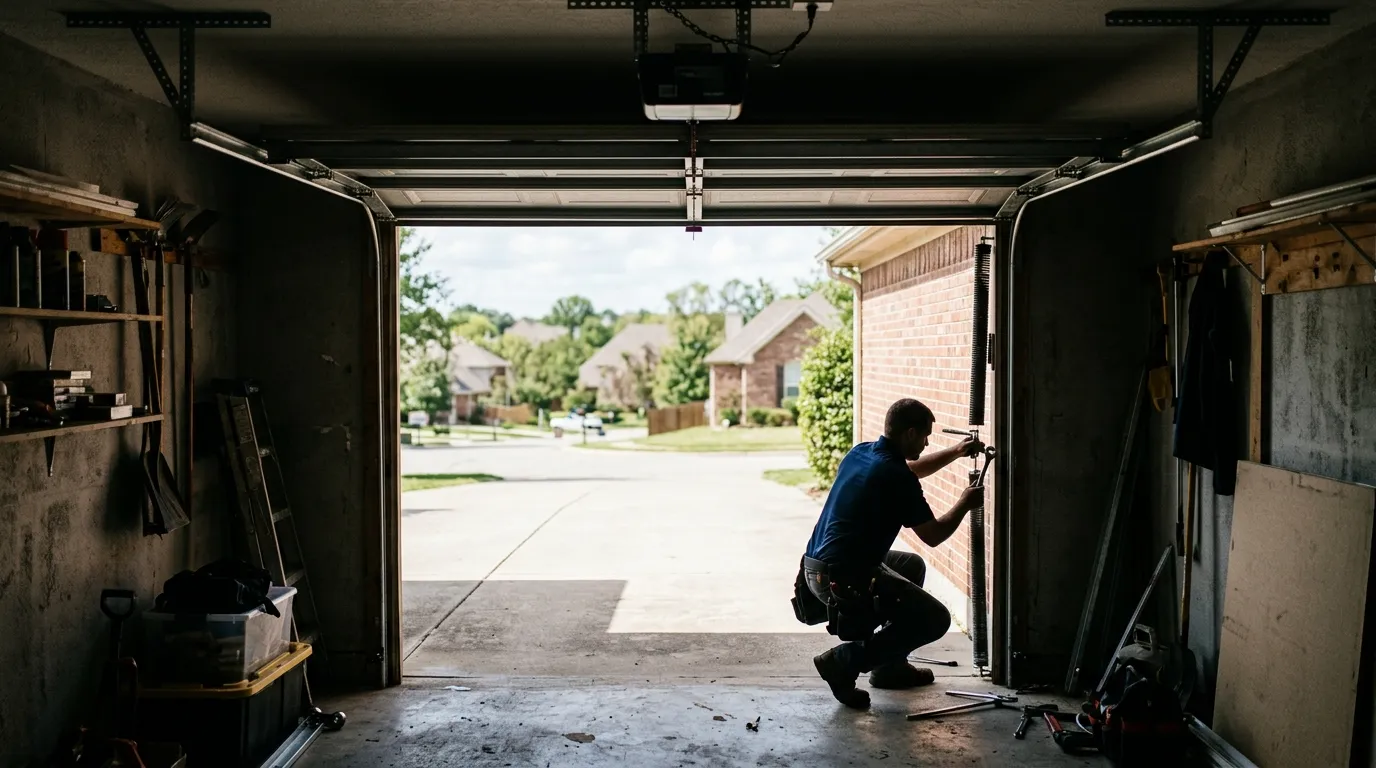
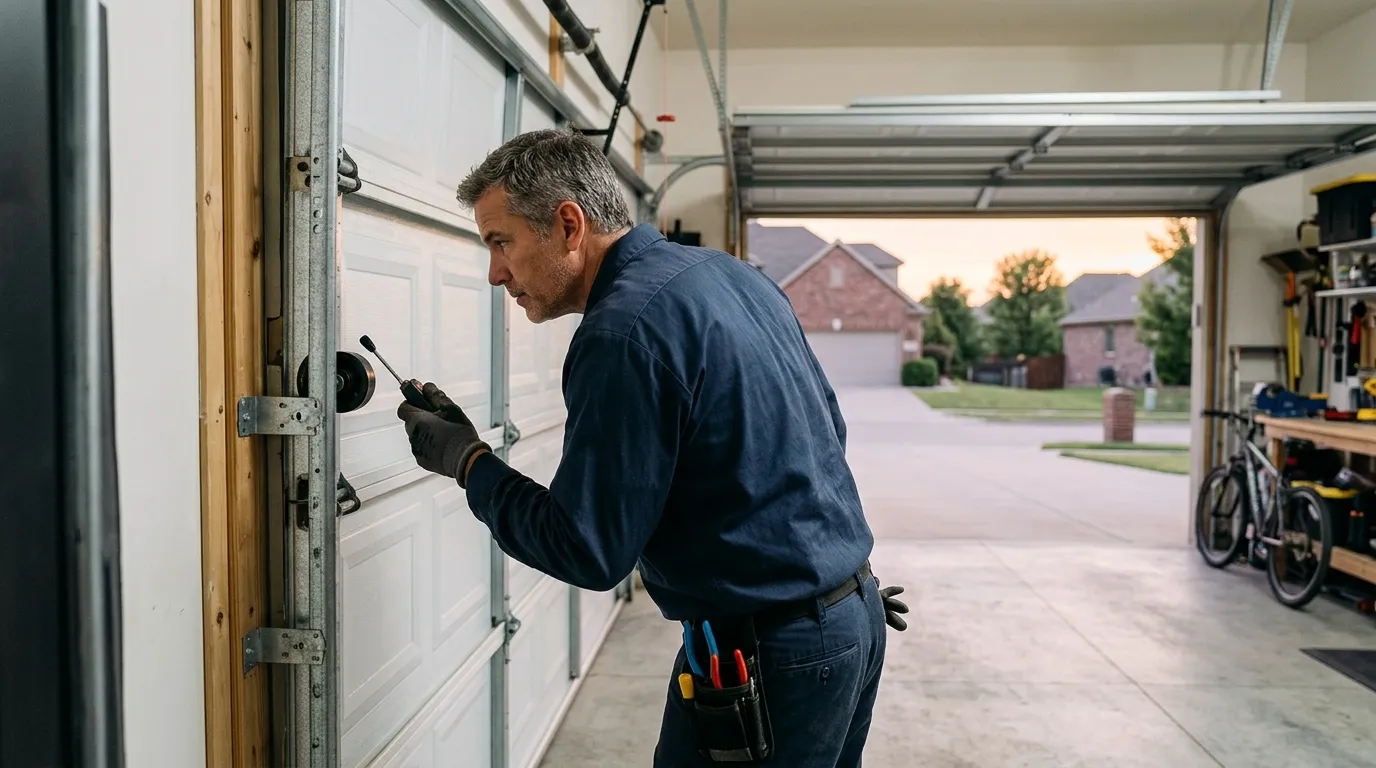
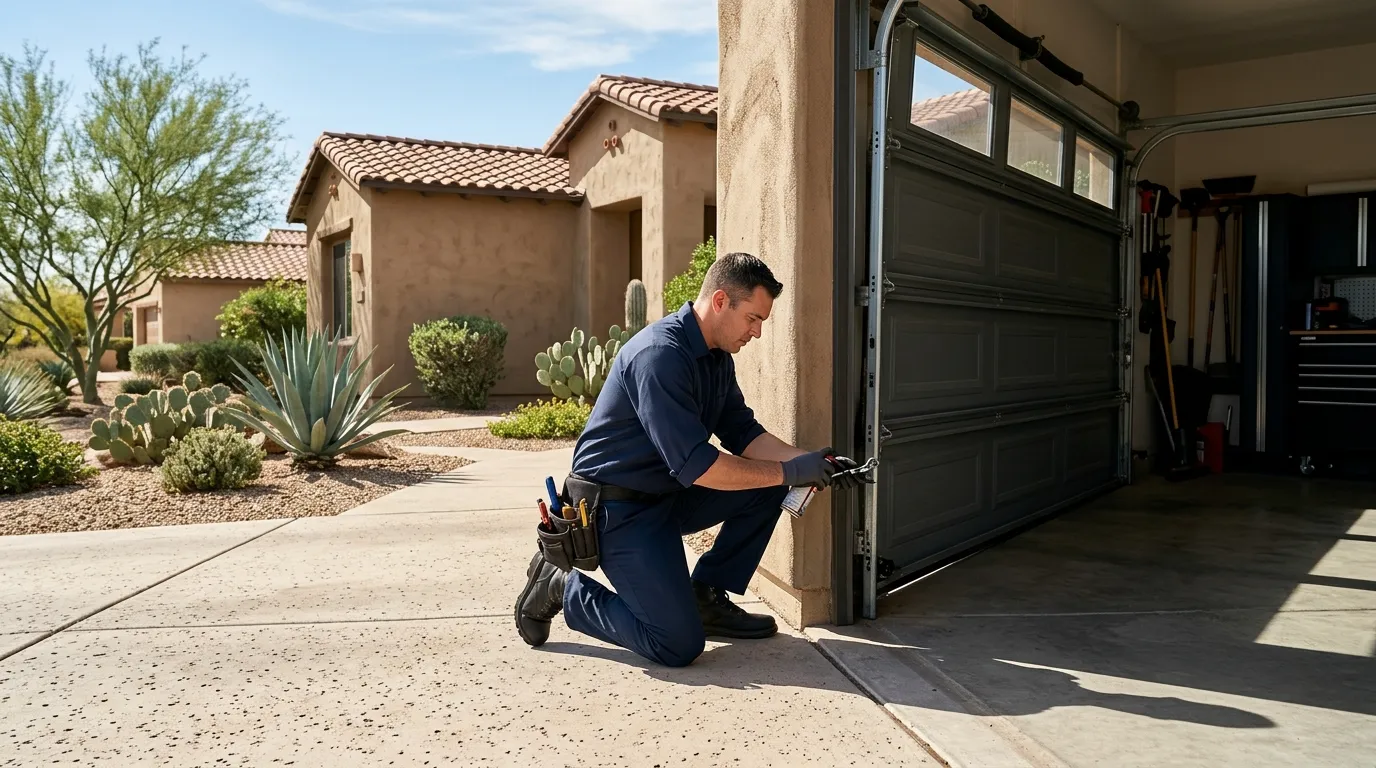
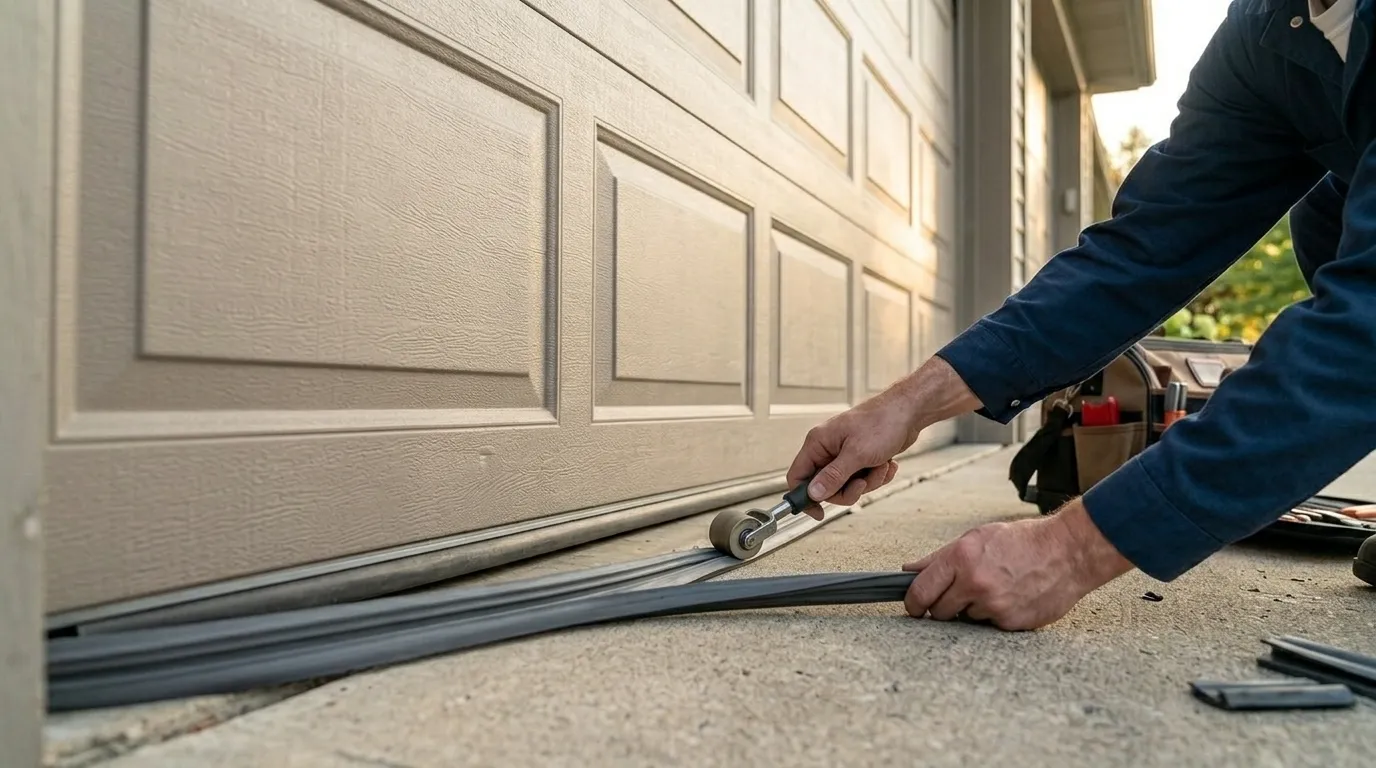
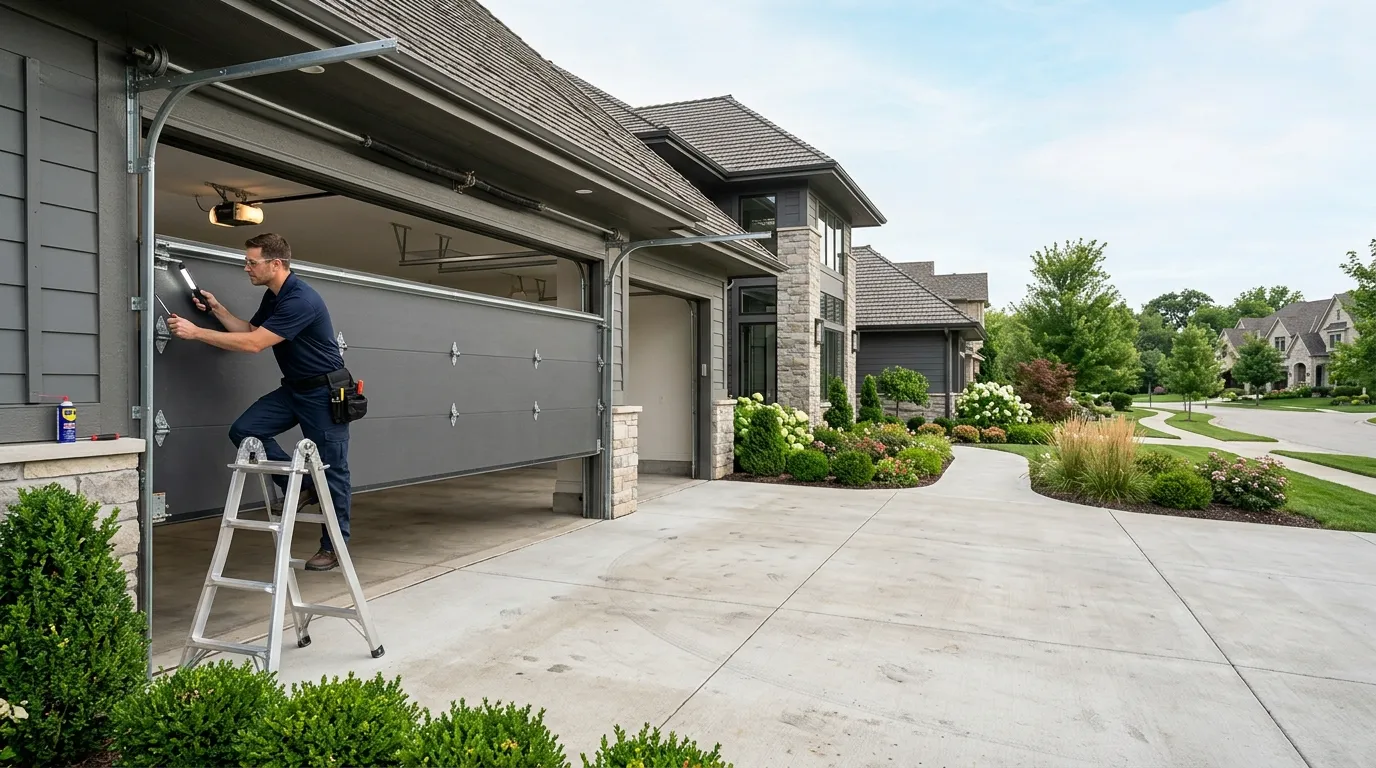
Once we know what we're working with, the job is: unbolt the damaged panel from the hinges and track rollers, support the rest of the door so it doesn't rack out of square, set the new or matched panel, rebolt hinges and rollers, and check that the door still travels straight on both tracks. On doors with the original torsion spring setup, we check spring tension and cable wear while we're in there, since a panel swap is a bad time to find out the springs are the next thing to go.