Hialeah's median household income sits below the Miami-Dade average, and that changes the repair-or-replace call on a broken spring or bent track fast.
Hialeah's median household income is $53,079, well under the $71,020 median across the wider service area. That gap matters the moment a spring snaps, because it decides whether a repair makes sense or a full door swap does instead. On a door installed when the house was built, torsion hardware sized for a builder-grade panel from the 1960s or 70s often still works fine once the spring or cable is replaced - there's no reason to pay for a new door when the track and opener underneath are sound.
What you can safely do yourself: reset photo-eye sensors that have drifted out of alignment, clear the track of debris, and check that the manual release cord isn't jammed. What you should not do: touch a wound torsion spring, pull a cable under tension, or force a door that's binding on a bent track. A door under spring load can put someone in the hospital, and on the older torsion setups common to this housing stock, the springs are wound tighter than most people expect. If the door won't move, or moves unevenly, that's a call, not a project.
Getting It Booked In
There's no Hialeah branch - the truck comes from Miami, about 9 miles out. That distance doesn't change what gets fixed, but it's worth knowing so you're not waiting on a crew that was never based here to begin with. Tell the dispatcher what the door is doing: won't open, opens partway and stops, came off the track, or the spring visibly broke. That detail decides what's loaded on the truck before it leaves.
If the job isn't a true emergency - a slow opener, a noisy roller, nothing that traps a car or leaves the door wide open - the standard install and repair page for this suburb covers routine work: Hialeah Garage Doors. For a rundown of what counts as an emergency call across the whole service area, see emergency garage door repair in Miami, FL.
What the Fix Involves
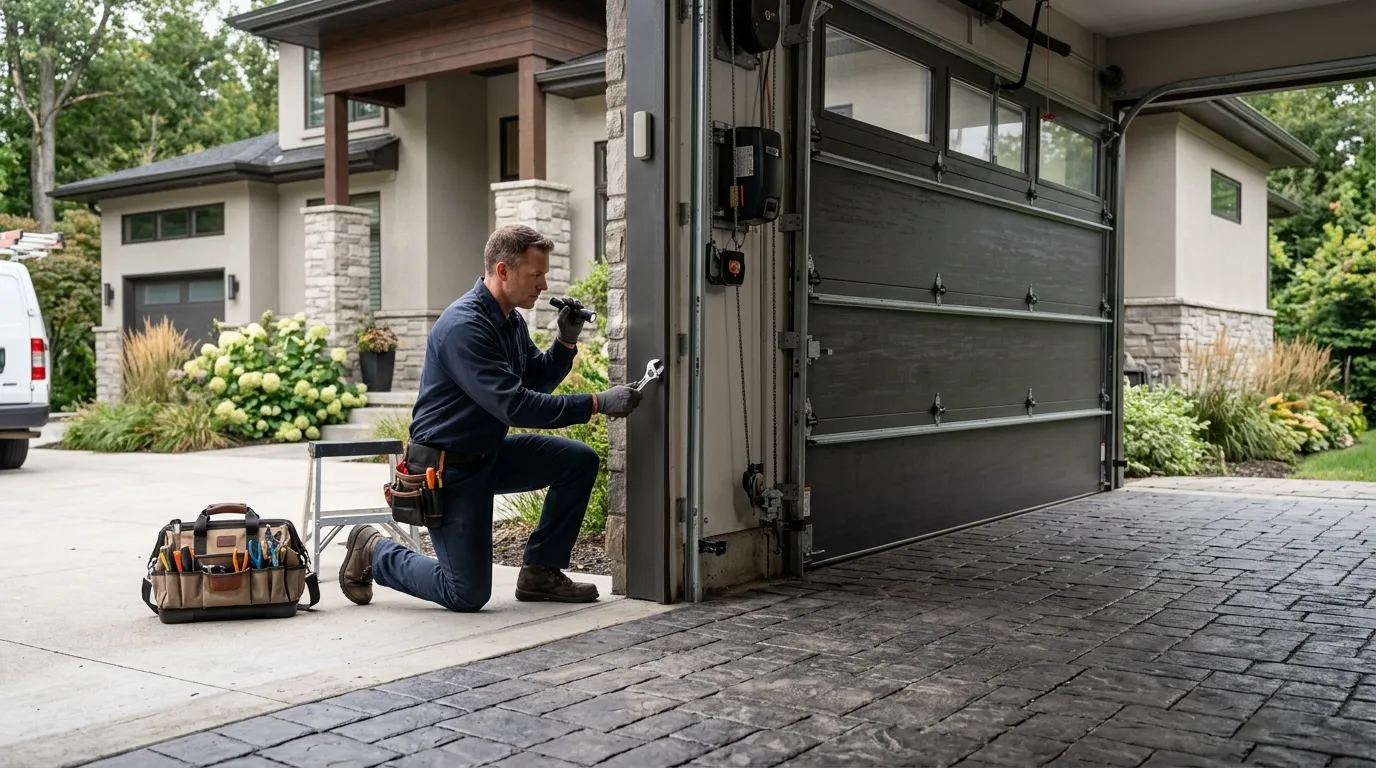
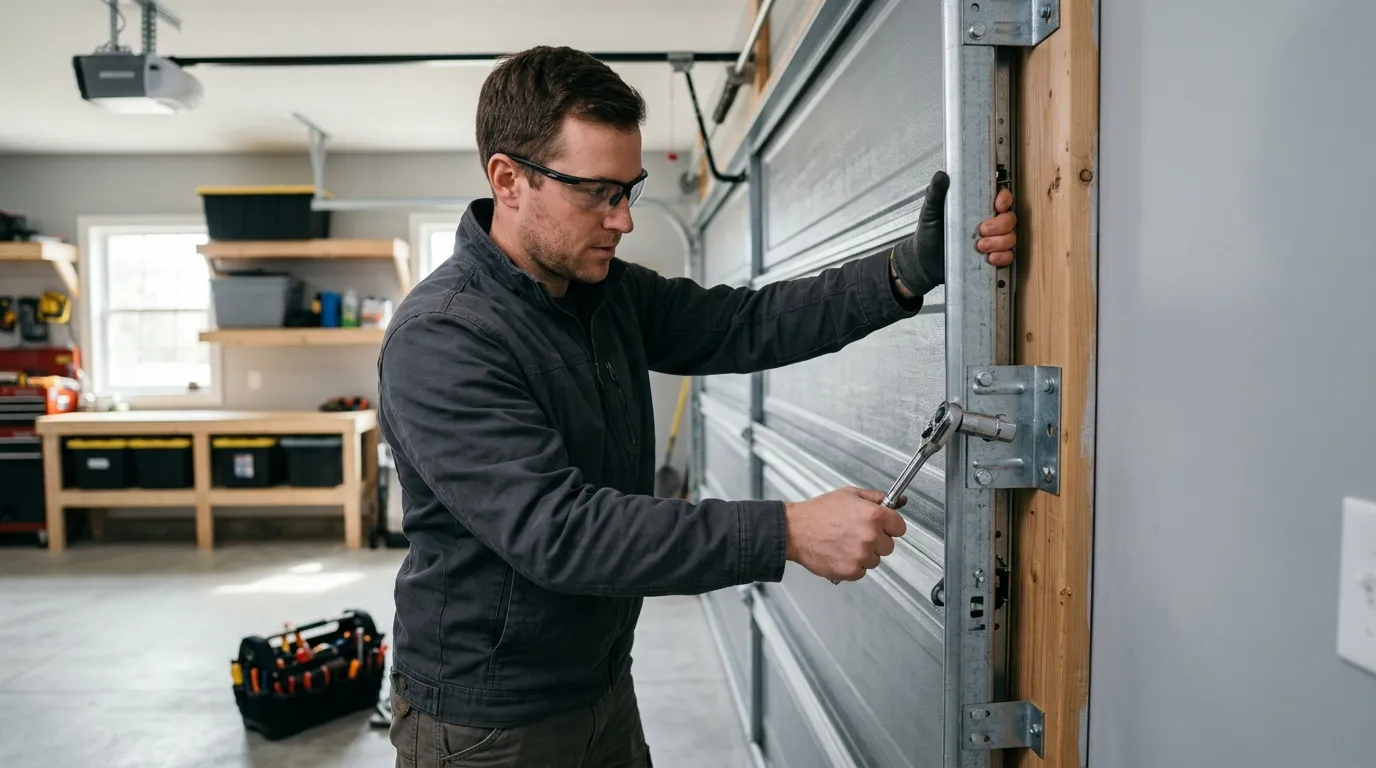
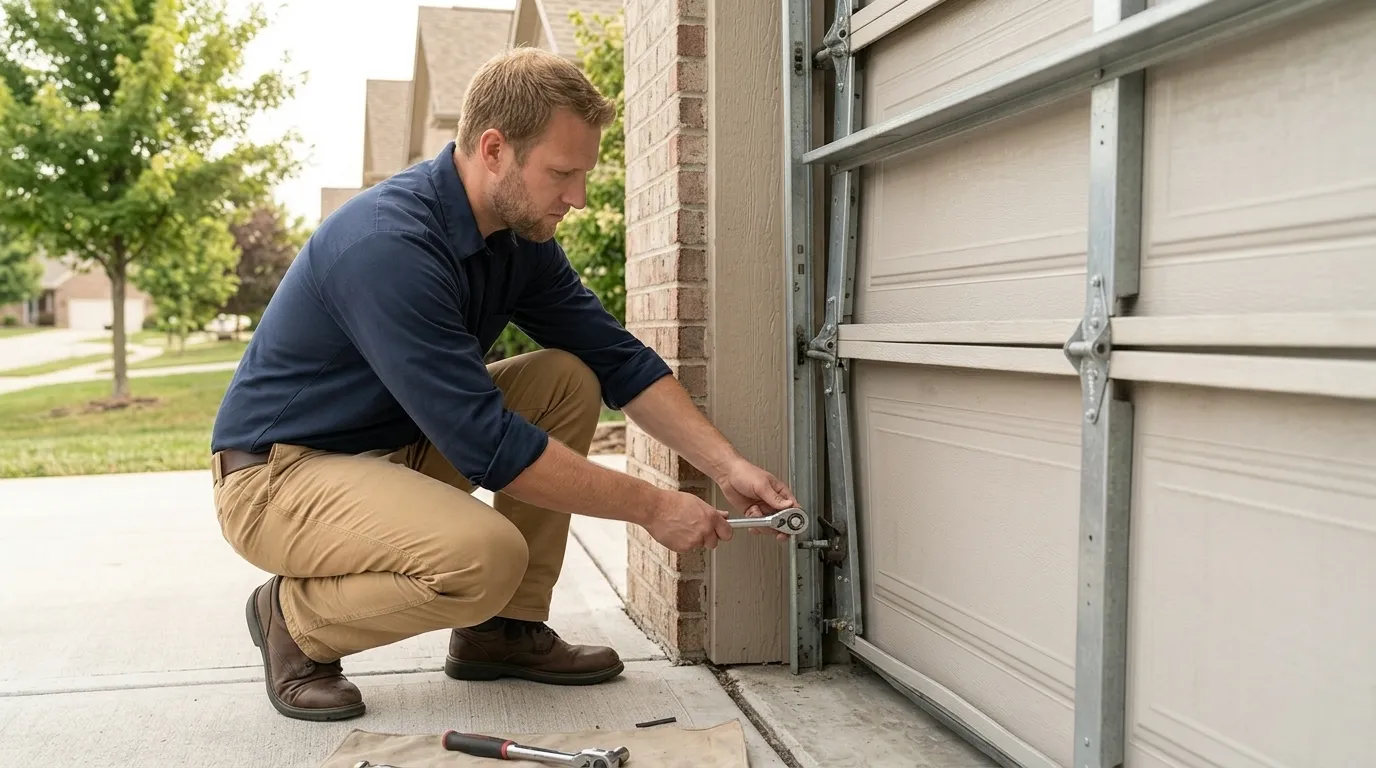
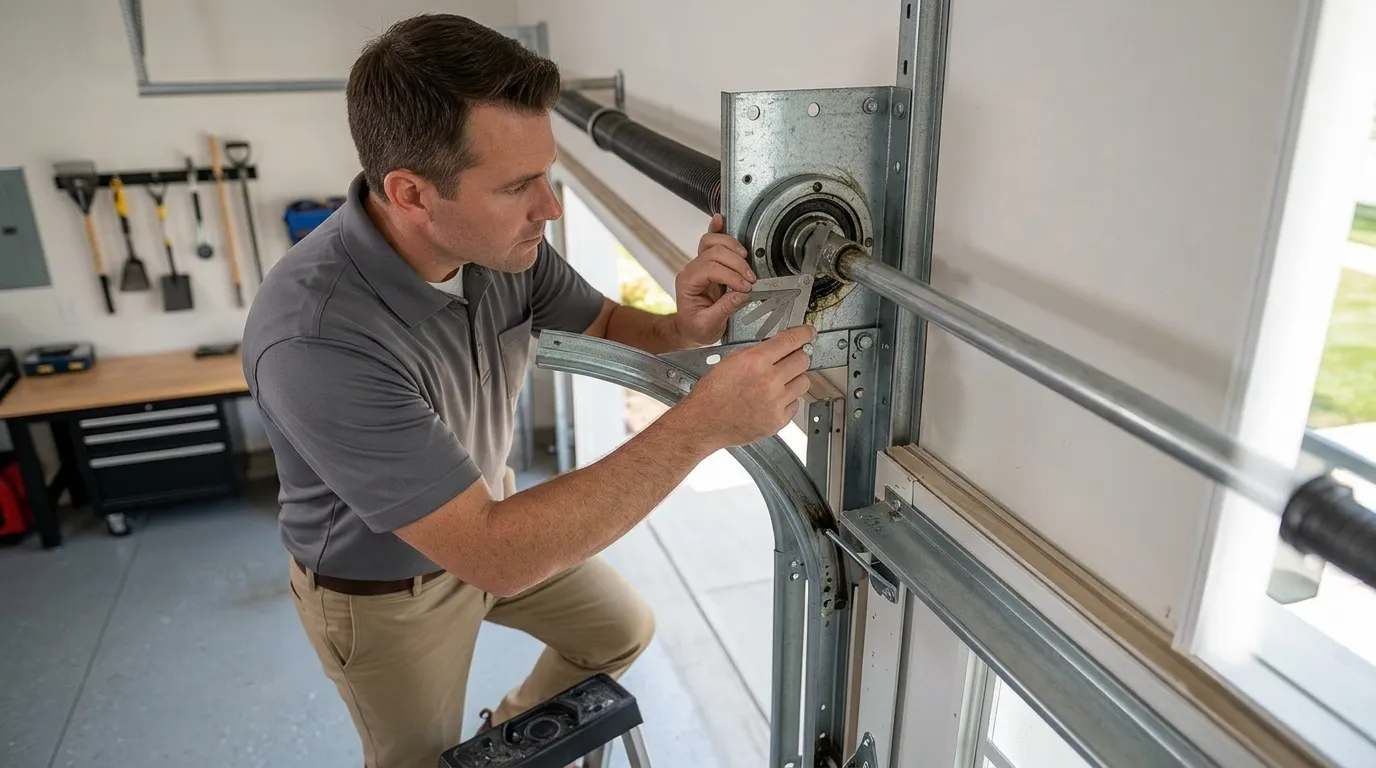
Houses in this part of the service area were mostly built in the 1960s and 70s, with a median build year around 1975. That means a lot of doors still running original torsion springs on side-mounted hardware, paired with openers that have been swapped out once or twice over the decades but bolted to brackets that were never upgraded. The fix on an emergency call is usually one of three things: a torsion spring replacement matched to the door's weight and drum size, a cable re-run after one strand frays and snaps, or a track realignment after a car clips the door or a roller jumps the rail.
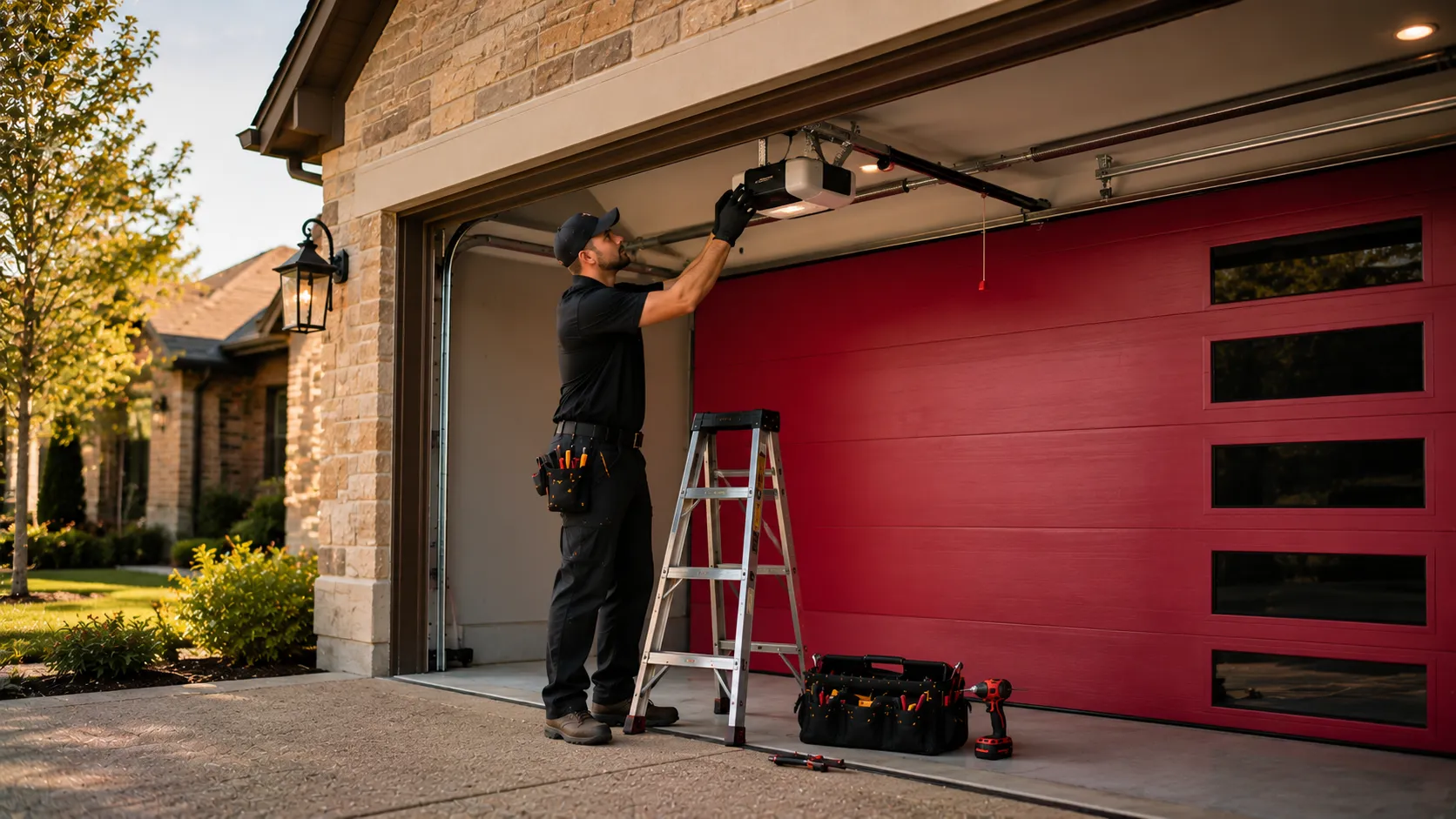
On openers from that era, the failure is often the logic board rather than the motor - the motor still has torque, but the board stops sending a clean signal to reverse or stop. We test the board and the safety sensors before assuming the motor's the problem, because replacing a motor that was never the fault wastes your money. Not every fix is a same-visit job - if a part has to be ordered for a discontinued opener model, we'll say so up front rather than promise a timeline we can't hold to.
What Can Go Wrong
A door left hanging on one cable doesn't stay put - it drops, usually fast, and usually when someone's underneath reaching for the manual release. That's the real emergency, more than a door that's simply stuck shut. Waiting a day or two to fix a snapped cable, hoping the other side holds, is the most common way a repair job turns into a bigger one.
The mild temperate climate here means we're not dealing with the freeze-thaw cracking or ice-jammed tracks that cause failures further north - the wear on doors in this area comes from age and use, not weather extremes. That's a small mercy, but it doesn't mean these doors are low-risk. A torsion spring that's been under load since the house was built in the 1970s doesn't announce it's about to go. It just goes. If your opener has started reversing on its own or the door shudders partway up, that's the spring losing tension, not a sensor glitch - get it looked at before it lets go entirely.
How it works
From “it’s stuck” to “it’s fixed”
01
Tell us what’s wrong
Describe the symptom - won’t open, loud bang, opener runs but the door won’t move.
02
On-site diagnosis
A technician tests the door under power and by hand and finds what actually failed.
03
Clear, up-front plan
You get the fix that’s needed and what drives the cost - before any work starts.
04
Repaired & tested
The repair is done, the door is set true and tested, and the work area left clean.
Next step
Serving Miami, FL - tell us what your door’s doing and we’ll take it from there.
No. The truck runs out of Miami, about 9 miles away. There's no local branch or depot in Hialeah, so we won't claim a response time specific to this suburb - we can tell you what's needed and get it loaded on the truck, but the drive is part of every call here.
Is it worth replacing my whole door instead of fixing it?
Depends on the fault and the door's age, not a fixed rule. With median household income here at $53,079, most repairs on a sound door - spring, cable, track - cost far less than a full replacement. If the panels themselves are cracked or rusted through, that's a different conversation.
Why did my opener stop responding after the door got stuck?
On openers from houses built in the 1960s-70s range, the control board sometimes fails before the motor does. The motor still has torque but stops getting a clean signal. We check the board and safety sensors first rather than assuming the motor's shot.
Ready to get your garage door sorted?
Tell us what it’s doing and where you are in Miami - we’ll take it from there.