North Miami runs about 20,077 households on 1960s-era construction, 9 miles north of our shop. Same-day emergency spring, opener, and track repair, dispatched from Miami.
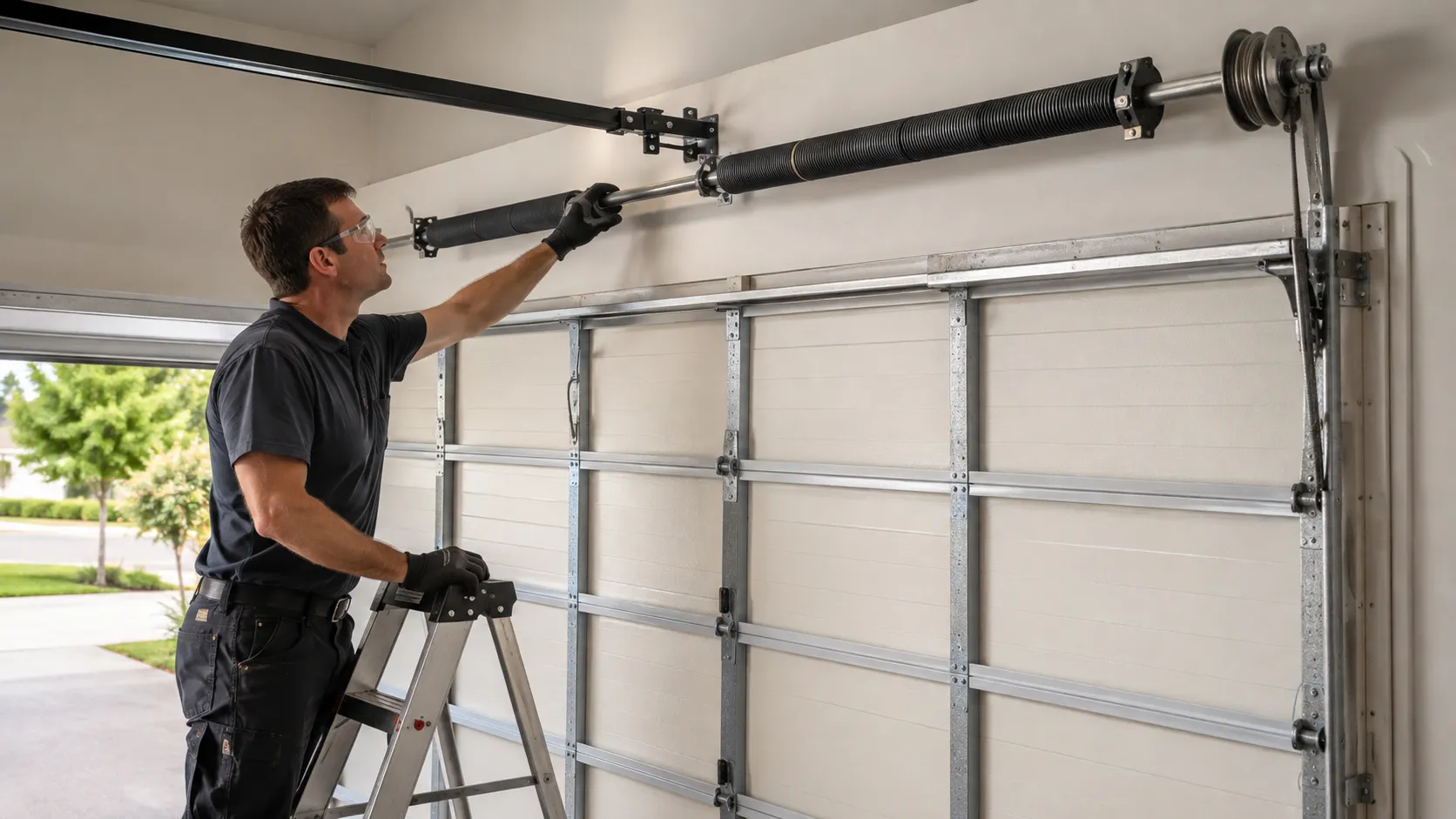
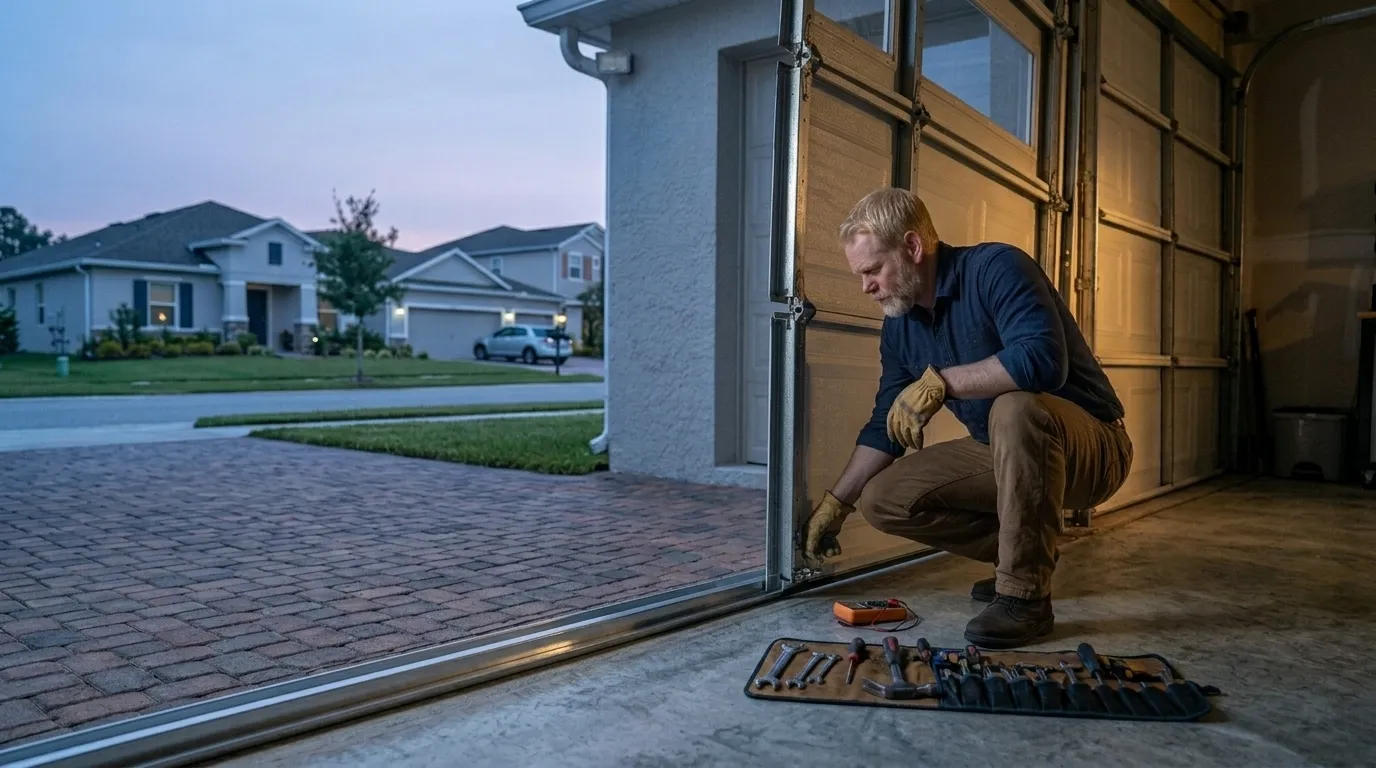
North Miami is a mid-sized suburb - 20,077 households, not a sprawling grid - so most of the doors we see here fall into a narrow band of ages and setups rather than a wide mix. That matters for what you can safely tackle yourself. A stuck door on a dead opener is often a simple fix: check the wall switch, check the breaker, pull the manual release and see if the door moves by hand. If it does, the opener's the problem, not the door. If the door won't budge by hand and one side looks lower than the other, that's a broken torsion spring, and it's not a DIY job. Torsion springs are wound under load high enough to snap a bone or worse. Same goes for a cable that's jumped its drum, or a bottom bracket that's pulled loose from the track. If you smell burning or hear a grinding opener motor, kill the power at the breaker before you do anything else. We'd rather talk you through what's safe over the phone than have you find out the hard way what a spring under tension can do.
How Long It Takes
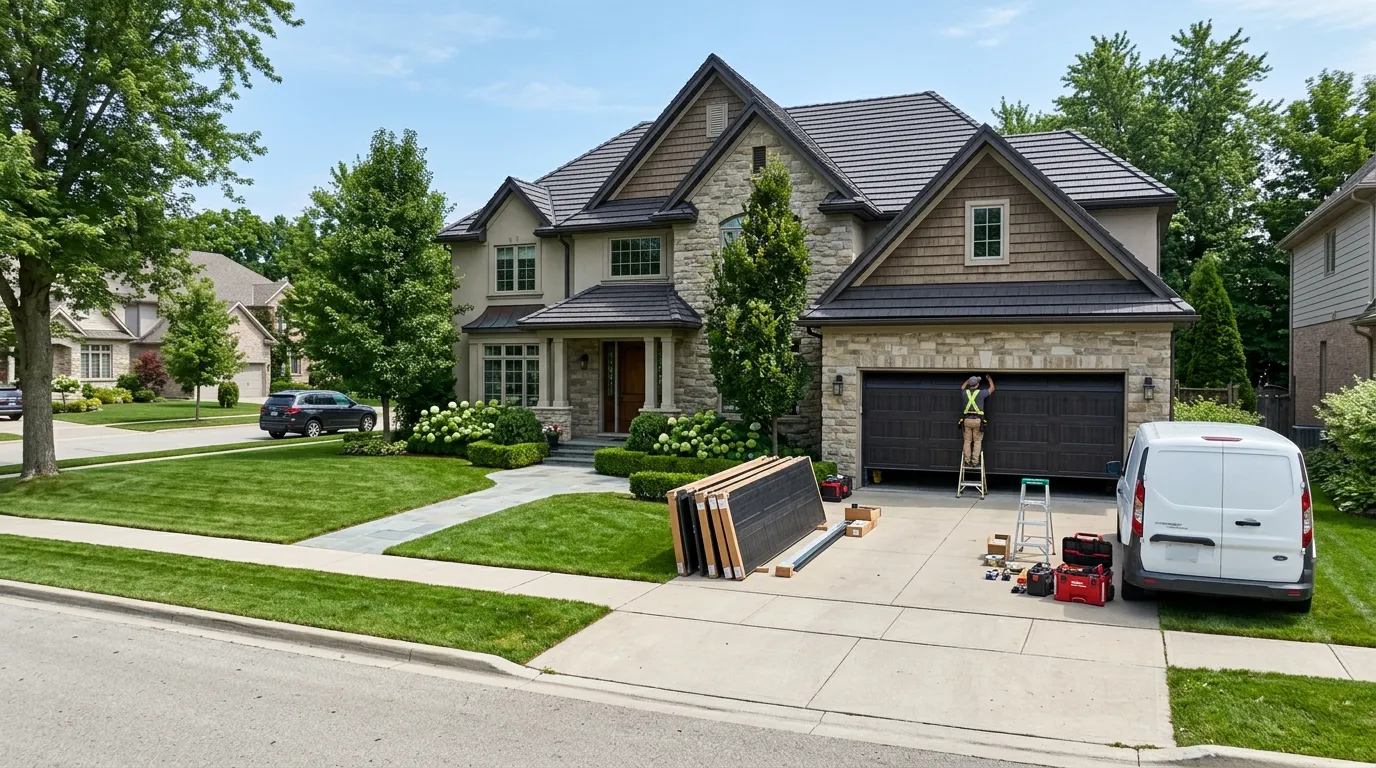
Most homes here went up around 1966, which puts North Miami squarely in the same building wave as a lot of the surrounding suburbs - older torsion setups, single-panel steel doors that have been through a few opener swaps since. A straightforward spring replacement or cable job on a door that age usually runs under two hours once a truck is on site. Track realignment or a bent panel takes longer if the door's an odd width, which shows up more in this era of construction than in newer subdivisions. We come from Miami, about 9 miles south, so factor that drive into when you call - we don't keep a branch in North Miami, and we won't tell you otherwise. What we can tell you is that once we're at the house, the repair itself is rarely the long part of the visit; diagnosing what a homeowner already tried to fix usually takes longer than fixing it.
Why This Fails Locally
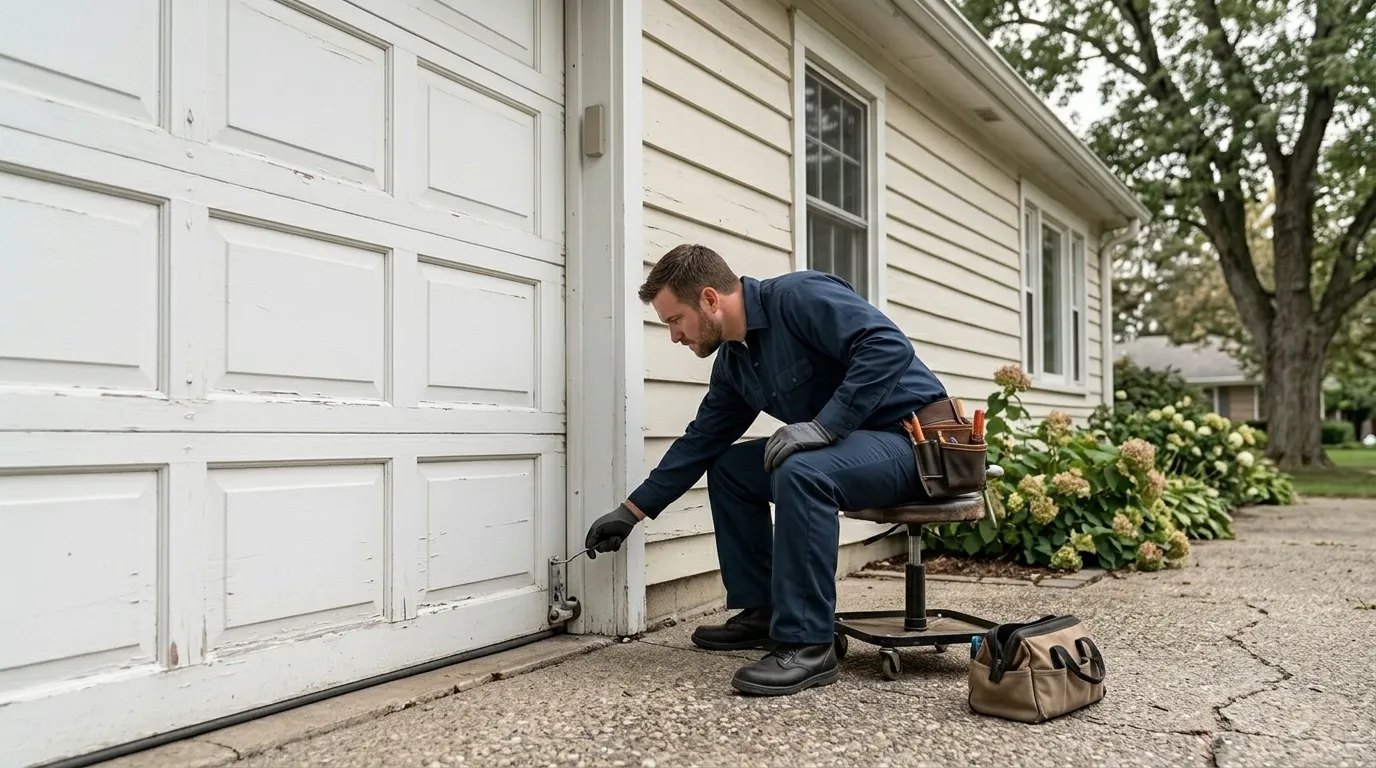
A house built in 1966 has had roughly six decades to accumulate hardware nobody's touched - the original torsion spring, maybe a second or third opener bolted onto brackets that were never resized for it. Mild coastal temperate air doesn't freeze anything here, but it does mean steady humidity and salt-tinged air working on springs and cables year-round, not seasonal wear that shows up once and stops. That's a slower, quieter failure mode than what you'd get somewhere with hard freezes - no dramatic cracking, just a spring that gradually loses tension until one morning it lets go. On a street of similarly aged houses, we see the same failure pattern repeat door to door: original torsion hardware nobody's replaced, wound to a spec from fifty-plus years ago, finally giving out. That's the fault we're usually diagnosing when a call comes in from this part of the service area - not a fresh install gone wrong, but old hardware finally done.
The Cost of This Job
North Miami's median household income sits at $51,909, noticeably below the wider service area's $71,020 - worth naming because it shapes the calls we get. A lot of homeowners here ask us to repair before they'll consider replacing, and on a door from the 1960s-70s stock, that's often the right call: a spring or cable swap on a sound panel is a fraction of the cost of a new door and opener. Where repair stops making sense is when the panel itself is rusted through or the track's been bent past straightening - at that point you're paying to patch something that'll fail again in a year. We don't have a set price to quote here without seeing the door, and we won't invent one. What we will say is that we diagnose before we quote, and if replacement is genuinely cheaper over five years than repeated repair, we'll tell you that instead of running up a bill.
How it works
From “it’s stuck” to “it’s fixed”
01
Tell us what’s wrong
Describe the symptom - won’t open, loud bang, opener runs but the door won’t move.
02
On-site diagnosis
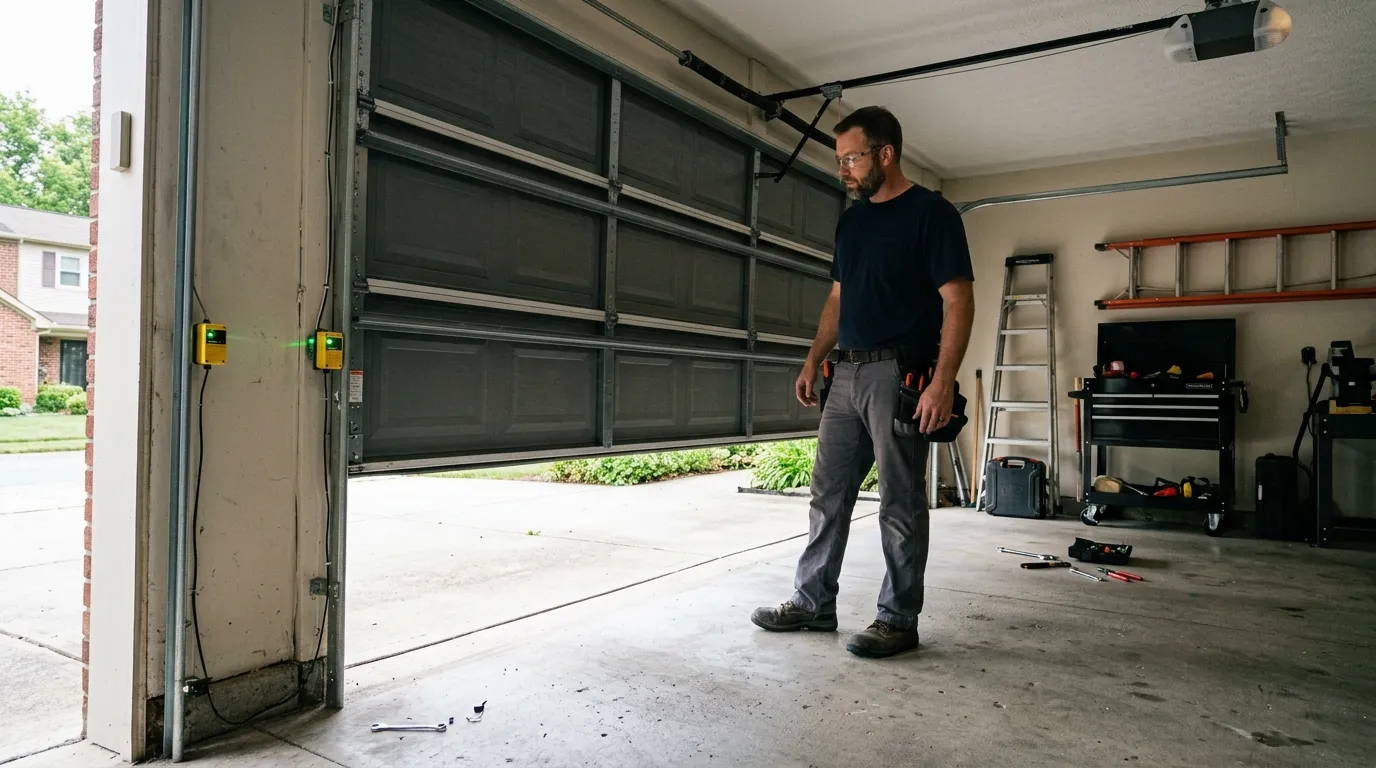
A technician tests the door under power and by hand and finds what actually failed.
03
Clear, up-front plan
You get the fix that’s needed and what drives the cost - before any work starts.
04
Repaired & tested
The repair is done, the door is set true and tested, and the work area left clean.
Next step
Serving Miami, FL - tell us what your door’s doing and we’ll take it from there.
No. We run out of Miami, about 9 miles south, and dispatch trucks out to North Miami for emergency calls. We're not going to claim a local depot we don't have - you'll get a truck from Miami, same as the rest of the service area gets.
What's the most common emergency call from North Miami?
A broken torsion spring on an older door. Most houses here date to the mid-1960s, and original hardware from that era is reaching the end of its working life across the neighborhood, not just at one address.
Is it ever too humid or salty here to matter for garage doors?
The mild coastal climate doesn't bring freeze damage, but steady humidity and salt air do wear on unprotected springs and cables over the decades, which is part of why older torsion hardware in this area tends to fail gradually rather than all at once.
Should I repair or replace an old door?
If the panel and track are sound, repairing a spring, cable, or opener is usually cheaper than replacing the whole door - common with 1960s-70s stock. If the panel's rusted through or the track is bent, replacement is often the better spend.
Ready to get your garage door sorted?
Tell us what it’s doing and where you are in Miami - we’ll take it from there.