What Can Go Wrong
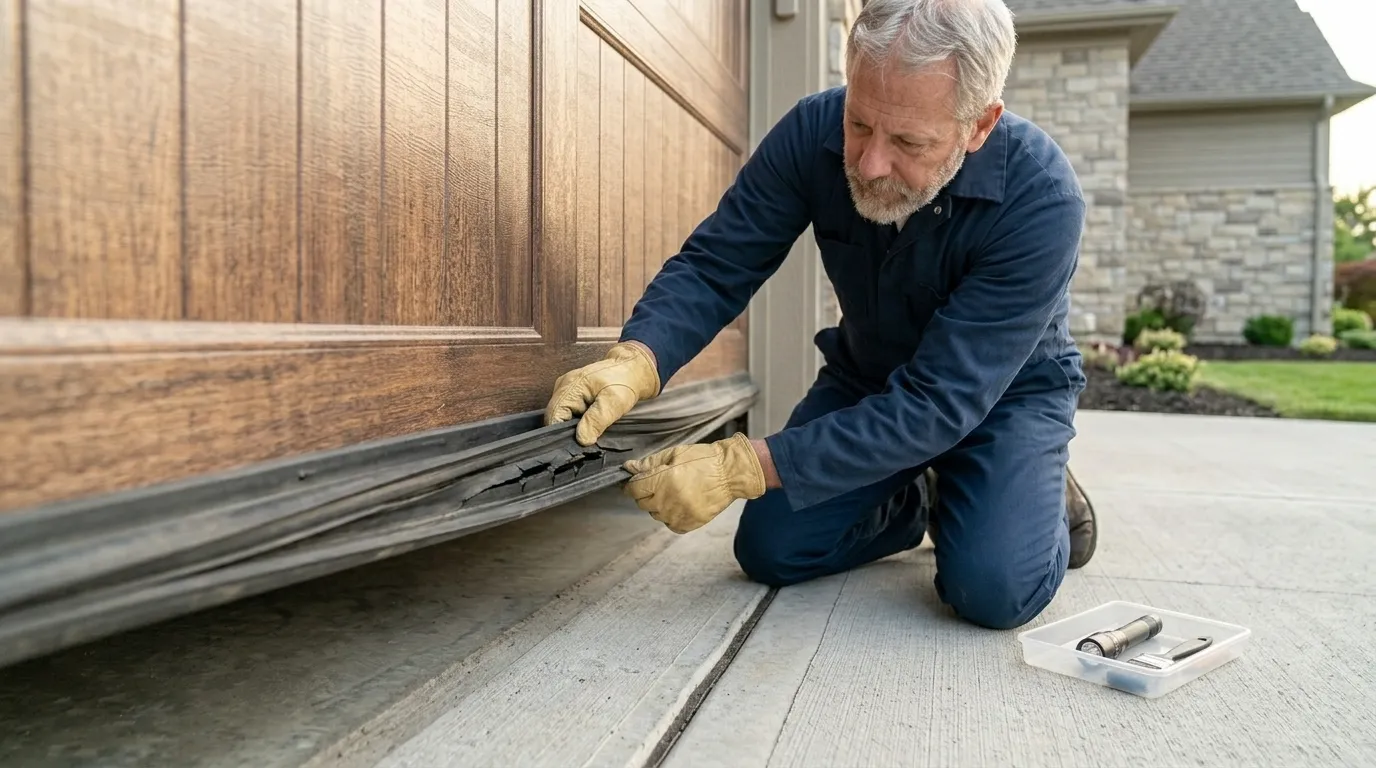
With a median build year of 1976, the failure we see most in this part of the service area is a torsion spring that's simply outlived its rated cycle count, often paired with an opener that's a generation or two behind what's sold today. Cables fray at the drum end from decades of the same wrap point taking the load. Rollers that were steel from the factory - which was standard on doors from that era - grind against the track and chew up the edges over time, especially since this is a mild, temperate climate with no hard freeze-thaw to blame instead.
Palmetto Bay's household income runs well above the wider service area average, and we mention that only because it tends to mean the door itself was upgraded at some point even if the spring and track hardware behind it wasn't. We see plenty of newer insulated panels riding on 1970s-era torsion assemblies - the visible part got replaced, the part in the ceiling didn't. That mismatch is its own failure mode: newer, heavier panels putting more load on old springs than they were sized for.
The Cost of This Job
We don't have a set price to quote you here, and we'd rather say that than make one up. What drives the number on a Palmetto Bay call is usually the age mismatch above - if the spring, cable, and drums are original to a 1976-era build, we're often replacing the full hardware set rather than one part, because the parts left standing are close to the same age as the one that broke. A single cable swap on newer hardware costs less than a full spring-and-cable job on a door where everything's original. We'll tell you which one you've got before we start, not after.
What the Fix Involves
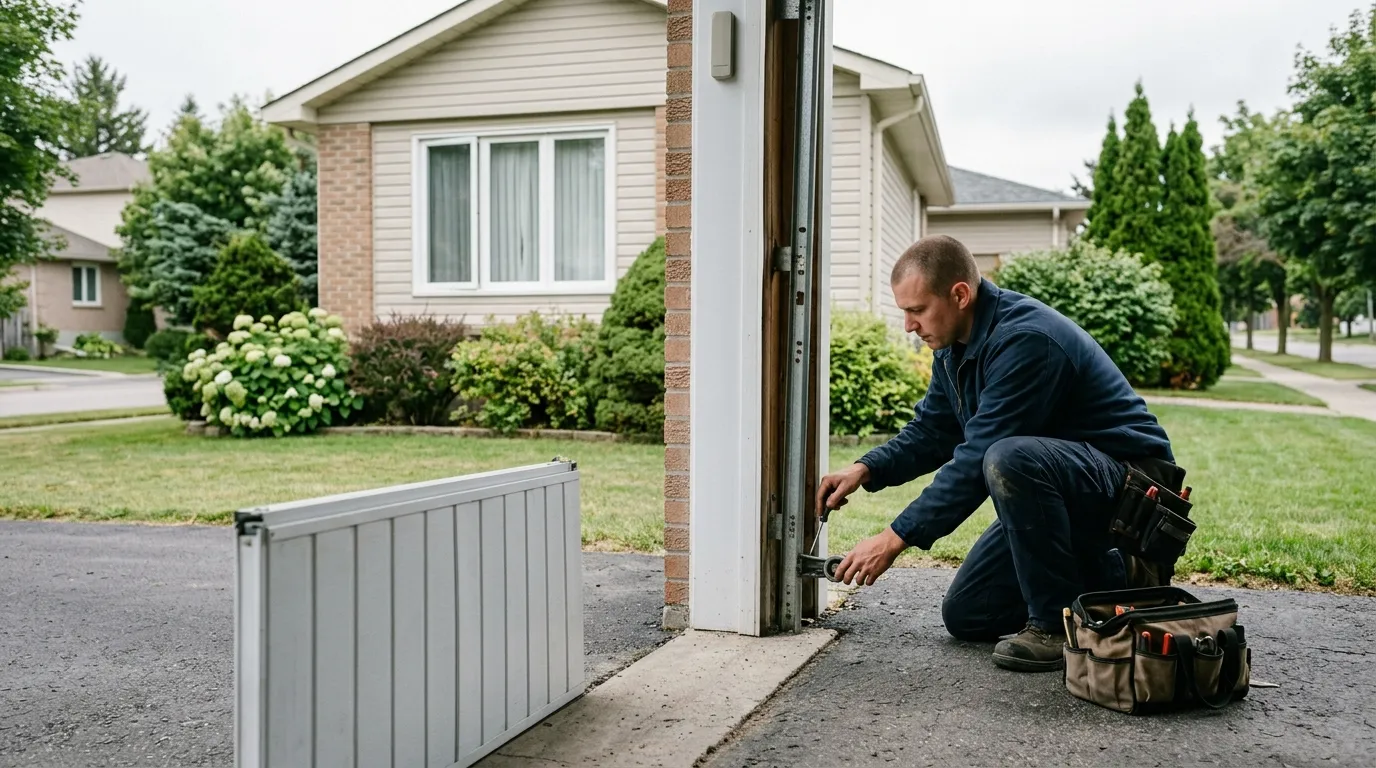
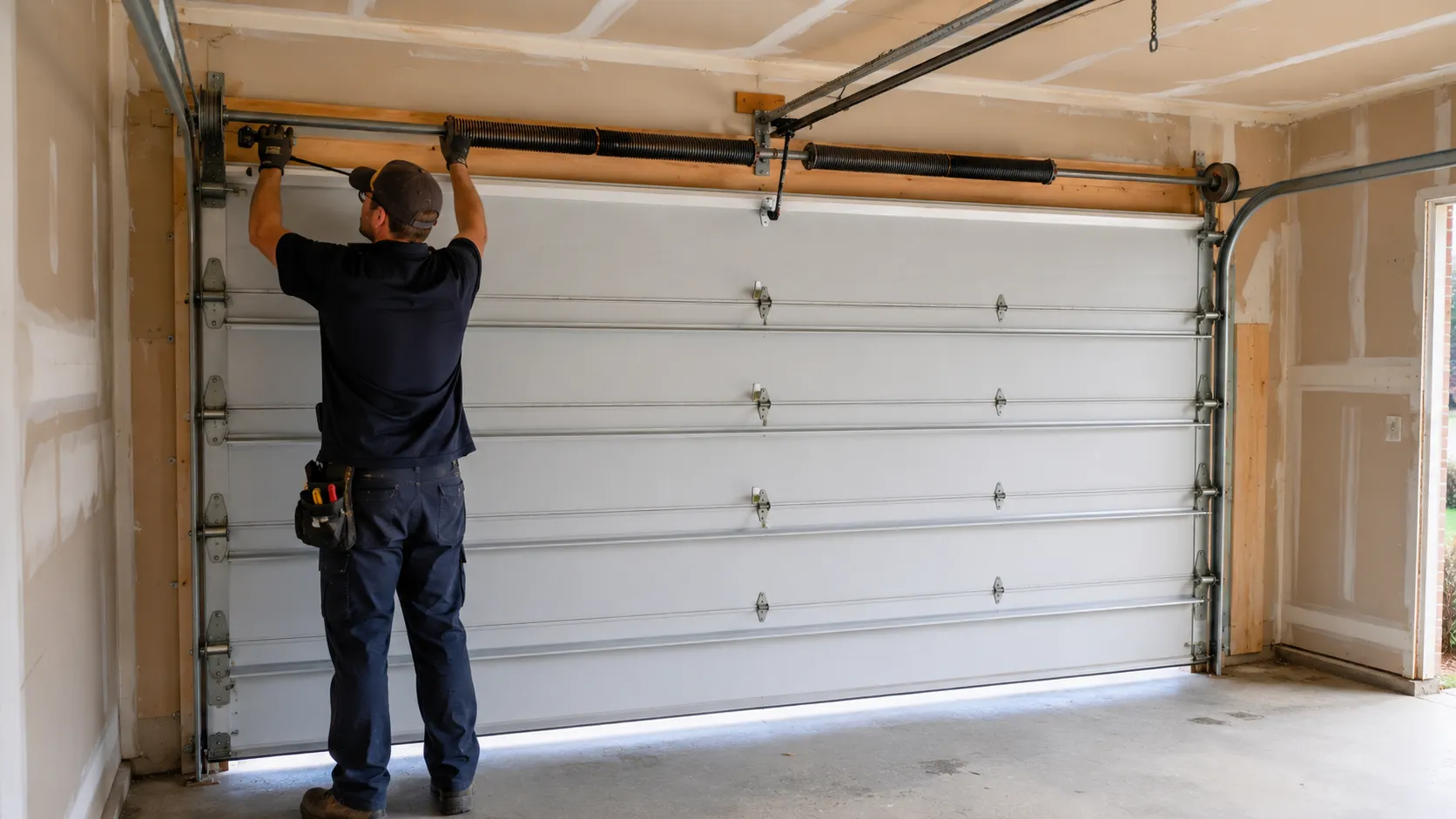
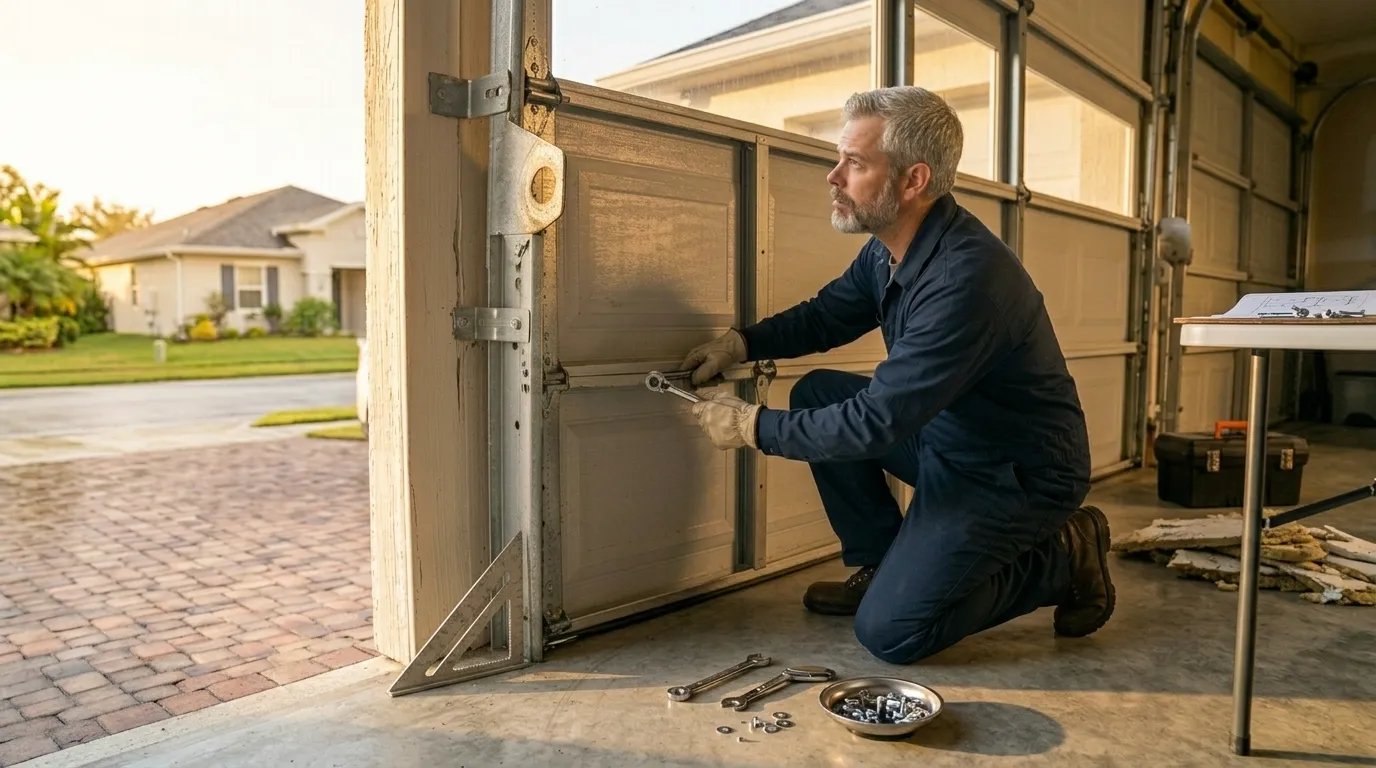
On a door with original 1976-era hardware, the job usually starts with unwinding what's left of the tension safely, which on old torsion hardware means using the right size bar and knowing the winding cone hasn't corroded or stripped. From there we're checking the drums, the cable anchors, and the track alignment, because on a door this old it's rarely just the one part that failed - the rest of the assembly has the same mileage on it. We replace what's actually worn, not the whole door, unless the panel itself is failing separately from the hardware. Given the mild climate here, rust isn't usually the driver of failure the way it would be somewhere with real winters; it's straight fatigue from cycle count.
How Long It Takes
We're coming from Miami, roughly 13 miles to Palmetto Bay, so factor that into when we can be at the door - we won't promise a same-hour arrival we can't back up. Once a tech is on site, a straightforward spring or cable replacement on a residential door is typically a same-visit fix. Full hardware sets on original 1970s installs take longer because there's more to inspect and more parts on the truck to match to what's there. If a part isn't something we carry standard, that's the one delay we'll tell you about up front rather than let you find out on the day.