What Is on the Truck
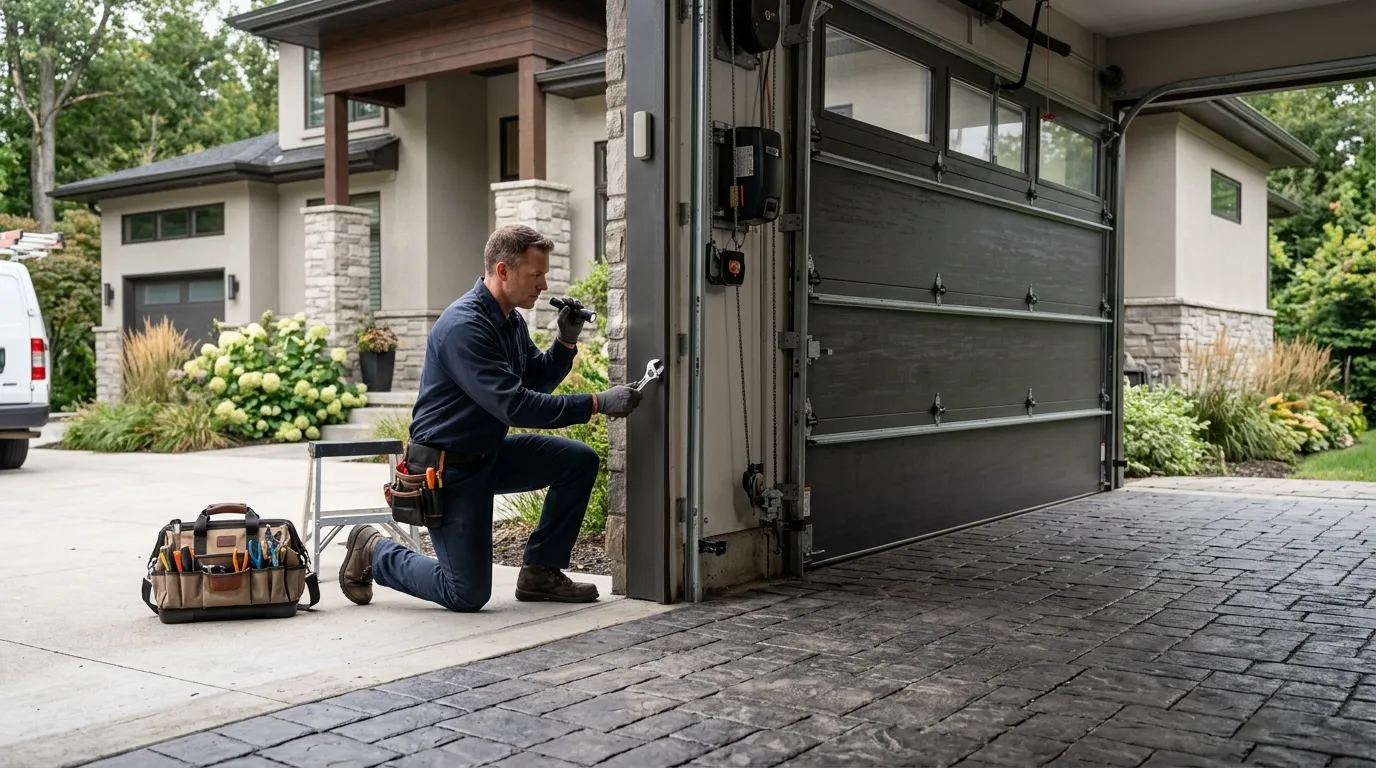
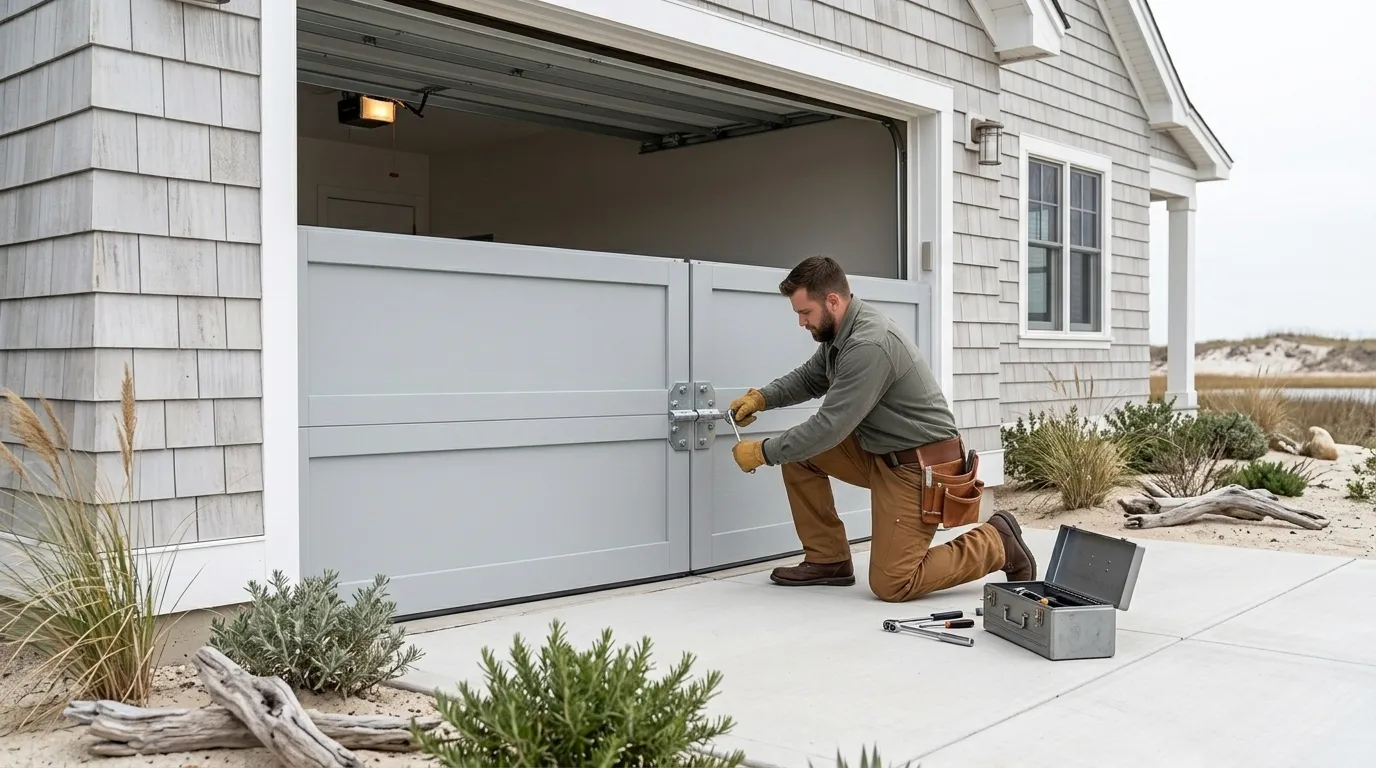
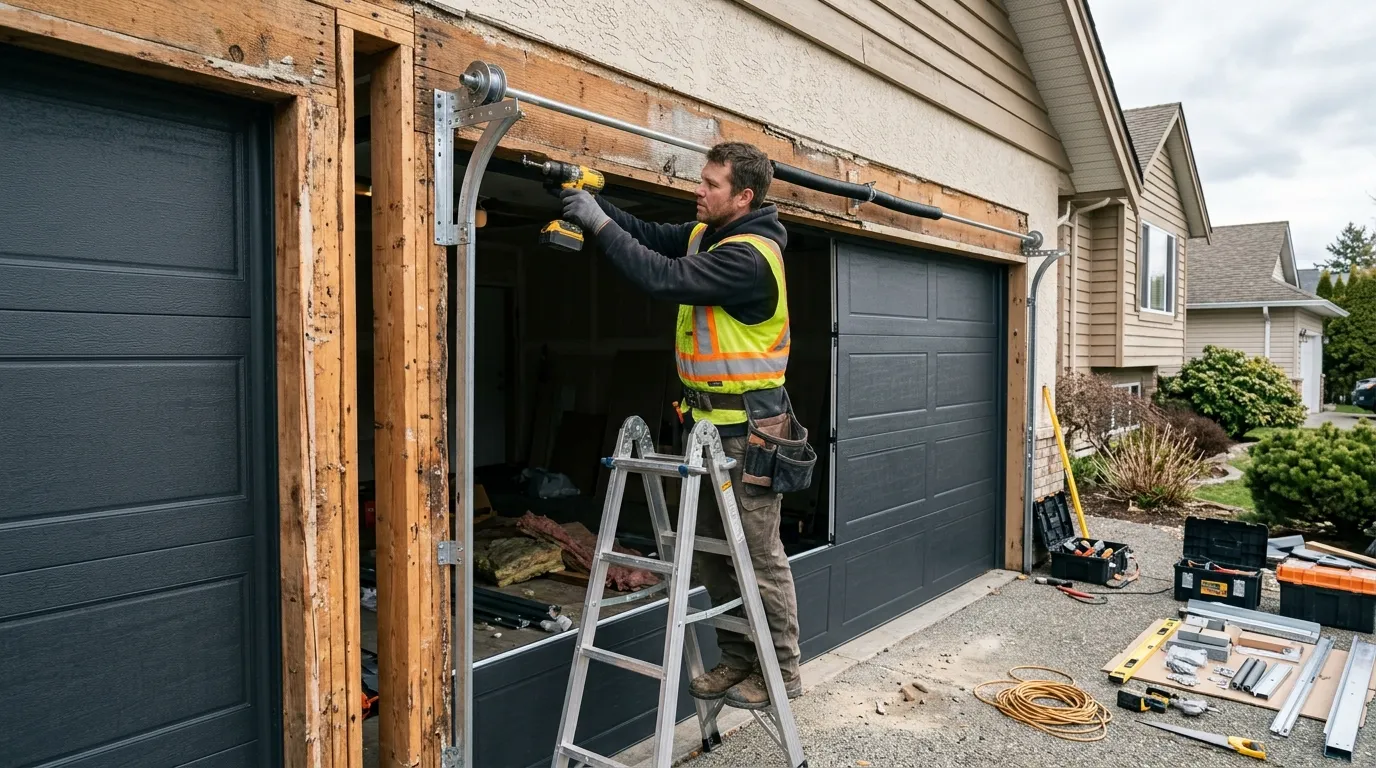
For an off-track call, the truck carries replacement rollers in both nylon and steel, hinge sets, track sections in the standard widths, and the fasteners and lag screws that hold a track to a jamb that's had 55-plus years to settle. We also carry cable and standard torsion springs, because an off-track door and a broken spring show up together often enough that we stock for it rather than making a second trip. What we don't carry is a full stock of the widest custom track profiles some architectural doors around Coral Gables were fitted with - if your door falls into that category, we'll tell you on site rather than guess and leave with the wrong part.
What Can Go Wrong
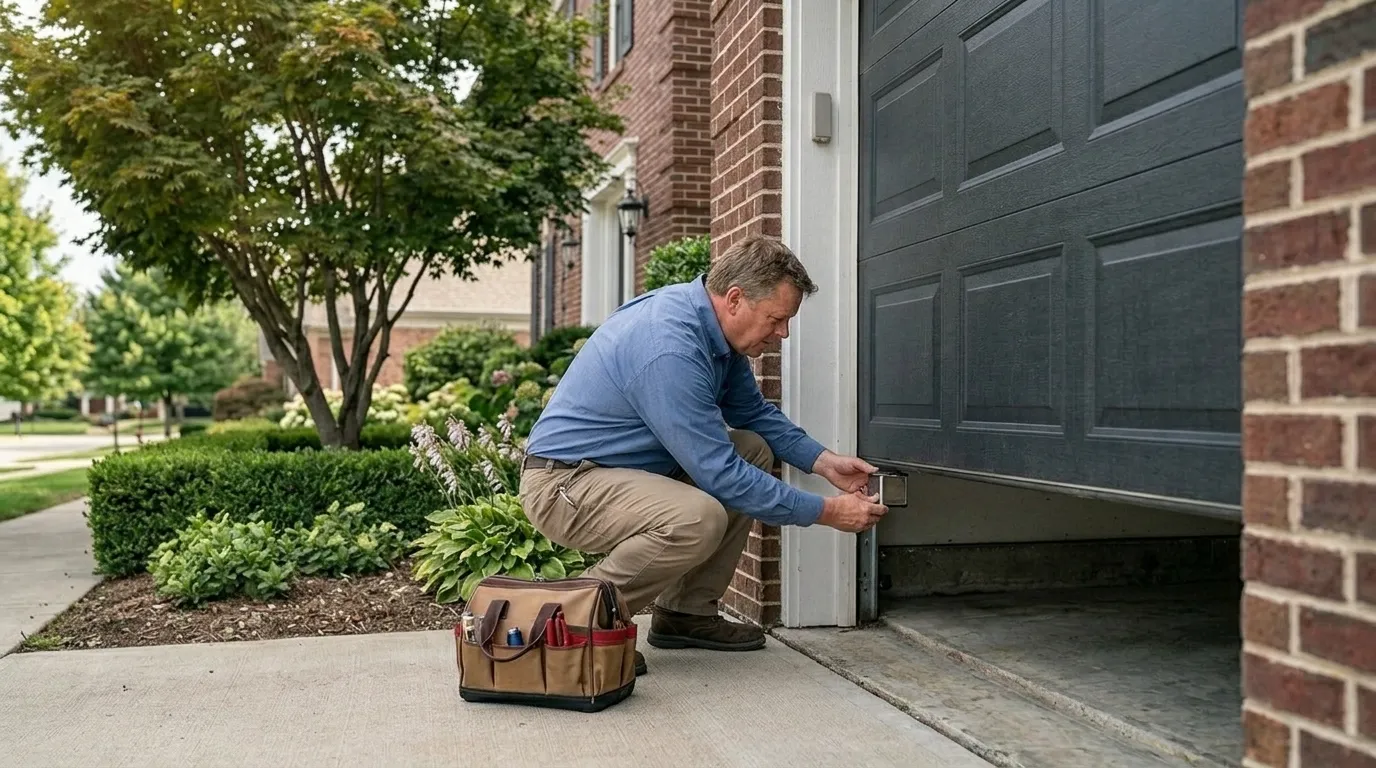
An off-track door usually means one of three things: a roller has worn through and jumped the track, the track itself has bent or pulled away from the jamb, or the door was struck and knocked sideways hard enough to bind against the hardware. On the older end of Coral Gables' housing stock - homes going up around the 1968 median build year - the track brackets were often fastened directly into wood framing that's since dried, shrunk, and loosened its grip on the lag screws. That loosening is slow and invisible until the day a roller finally rides off the rail. Left alone, an off-track door will keep chewing at the same weak point every time it's opened, widening the gap until the track bends permanently and the door won't seal or close square at all.
Can You Do This Yourself
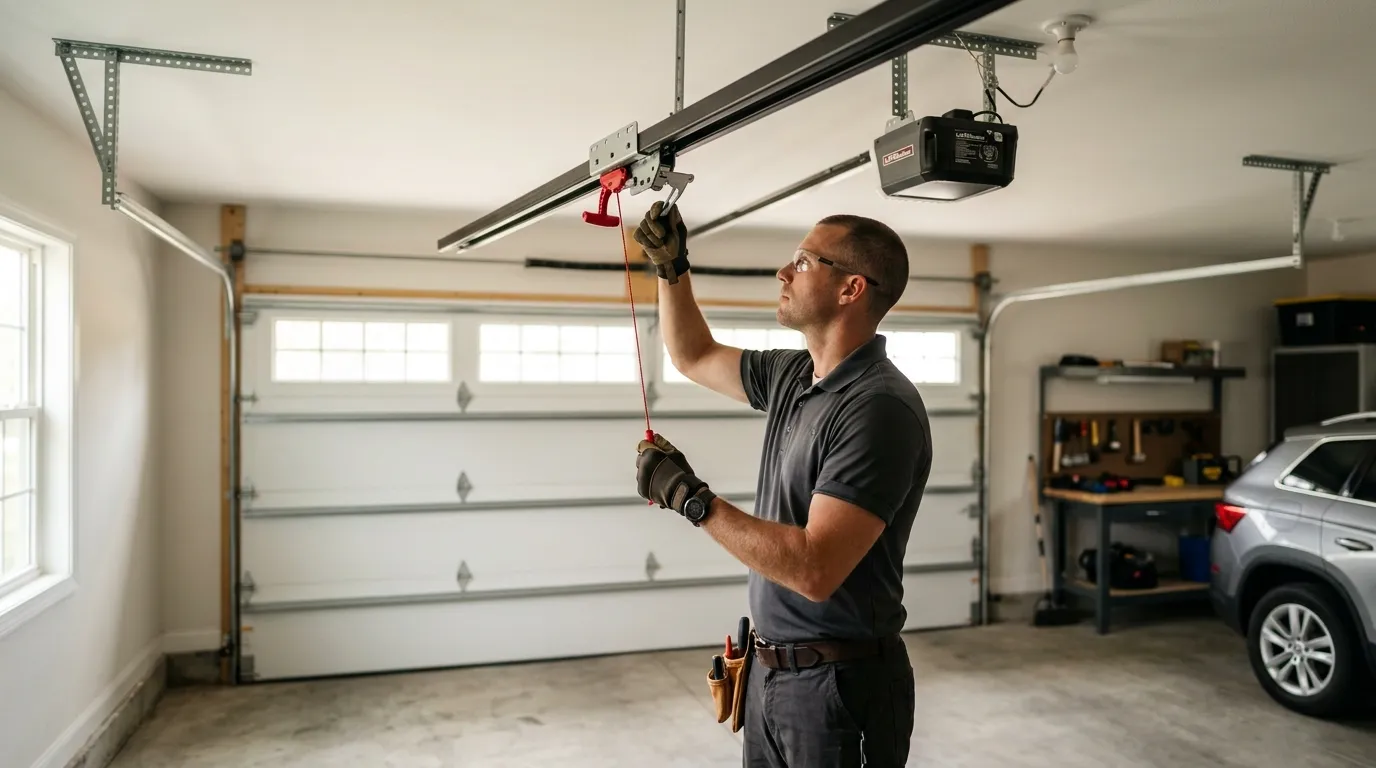
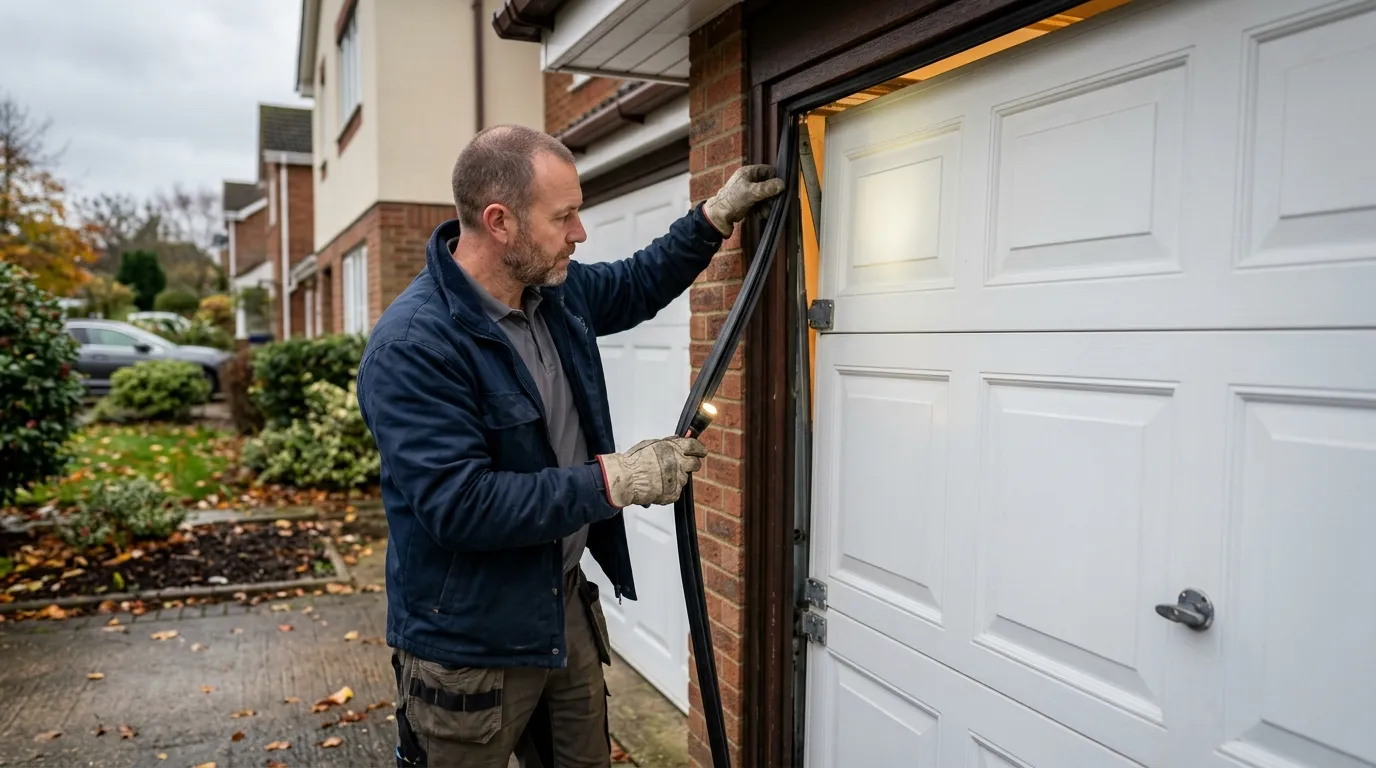
Re-seating a door that's popped one roller off a straight run of track is within reach for a careful homeowner with the door disconnected from the opener and the springs left alone. Bent track, a door that's come off on both sides, or any job where the track bracket has pulled loose from the jamb is not a DIY repair - torsion spring tension can put a track bar through a windshield or a hand, and a bracket that's already failed once under load will fail again if it's just screwed back in the same holes. If the door won't roll freely by hand once it's off the opener, stop and call rather than force it.
What You Are Seeing
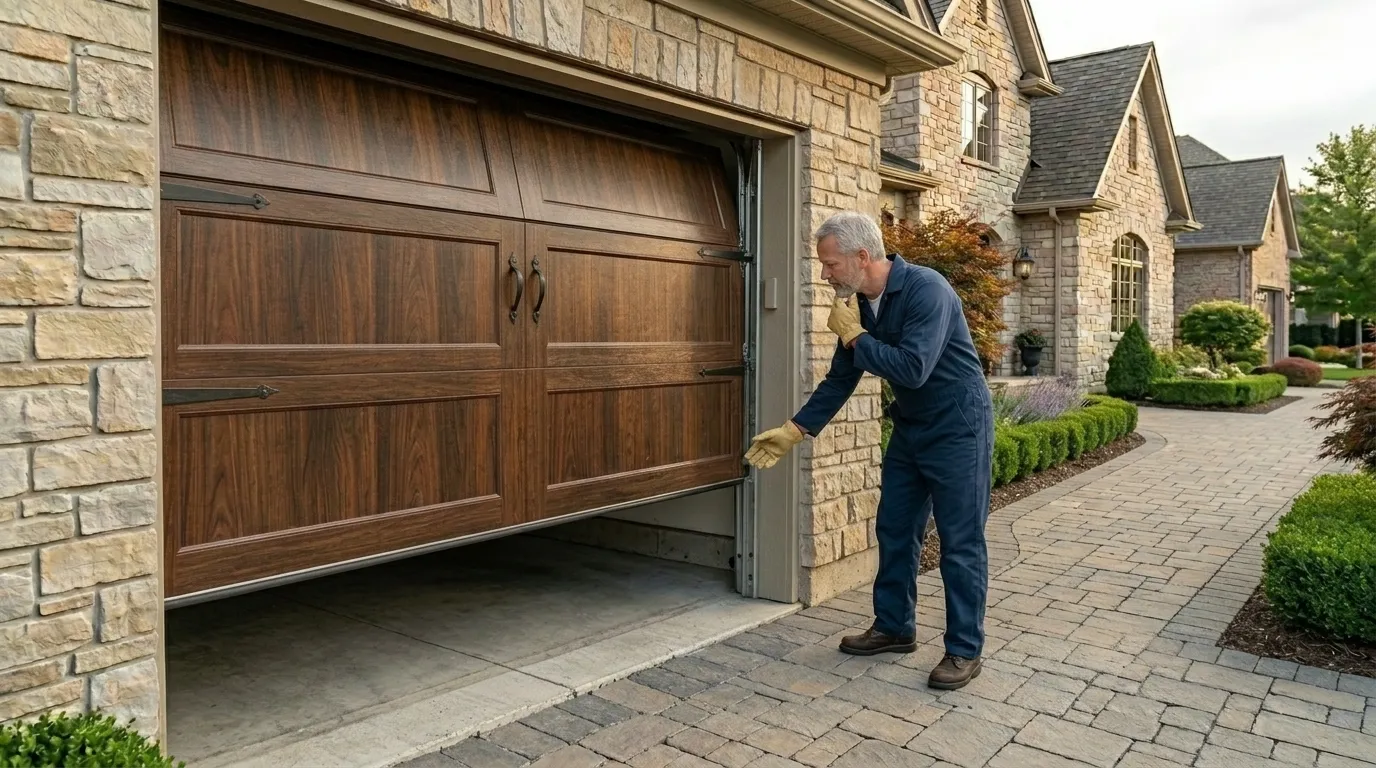
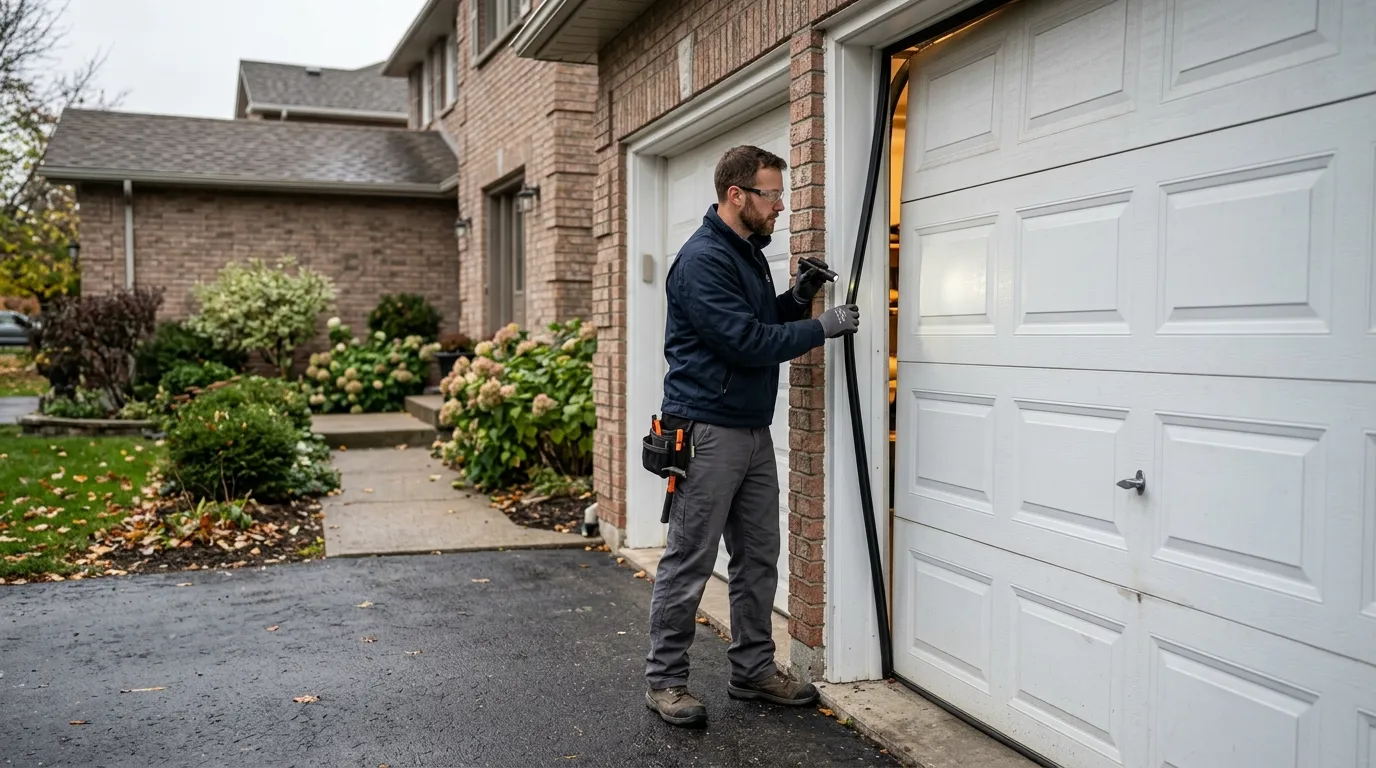
The signs are usually a door that hangs unevenly, drags on one side, or scrapes and grinds partway through its travel instead of moving smooth top to bottom. Sometimes it's a visible gap between the roller and the track on one panel, or a section that's bowed slightly outward where it shouldn't be. If the door stops closing all the way and leaves daylight along the bottom edge, the track has likely bent enough to change the door's travel path, not just its alignment. None of these get better by running the opener again - each cycle usually widens whatever gap started the problem.