Getting It Booked In
Booking starts with a phone call, not a form that sits in an inbox. Tell us the door is stuck, tell us if it's stuck open or stuck shut, and tell us whether anyone's tried to force it - that last part matters, because a door forced past a broken spring or a bent track usually turns a repair into a replacement.
Since every job here is a dispatch from Miami rather than a local branch, we ask for the cross streets or a nearby address landmark when we schedule, not because Coral Terrace is hard to find, but because it helps us sequence the day's route. With roughly 8,099 households in Coral Terrace, most on that same older housing stock, we're not guessing at what we'll find when we get there - extension springs, older steel panel doors, hardware that predates the safety cable requirements newer doors ship with. Knowing that in advance means the truck usually already has the right parts on it before it leaves Miami.
Why This Fails Locally
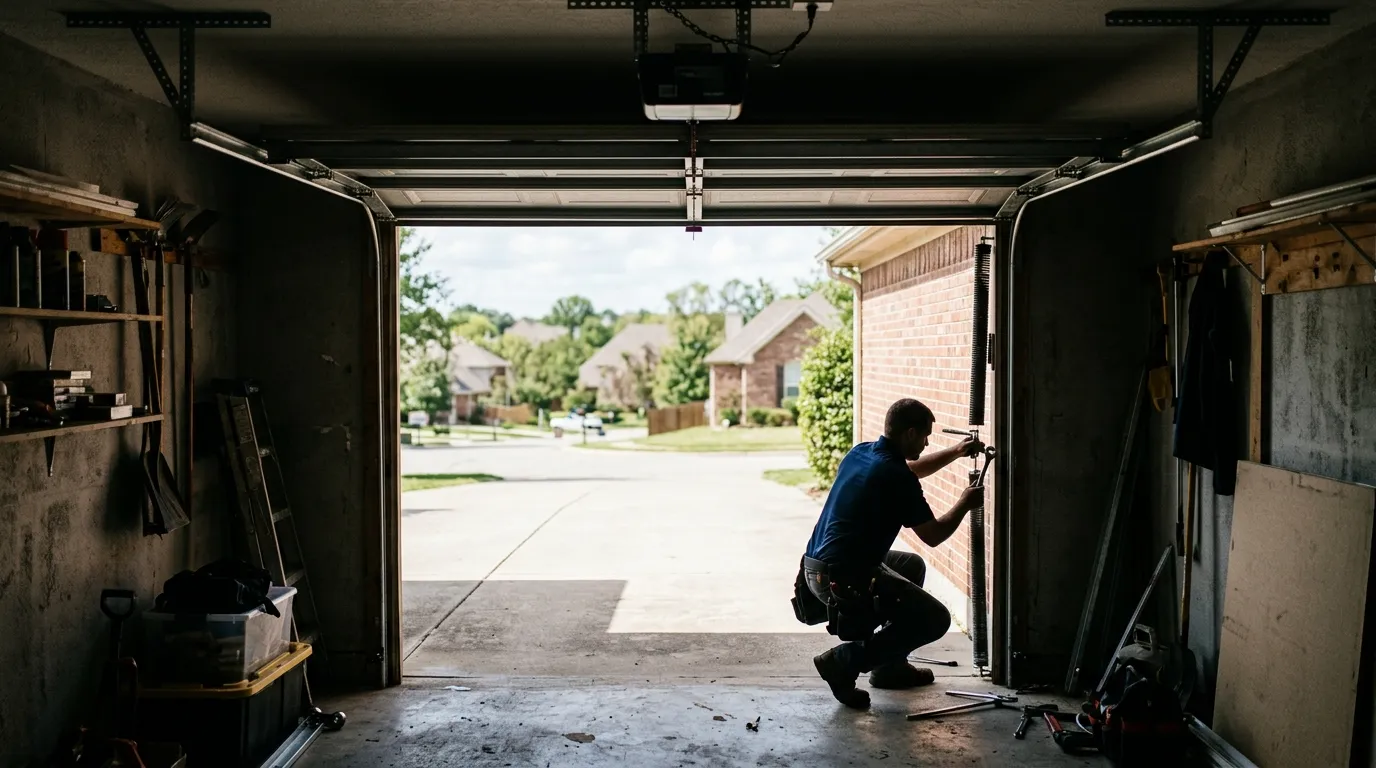
A door installed when a house went up in the late 1950s was built to a different standard than one installed in 2005. Extension springs stretch along the horizontal track instead of twisting on a shaft over the door, and a lot of the original installs in this part of the service area never got the safety cable retrofit that runs through the spring - so when it lets go, it can whip loose instead of staying contained.
The climate band here is mild temperate, so we're not dealing with freeze-thaw cracking or ice-jammed tracks the way colder markets do. The failure in Coral Terrace is almost always age and cycle count, not weather. A door that's opened and closed twice a day for over sixty years has put a spring through tens of thousands of cycles it was never rated to survive that long without replacement. That's the fault we're driving out for - not a storm, not a freeze, just metal that's finally done.
What the Fix Involves
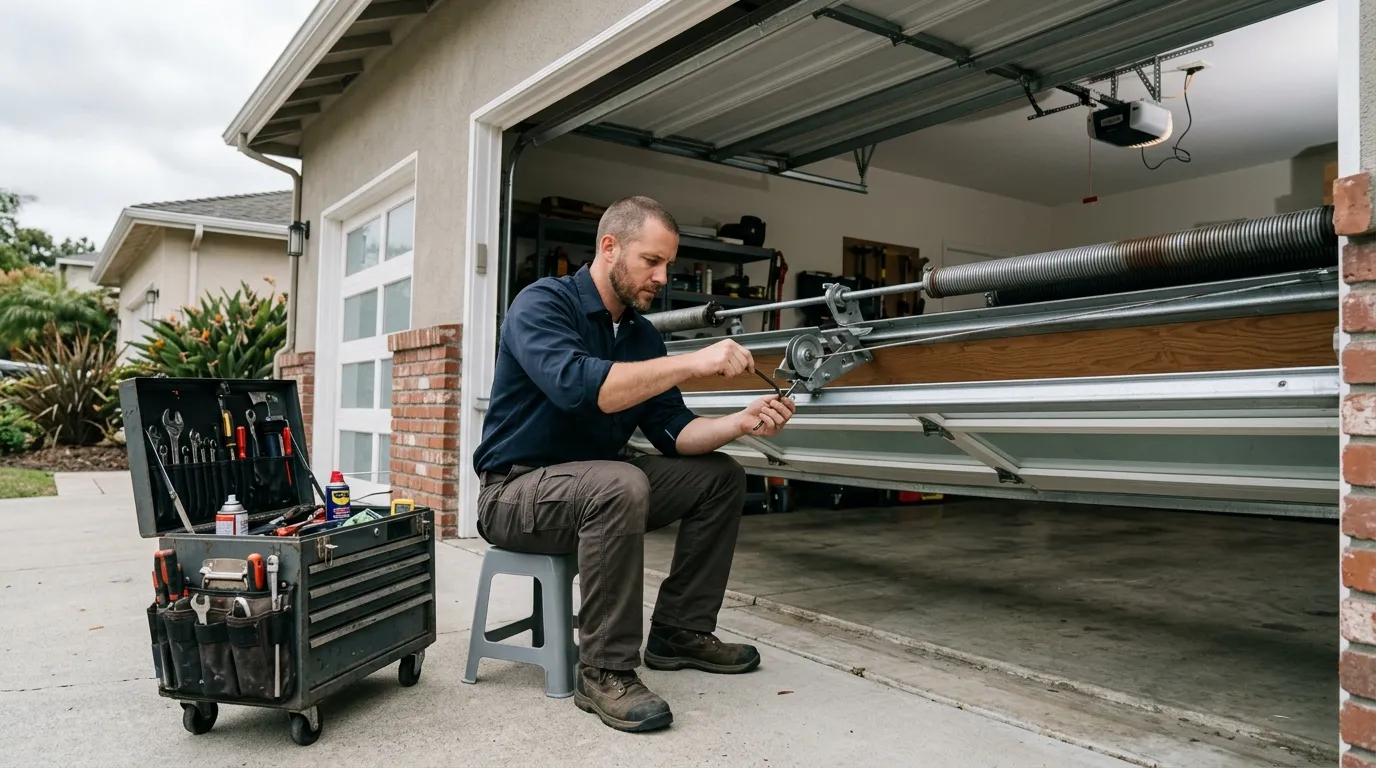
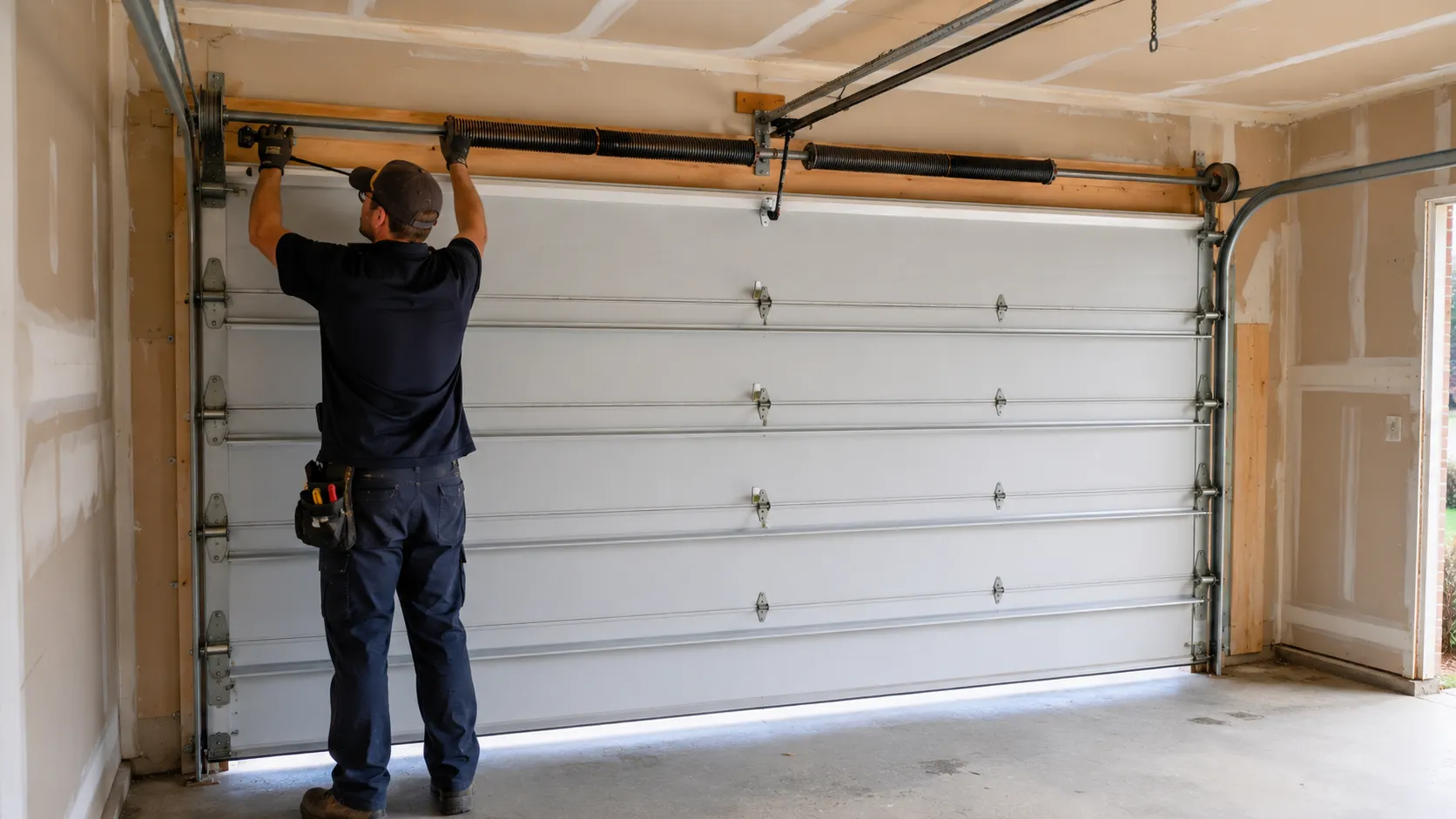
For a broken spring, the job is pulling the old spring off the shaft or track, matching the wind and wire gauge to the door's weight, and installing new - never re-tensioning a spring that's already fatigued. On the older extension-spring doors common in Coral Terrace, we also check for a safety cable through the spring; if there isn't one, we install it while we're already in there, since that's the part that keeps a future failure from becoming a projectile instead of a repair call.
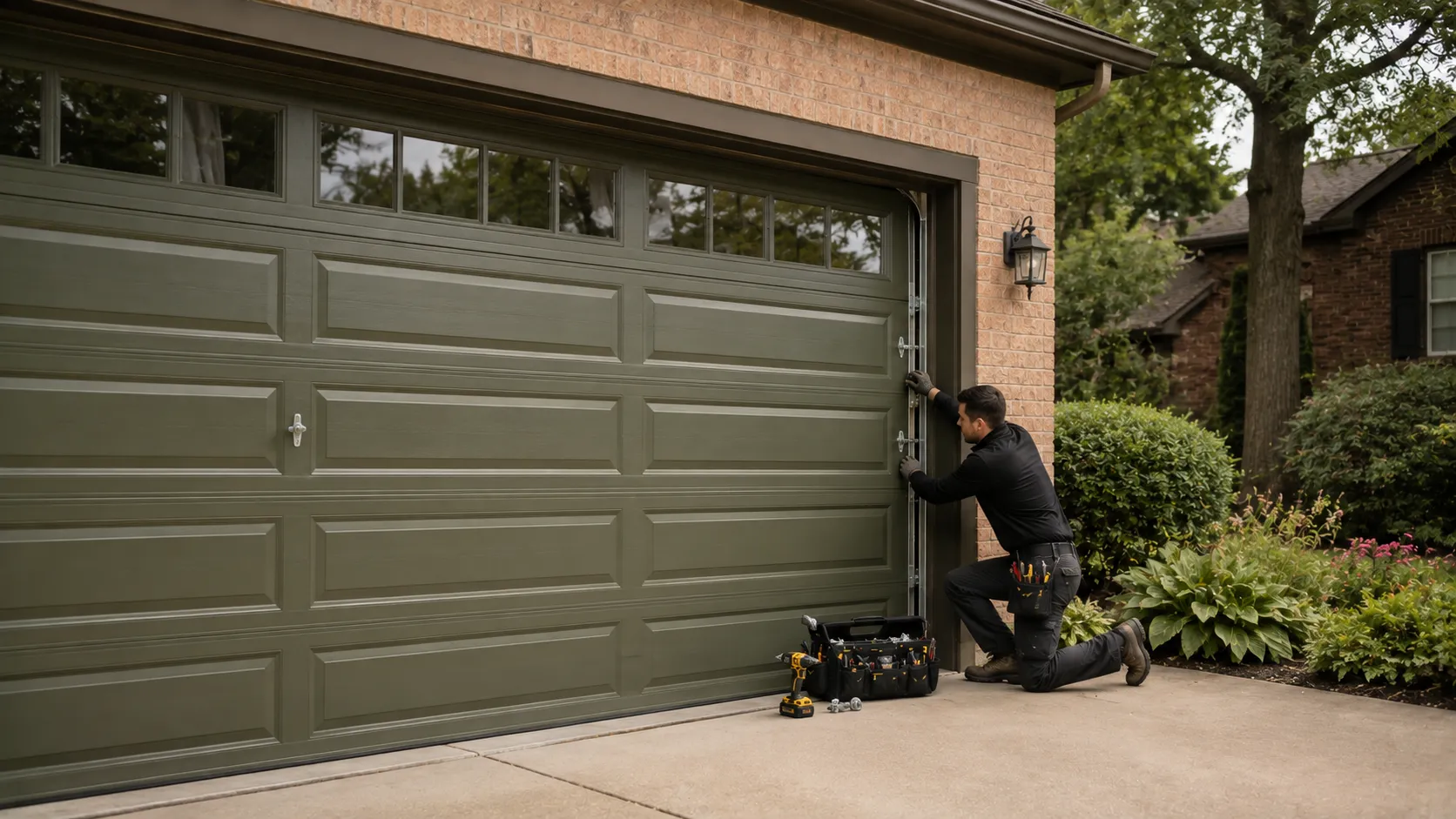
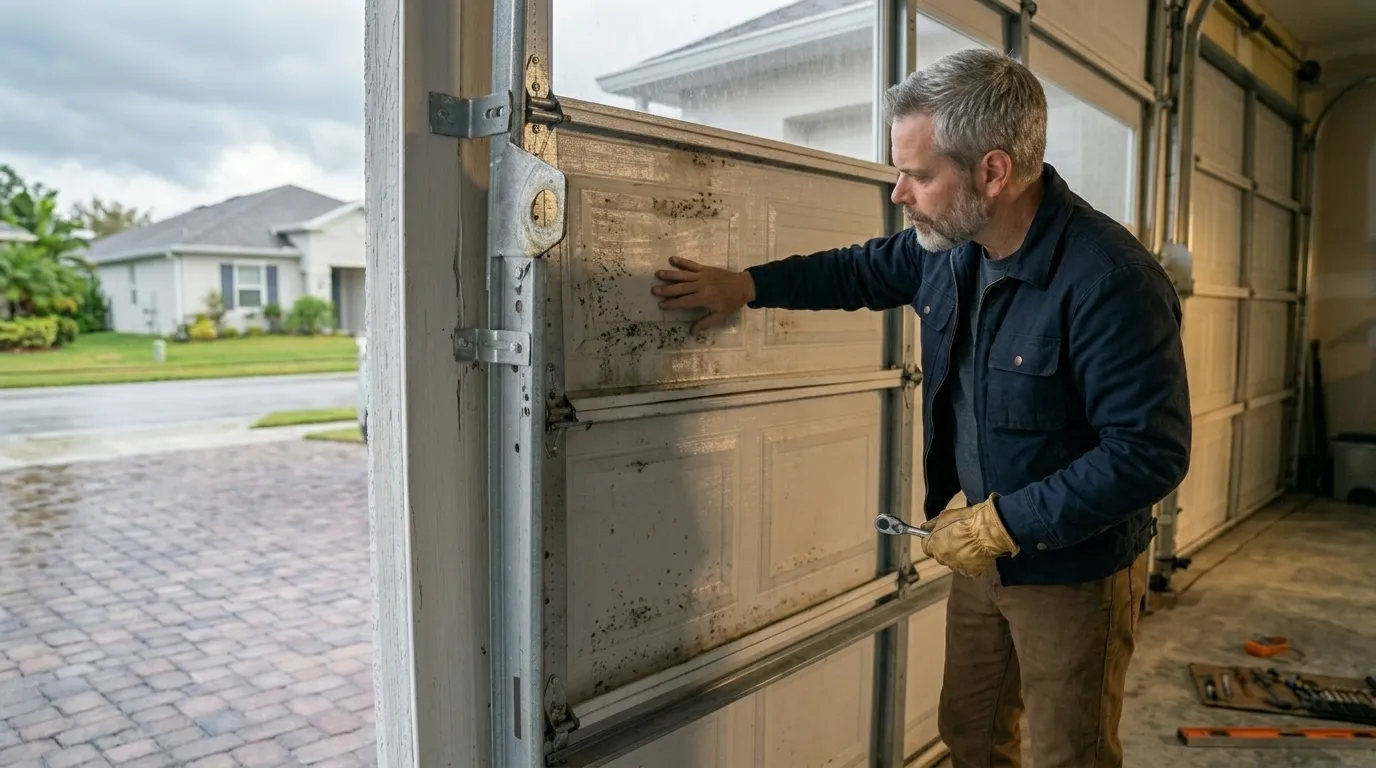
If the cable or drum came off with the spring, that gets replaced too, and we check the track alignment before we call it done - a door that's been forced while jammed often bends the track just enough that it'll bind again in a few weeks if nobody looks at it. What we don't do is patch a door that's structurally failed at the panel level; if the door itself is delaminating or rusted through, we'll say so and talk replacement instead of pretending a spring fix solves it.
What You Are Seeing
The door stops halfway and won't go up or down under power or by hand. There's a loud bang from the garage, usually followed by the door refusing to move at all - that's a spring letting go, not the opener failing. One side of the door hangs lower than the other, which usually means a cable came off its drum rather than the spring itself. The door looks like it's fighting the opener, straining and slowing partway through the cycle instead of running smooth.
On Coral Terrace's older stock, we also see stiff, squealing rollers that have simply outlived their lubrication and hardware life, and side-mounted track that's worked loose from the framing over decades of use. None of these are emergencies in the sense that they'll hurt someone right away, but a door stuck open is a door you can't secure, and that's usually the one that gets the call made same day.