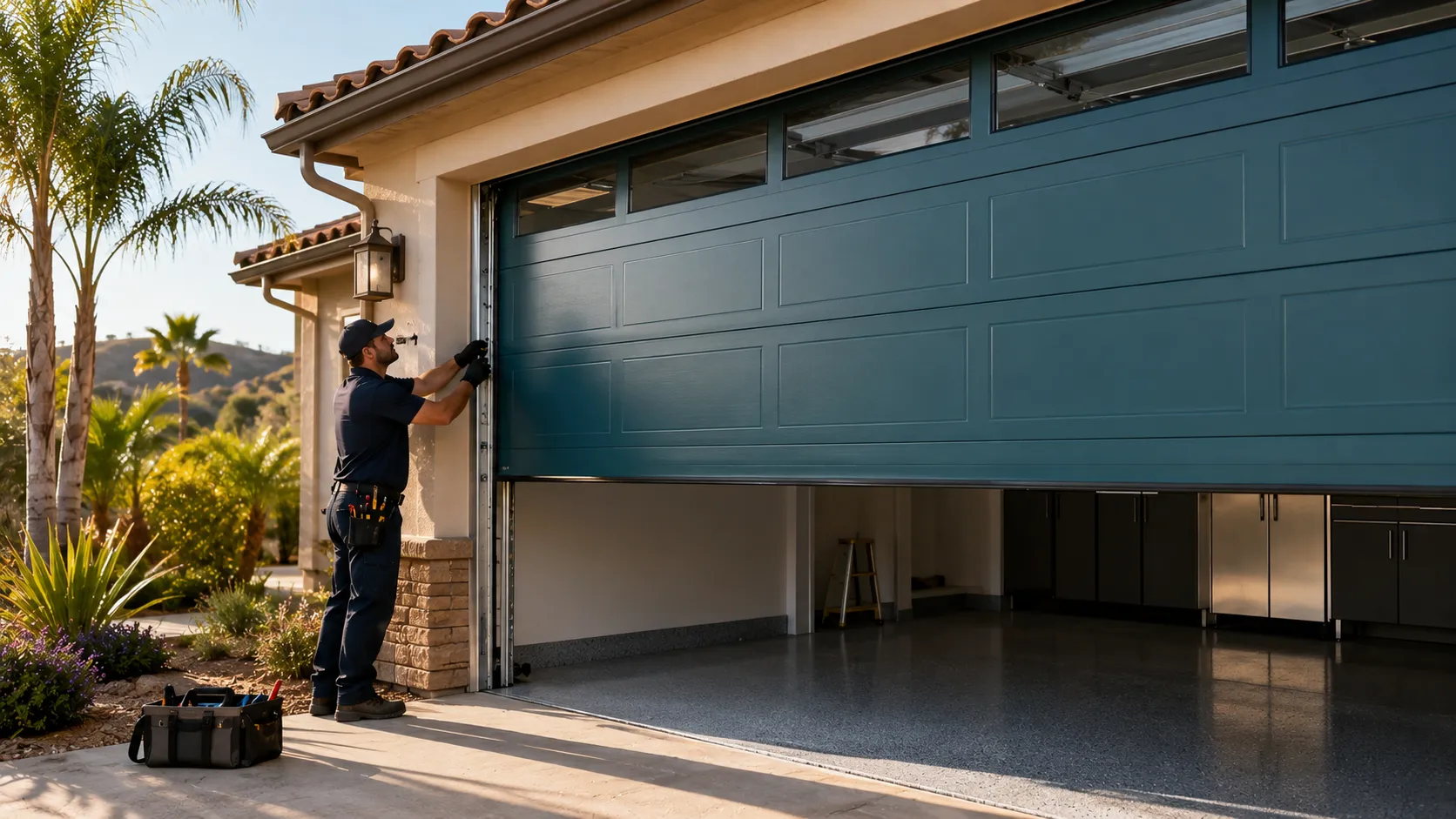
Getting It Booked In
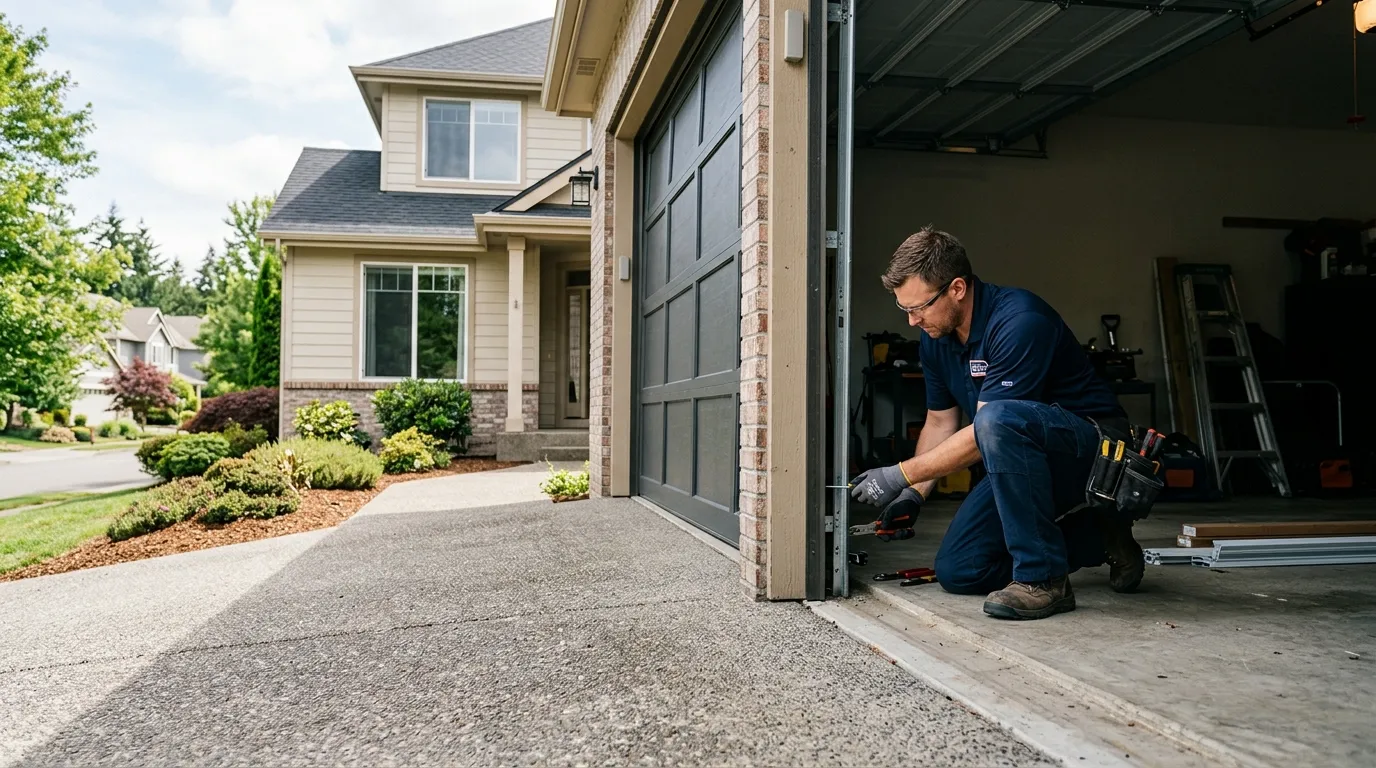
When you call, tell us the age of the house if you know it - for Coral Terrace that's often mid-to-late 1950s - and whether the door is single or double, sectional or one-piece. That alone narrows down what we load on the truck before we leave Miami. Because we're covering a service area that runs from here out past we book by the day's route, so a Coral Terrace call gets grouped with nearby stops rather than dispatched in isolation.
If you're not sure what's wrong, that's fine. Tell us what you hear or see - grinding, a door that stops halfway, a remote that's stopped working - and we'll ask a couple of follow-up questions on the phone to figure out whether it's a spring, a sensor, or the opener itself. That fifteen-minute drive means there's little upside in guessing wrong and showing up without the right part.
Why This Fails Locally
The median home in Coral Terrace went up in 1958, which puts it near the front edge of the 1953-2005 range across our service area but well ahead of the 1960s-70s stock that makes up most of the 54 areas we cover. That earlier build date matters because doors and openers from that generation were installed on hardware that manufacturers largely stopped supporting decades ago - narrower tracks, different spring cone sizes, and in some cases openers bolted to framing that was never meant to carry a heavier steel replacement door.
South Florida's mild temperate climate means we're not dealing with the freeze-thaw cycling that cracks concrete and warps track brackets up north, so the failures here are mechanical age, not weather damage. Springs fatigue on their own schedule regardless of climate, and a fifty-plus-year-old torsion setup is well past where most manufacturers rate the wind cycles. Rollers on original hardware are usually steel, not nylon, and by now they're the loudest part of the door - that grinding sound is often just old bearings, not something urgent, but it's worth having looked at before it turns into a cable failure.
What the Fix Involves
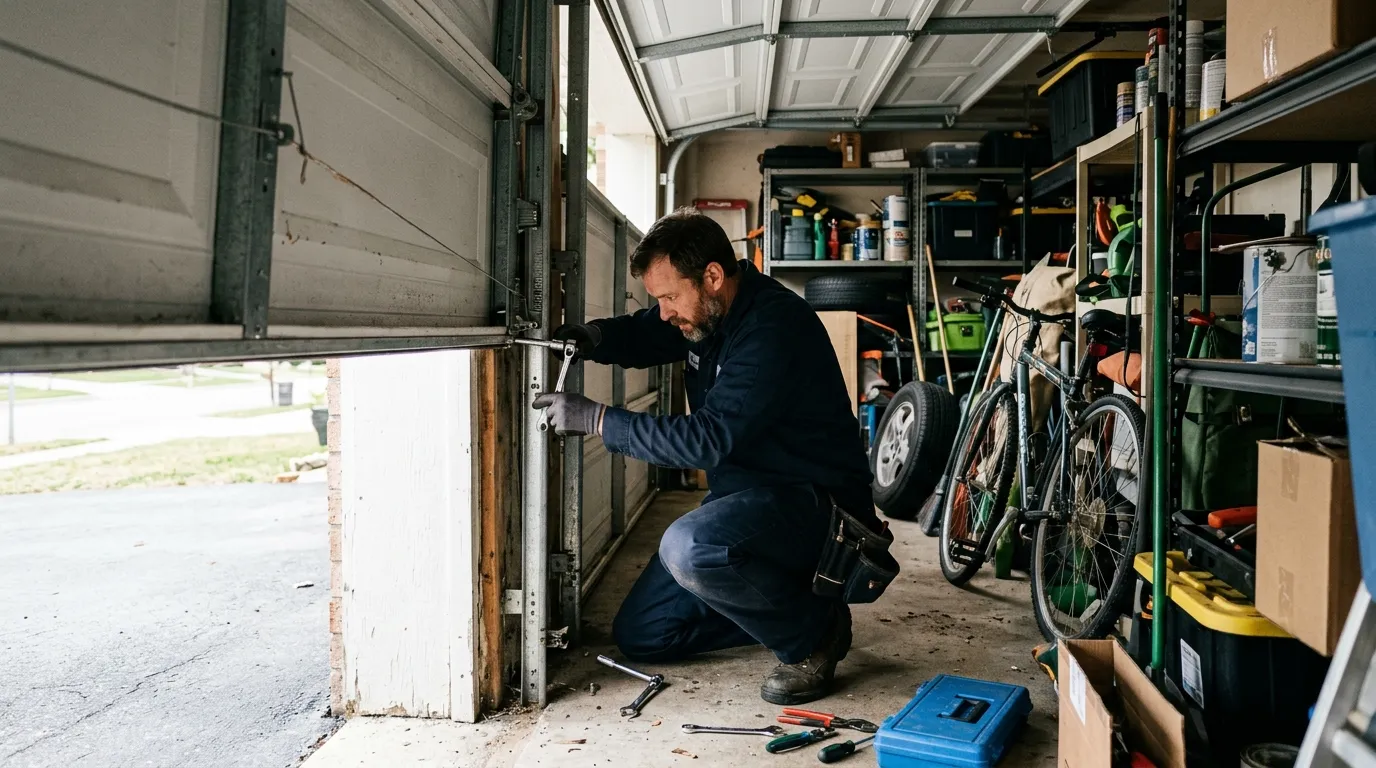
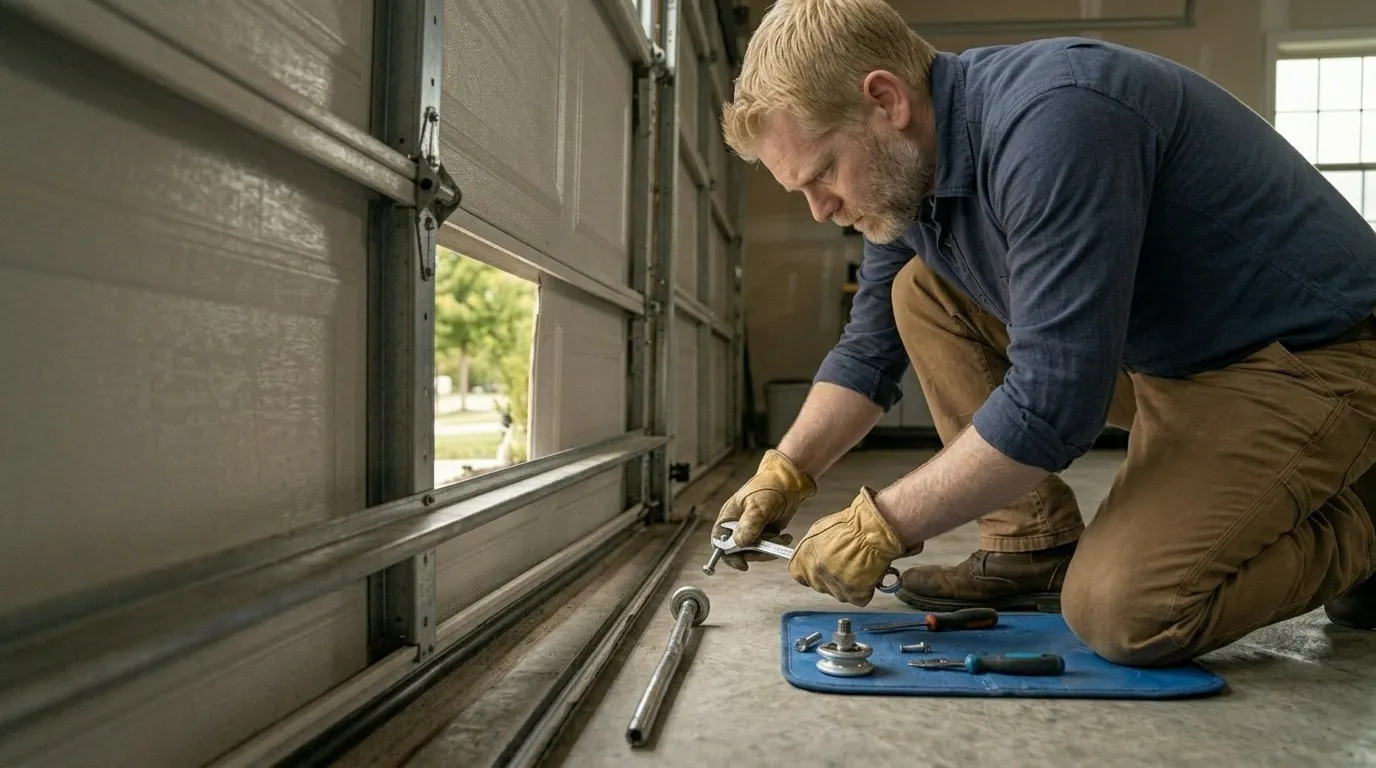
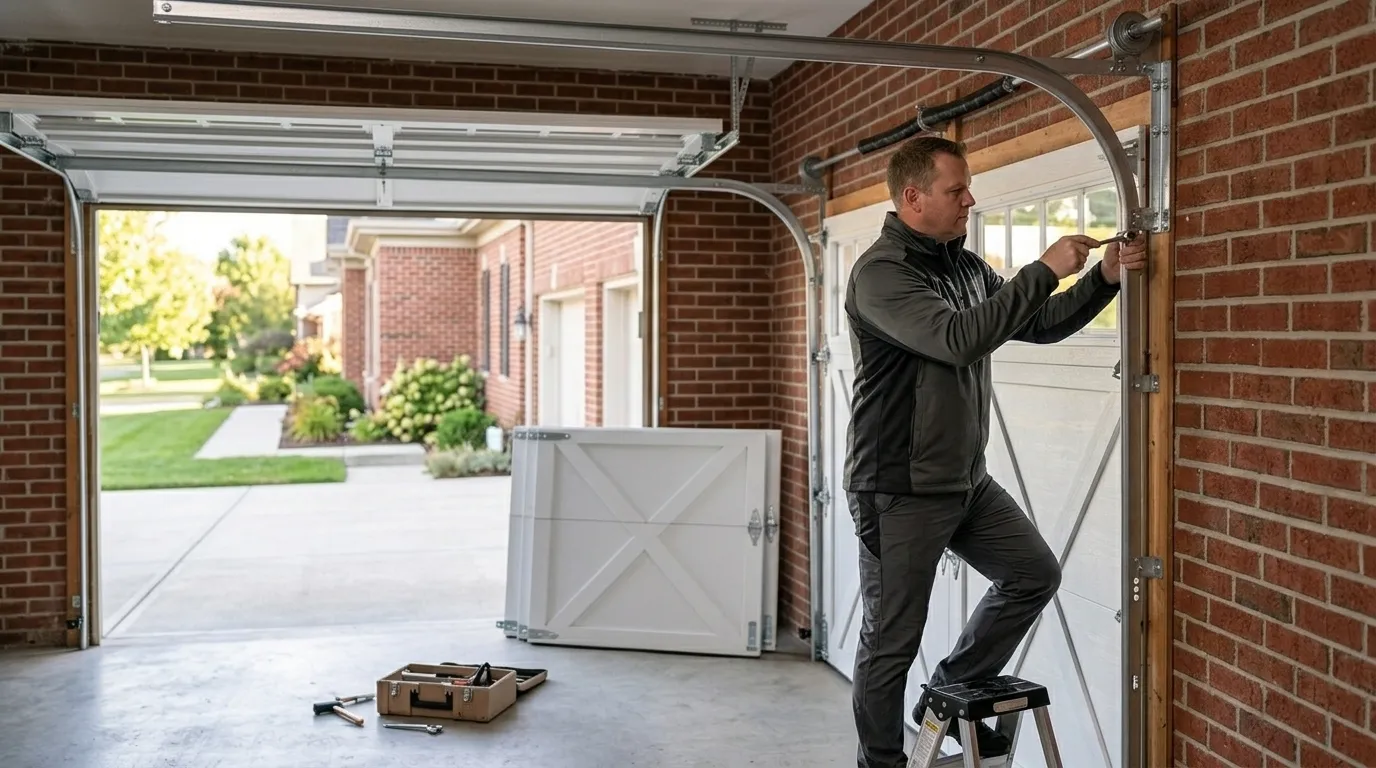
On a house from this era, the first thing we check isn't the spring, it's the mounting. Original hardware from the late 1950s was frequently through-bolted into framing that's shifted slightly over sixty-plus years, so a spring replacement that looks routine can turn into a bracket re-mount if the wood's moved. We measure the door and track before we touch the spring, because a cone that's slightly off from stock sizing will bind the door within a season if we force a generic part onto it.
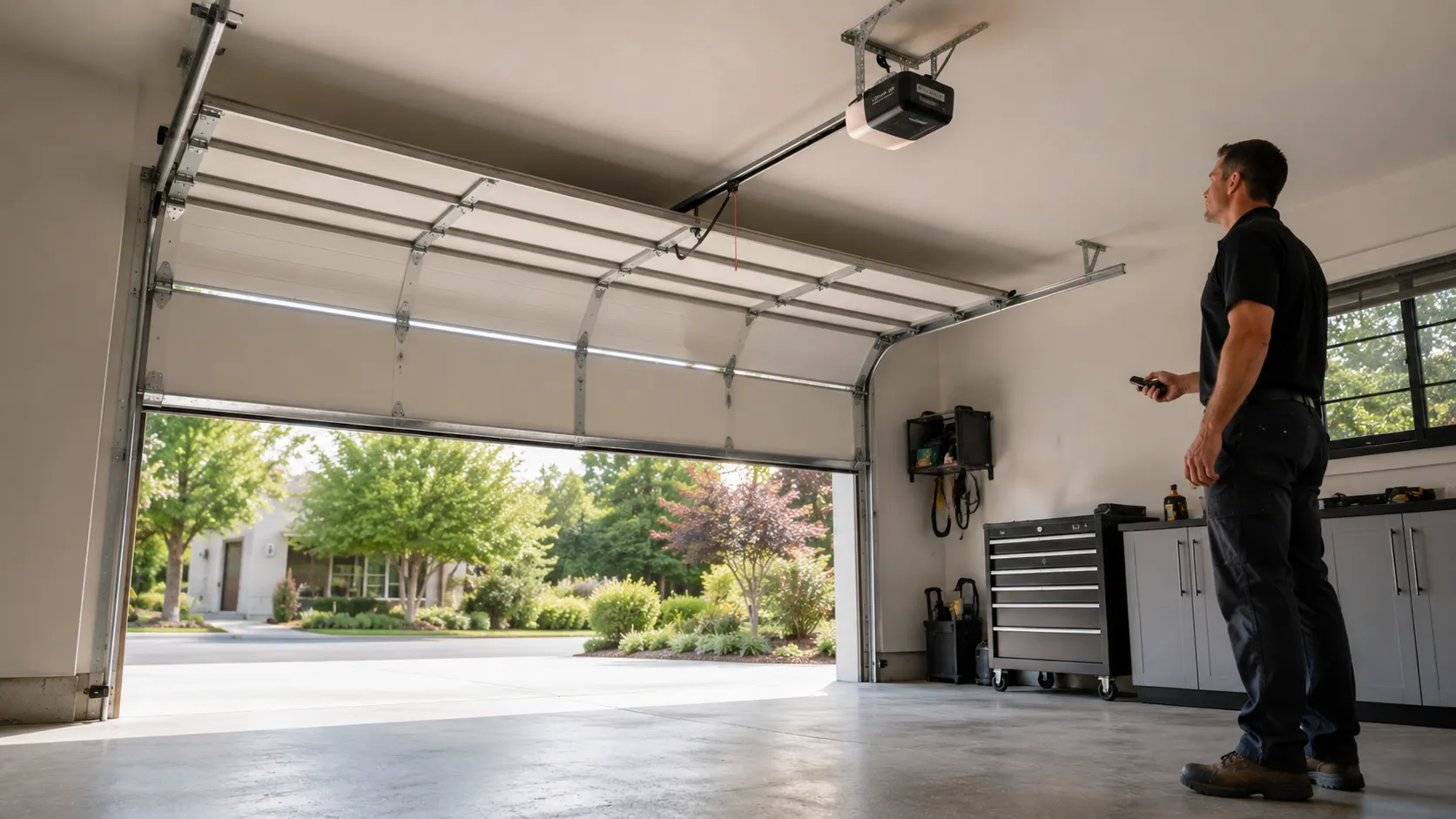
For openers, if the unit predates modern safety sensors, we won't just bolt a new logic board onto old wiring - we'll tell you it needs a full unit swap, because a patched safety system isn't one we'll put our name on. That's the one limitation worth saying outright: we don't do partial safety fixes on pre-sensor openers. It's a full replacement or we walk you through why it's not worth touching yet.
What You Are Seeing
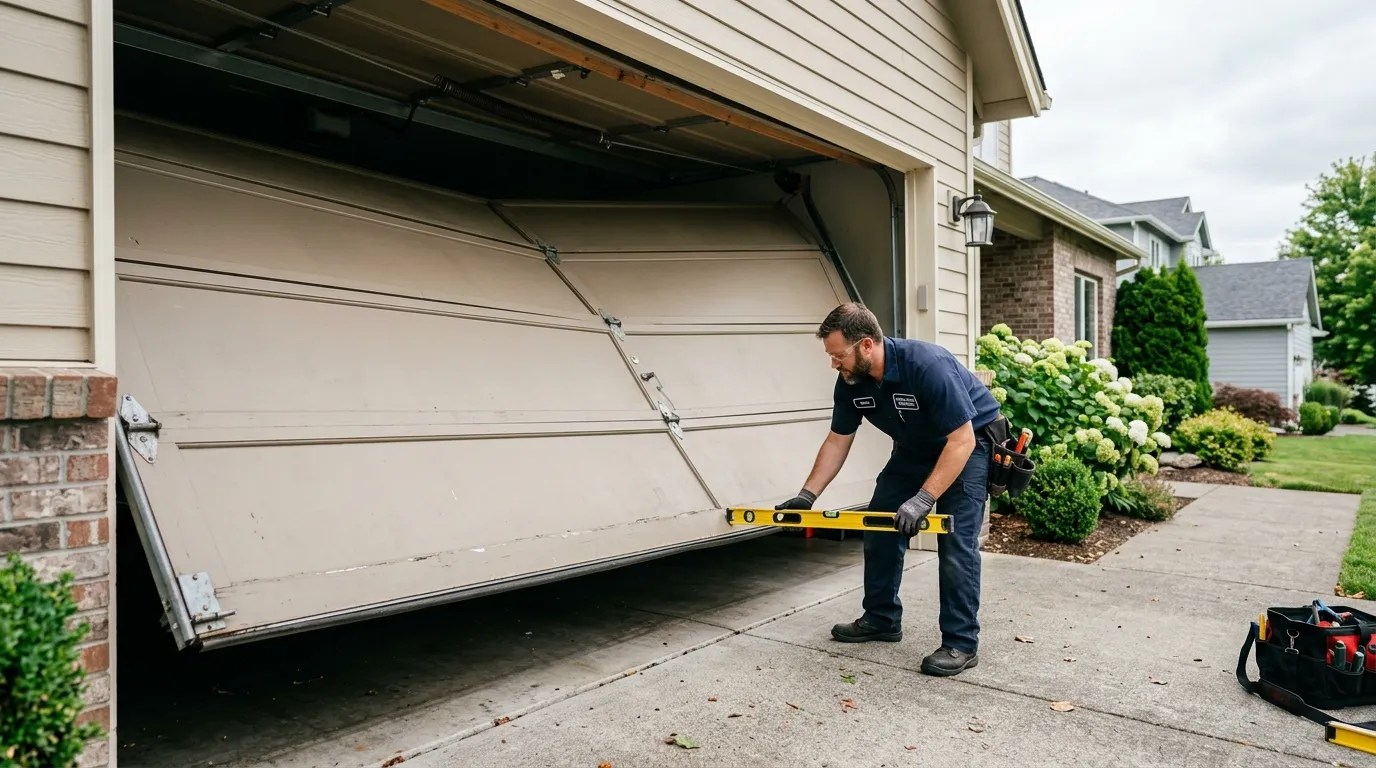
If your door hesitates about a foot off the ground and then jerks the rest of the way, that's usually a spring that's lost tension, and on a house from 1958 it's likely original or a prior owner's mismatched replacement. If it's making a grinding sound that's gotten louder over months, check the rollers - steel rollers on original track wear down slower than nylon but louder, and by now most in this pocket of Coral Terrace are past due.
A door that reverses immediately after closing, or won't close at all, points to the opener's safety sensors - but if the unit is old enough to predate sensors entirely, the fault is more likely a limit switch or the logic board itself. Either way, don't force the door manually if the spring feels like it's holding no tension at all; that's the setup for a cable snapping under hand pressure. Call it in and we'll walk you through whether it's safe to leave the door where it is until we get there.