Getting It Booked In
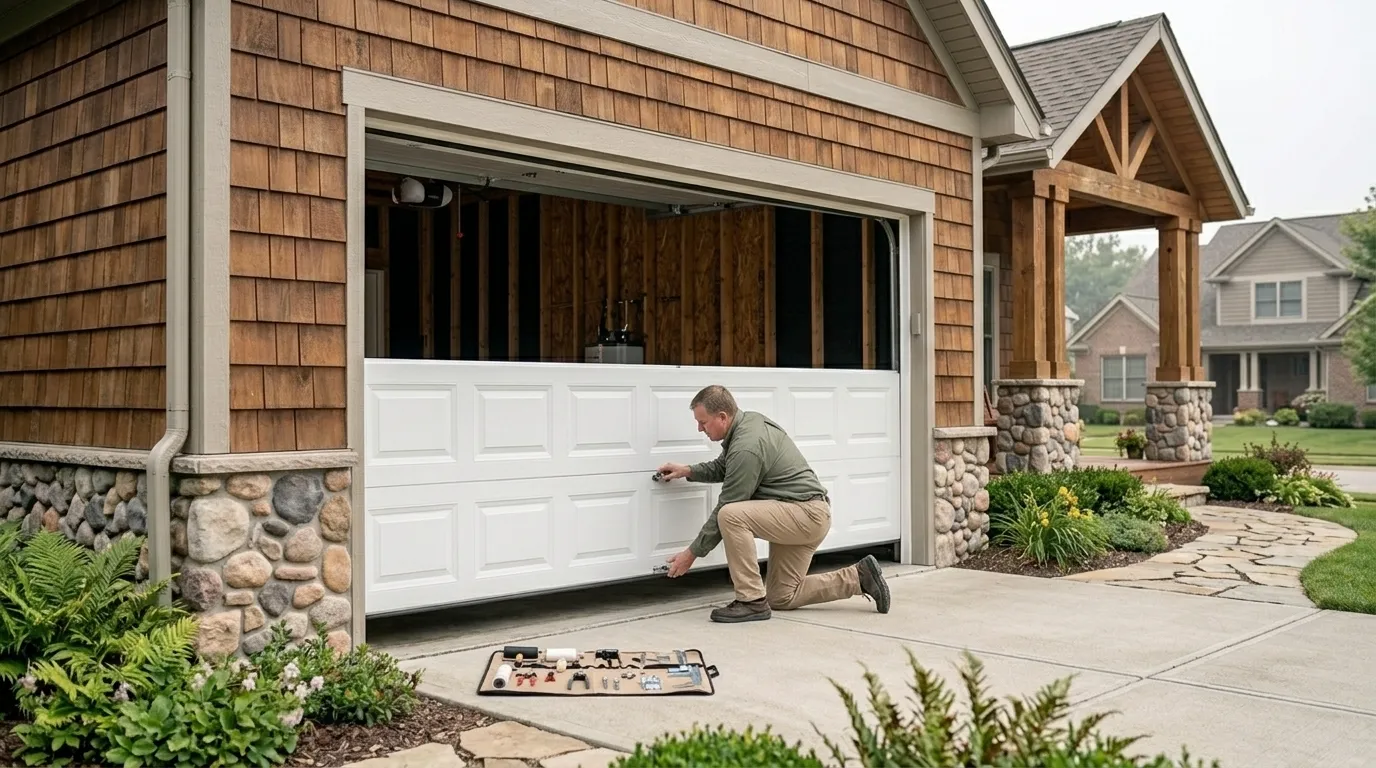
We travel to Coral Terrace from Miami, about six miles out. There's no branch or drop-in counter here - we schedule the run and come to the address, same as we do for the other suburbs on that side of the city. Booking works the same way it does anywhere in the service area: a call, a time window, and a truck that shows up with the parts a house of this age is likely to need, based on what we know about the build year going in.
One honest limit: if the inspection turns up a part we didn't stock for - an obsolete spring size or a hinge pattern that stopped being made decades ago - that part isn't sitting on the truck. We'll note it and follow up once it's sourced rather than guess at a fix. On a street where most doors are pushing 65 years old, that happens more often than it does on newer stock, and we'd rather say so than force a part that's close enough.
Why This Fails Locally
With a median build year of 1958, a large share of the springs, cables, and track brackets on Coral Terrace garages have never been touched since the house was framed. That's not a guess about age - it's the math of the year itself. A steel torsion spring is rated for a working life measured in cycles, not years, and a door that's opened and closed twice a day since the late 1950s has put more cycles through that spring than most homeowners realize.
The mild temperate climate across this part of Florida is kind to the wood and steel components - no freeze-thaw cracking, no heavy snow load on the header - but it doesn't stop metal fatigue. Salt air and humidity do their own slow work on unpainted hardware, and original mounting bolts corrode quietly behind brackets nobody's looked behind in decades. The failure mode here isn't dramatic weather damage. It's a spring or cable that's simply used up its rated life and picked this particular week to let go.
What the Fix Involves
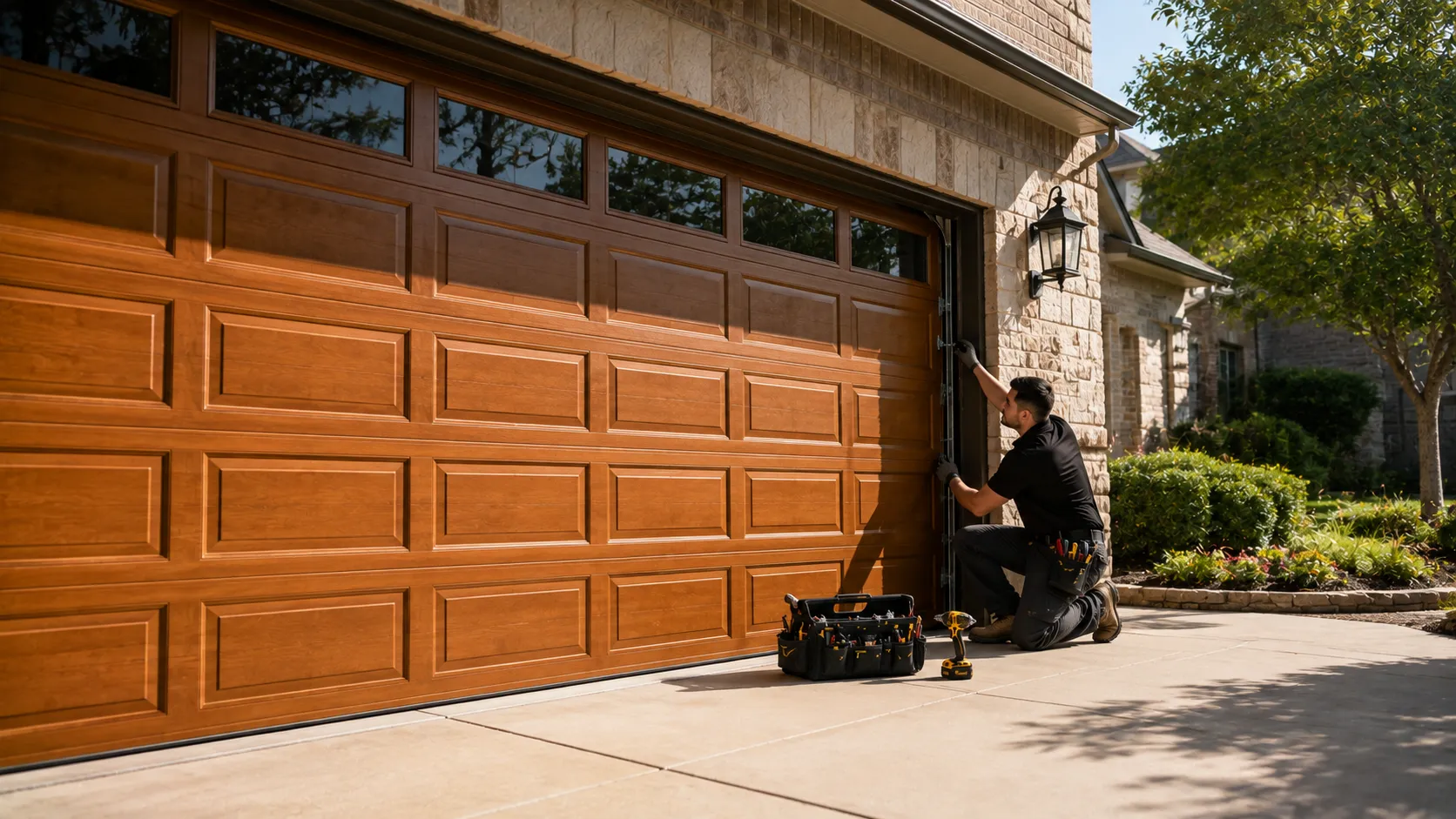
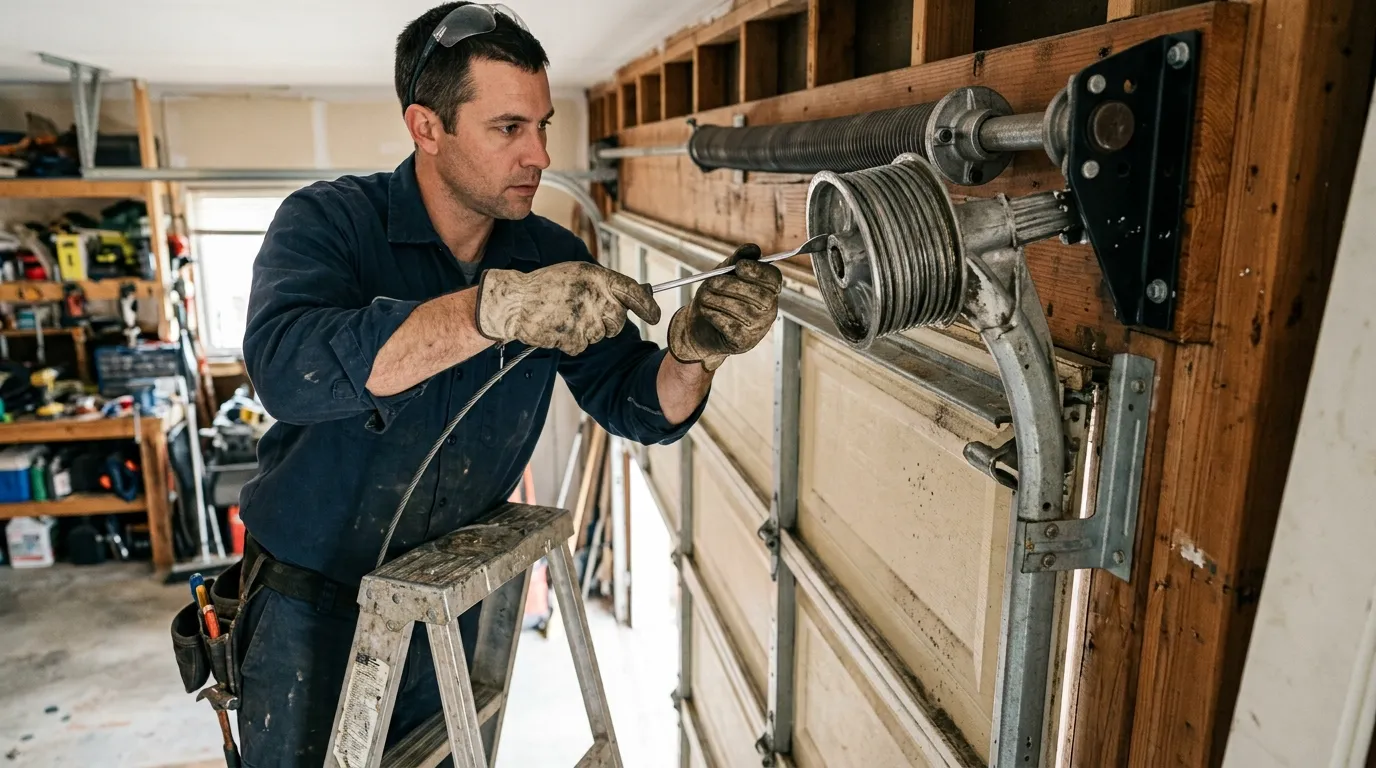
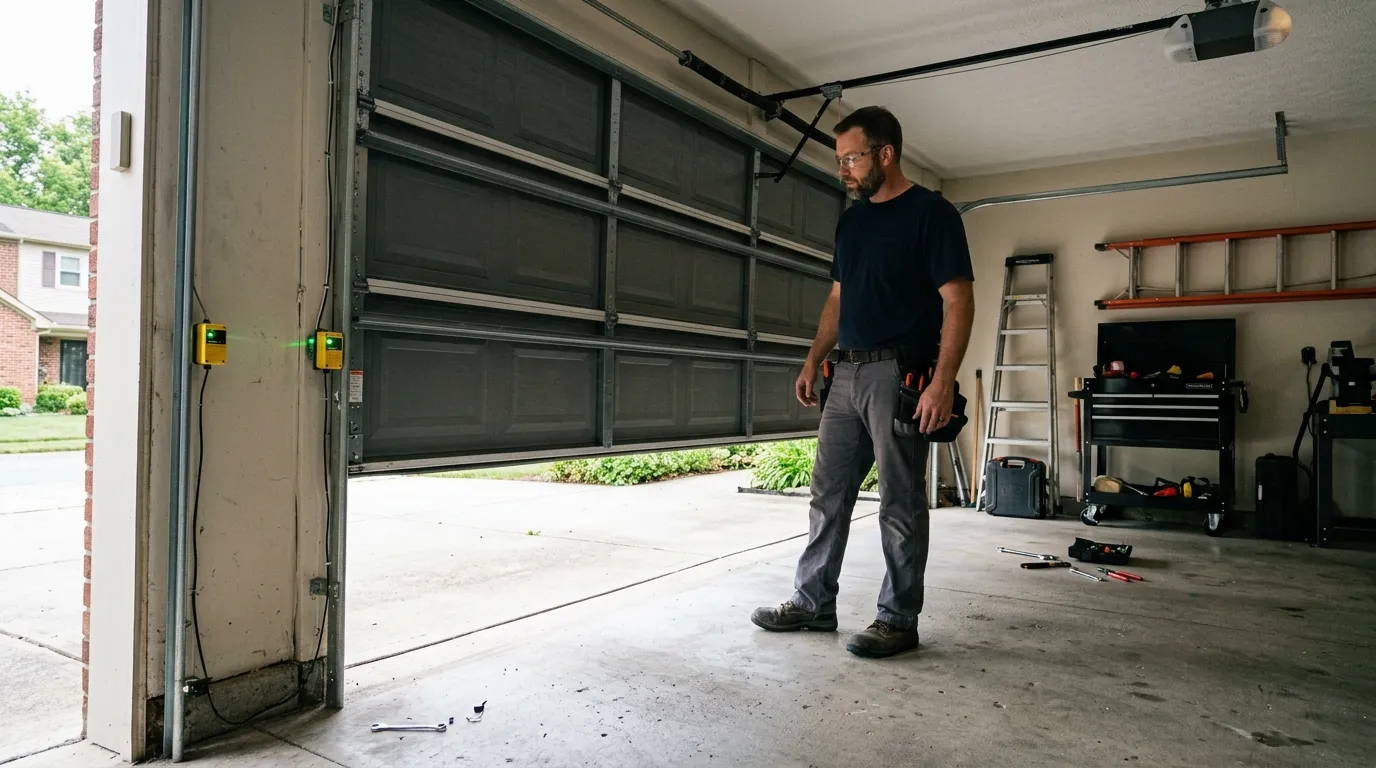
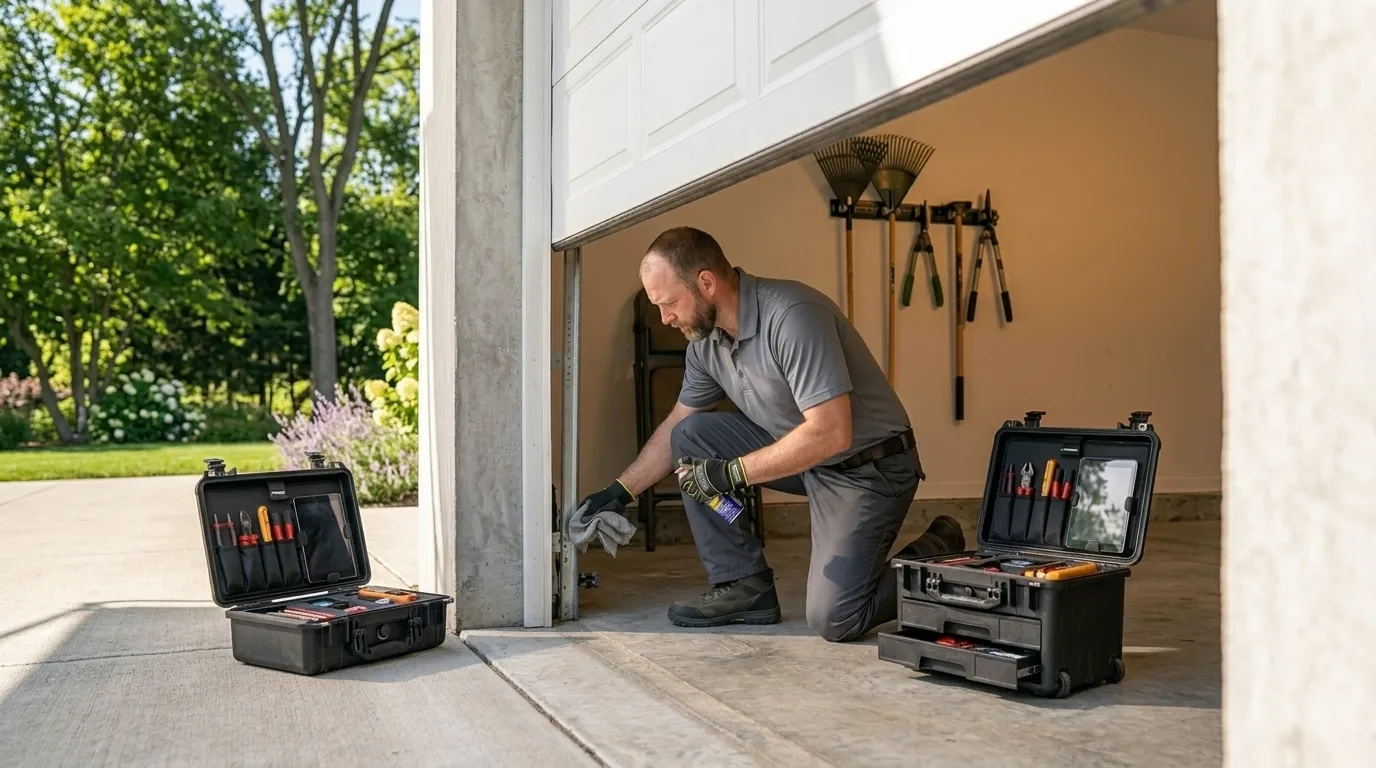
On a Coral Terrace visit, the checklist starts with what's most likely to still be original: the torsion or extension spring, the track alignment, the roller condition, and the mounting hardware bolted to a header framed in 1958. We check spring tension against the door's actual weight rather than assuming factory spec still applies - 65 years of humidity and use change how a spring behaves even when it hasn't visibly failed.
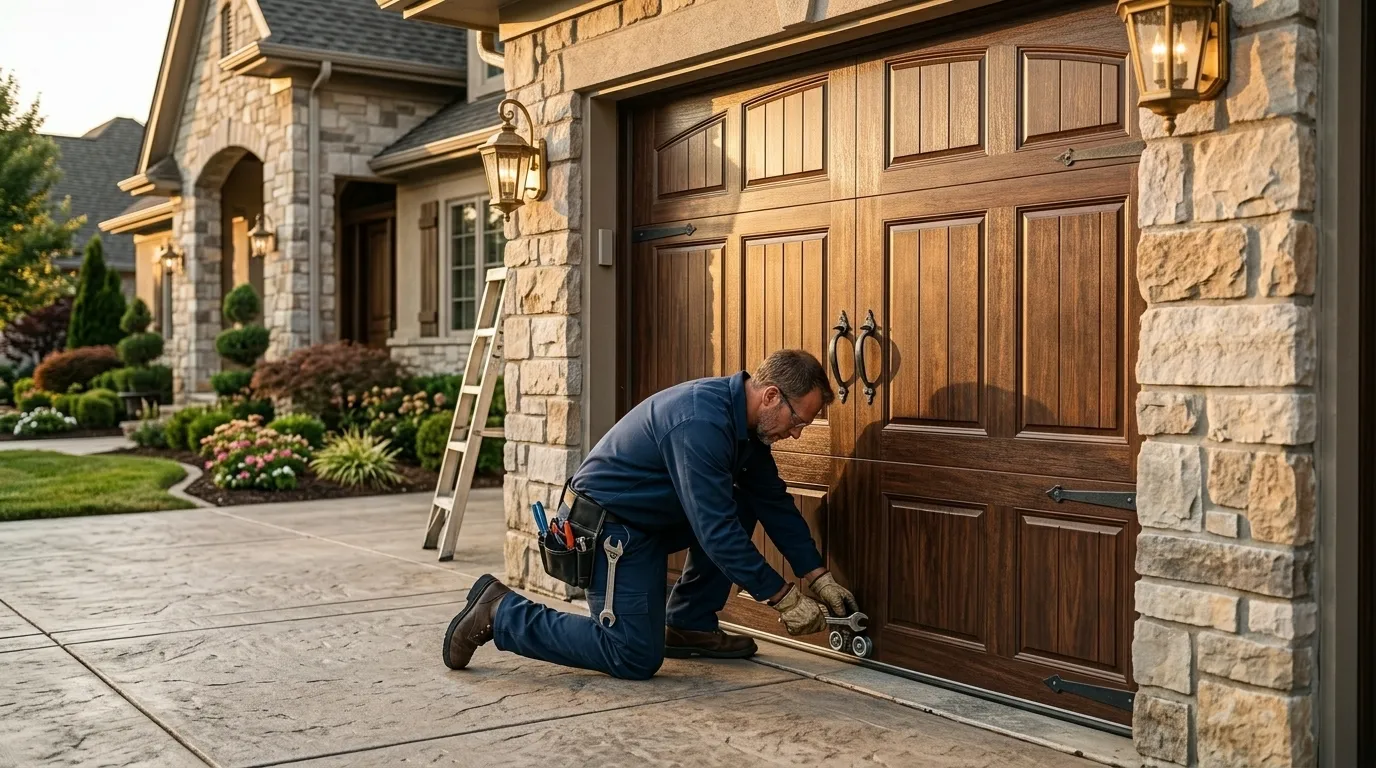
Rollers and hinges get pulled and inspected, not just lubricated, because a worn roller on original track can chew the track lip in ways a quick spray misses. Cables get checked for fraying at the drum, a common failure point on doors this old that have never had the cable replaced on its own schedule. If the opener's been added later - as it often is on a house older than the opener itself - we check that the mounting and safety reversal still match the door's actual weight and travel, not just the manufacturer's factory setting.
What You Are Seeing
If your garage door in Coral Terrace has started dropping unevenly on one side, or the opener strains and slows partway through the cycle, that's usually original spring tension finally losing ground against a door built in 1958 - before lighter modern panel materials existed. A door this old is often heavier steel than what's sold today, and a spring calibrated for that weight decades ago doesn't stay calibrated forever.
A grinding or popping sound from the track is often a roller that's worn oval instead of round, riding in track that's also original and slightly out of true after that many years of settling. Rust bleeding from a hinge or bracket is corrosion working on hardware that predates galvanized coatings common in later builds. None of these are emergencies by themselves, but on a house this age they're worth a maintenance call before one of them becomes the reason the door won't open at all.