Getting It Booked In
We run this job out of Miami, about 6 miles from Coral Terrace, so there's no local branch and no drop-in slot - every install here gets scheduled as its own appointment rather than squeezed between other calls. That's not a knock on the town; it's just how the routing works when you're covering dozens of named areas out of one shop. Booking starts with a quick look at the opening: width, height, headroom above the track, and whether the existing frame is square, since a lot of the 1958-era construction here has settled a little over the decades. If the opening's standard, we can often confirm a door and a date on the same call. If it's not - and non-standard widths turn up more often on houses this age than on newer construction - we order the panel first, then set the install date once it's in. Either way, the appointment is set before a truck leaves Miami, not after.
Why This Fails Locally
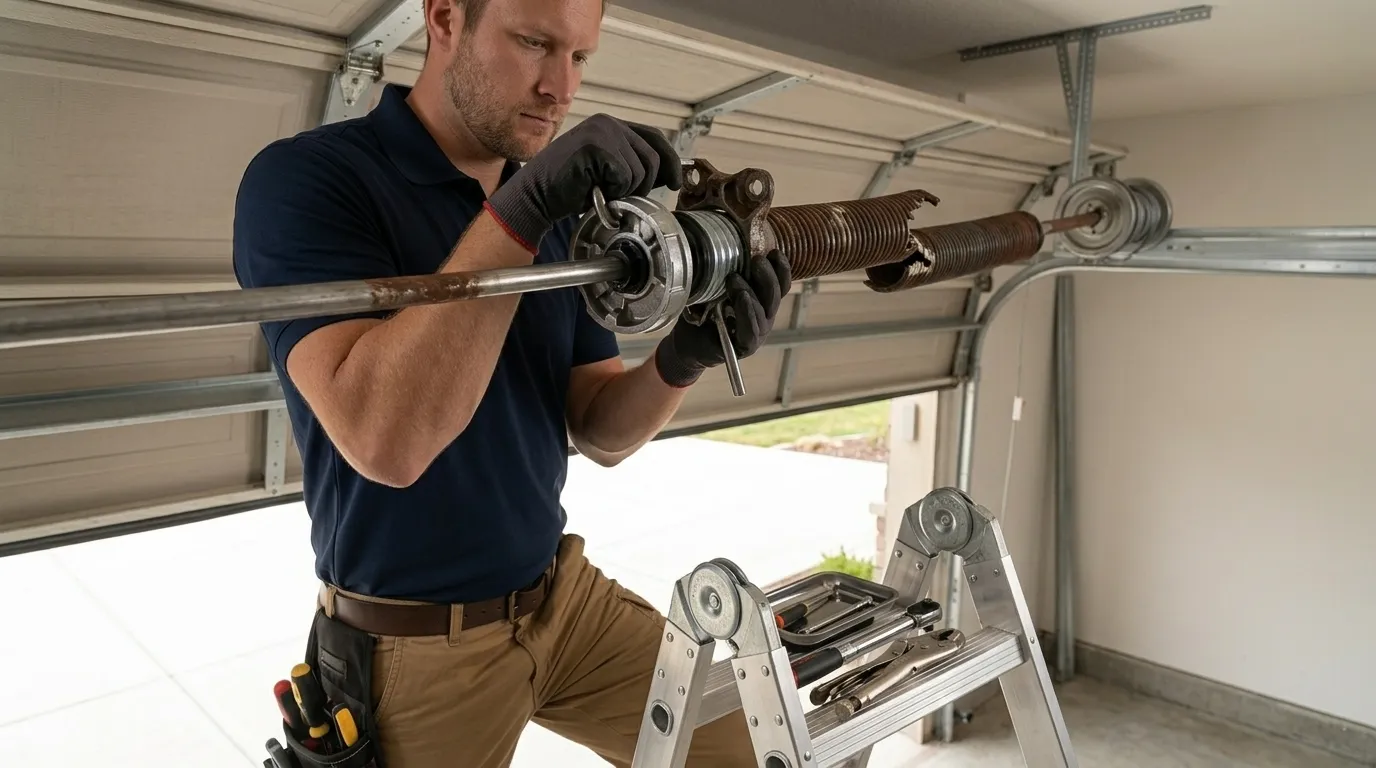
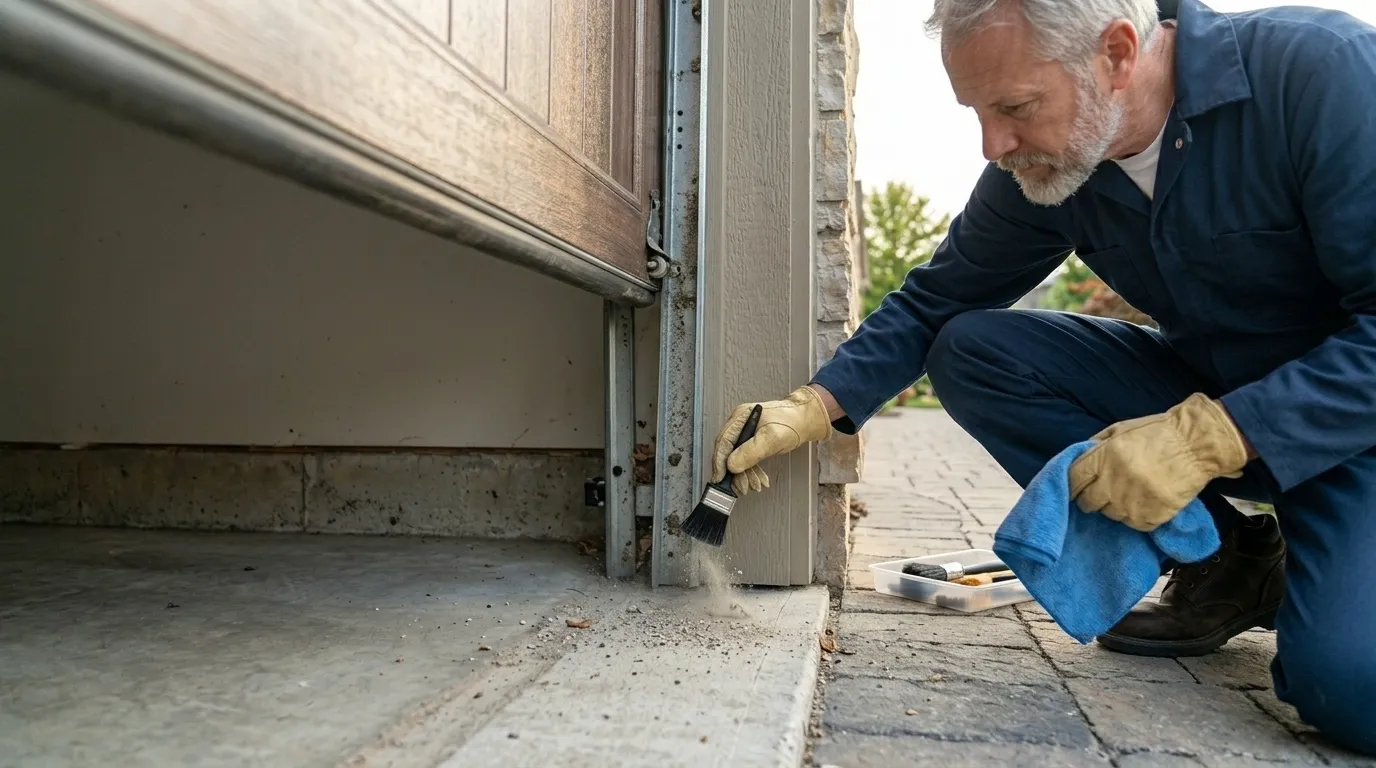
Most houses in Coral Terrace went up around 1958, well ahead of the service area's overall median build year of 1976, which means older torsion and sectional hardware nobody stocks off the truck. Garages built in that stretch were often sized for shorter, narrower cars, and a lot of owners have never widened the opening even after swapping vehicles - so the original track and spring sizing is still doing a job it wasn't built for. The mild, humid climate here works differently on a 1958-era steel door than on the newer stock going up elsewhere in the county, rusting hinges and hardware faster than the panel itself wears out. You'll see corrosion at the hinge pins and roller brackets well before the door panel itself gives out, which is why a repair on an old door this age often just delays the same failure at a different bolt six months later. That combination - undersized openings, aging track, and hardware that corrodes faster than it wears - is the specific reason full replacement gets recommended here more than a straight spring swap.
What the Fix Involves
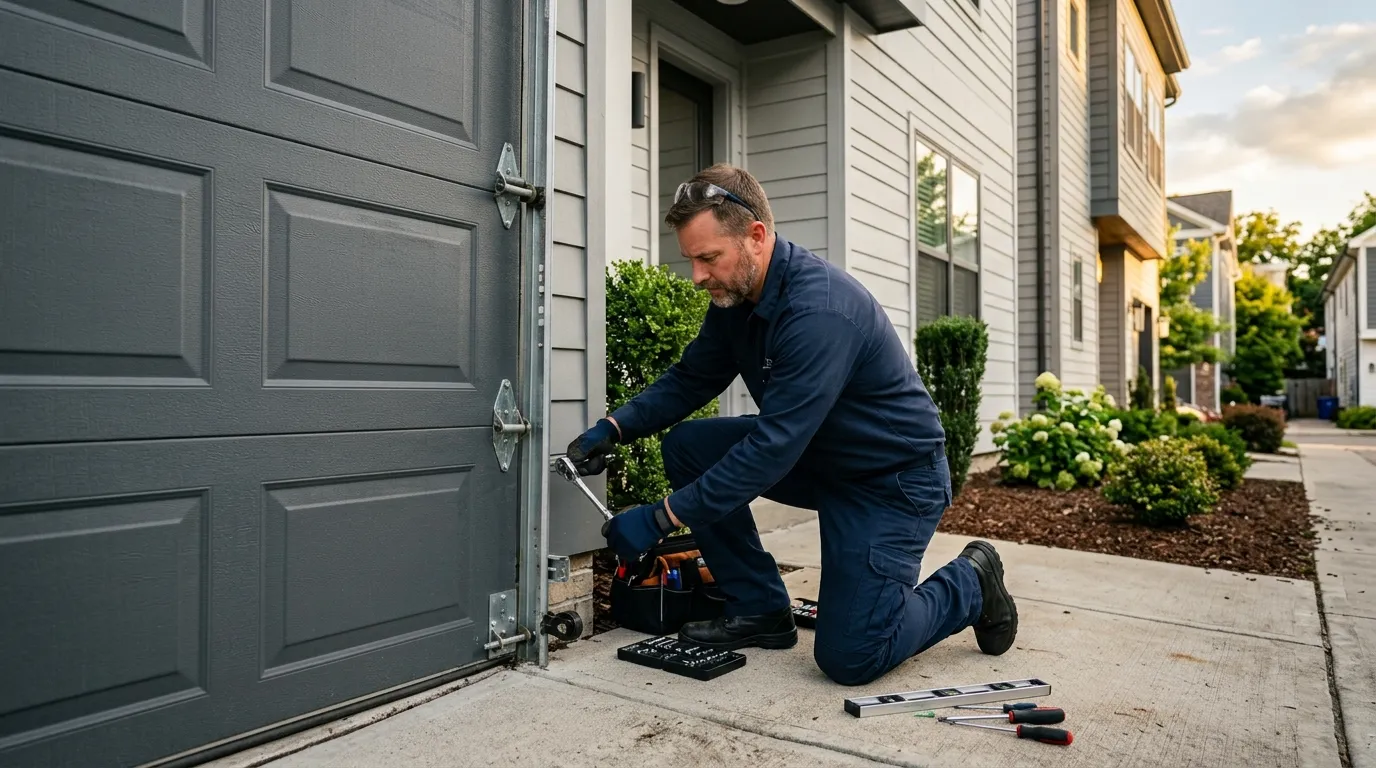
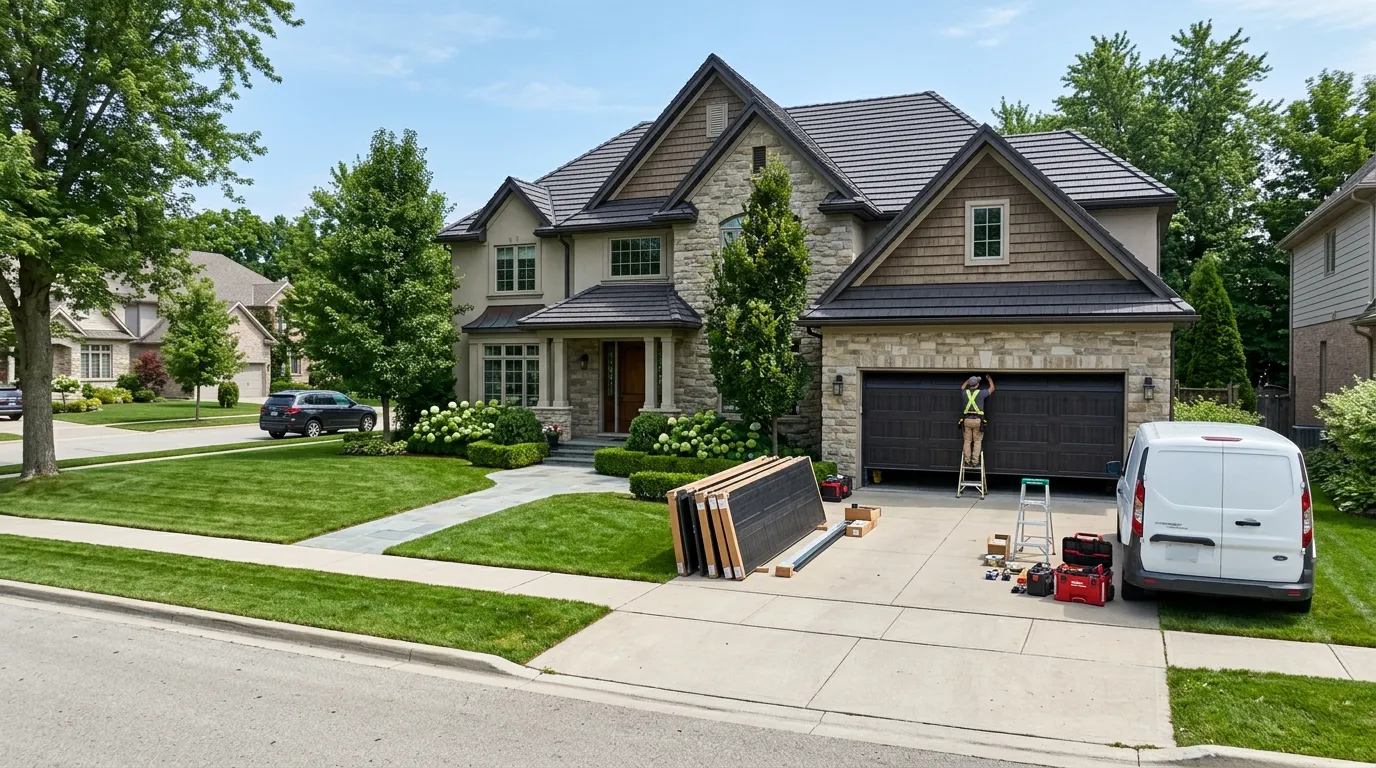
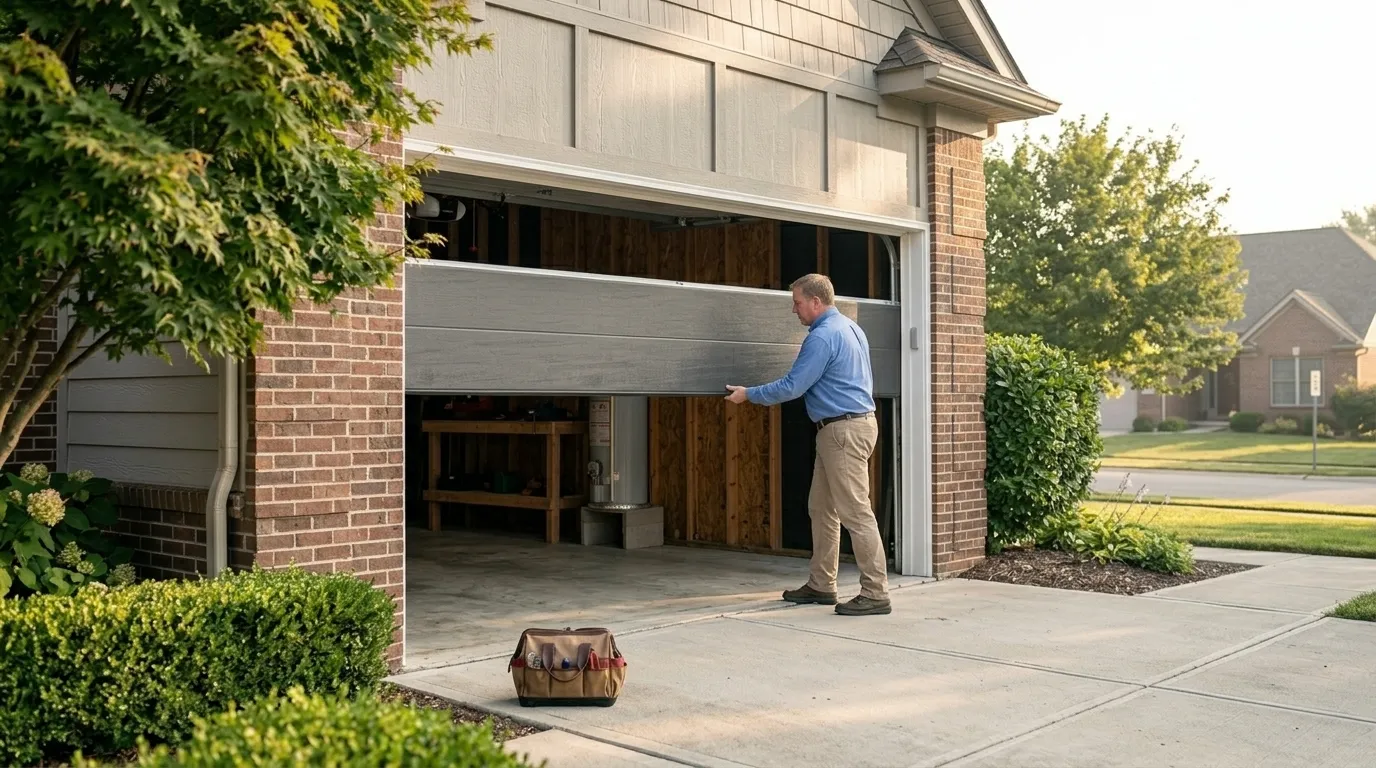
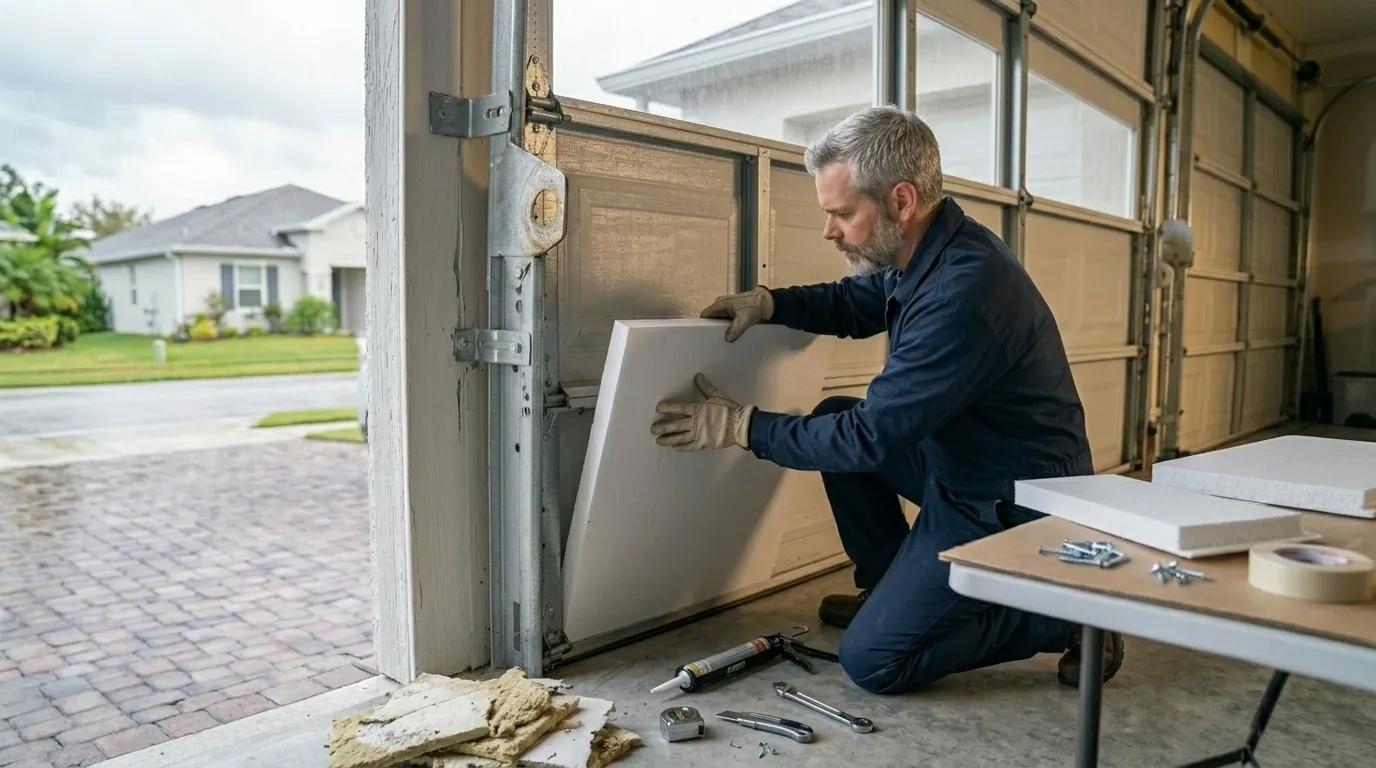
A full replacement starts with pulling the old door off the track - panels, cables, and springs together - and checking the jamb and header for rot or settling before anything new goes up, which matters more on a 1958-built opening than a newer one. If the track is bent or the drums are worn, that gets swapped too rather than reused, since mixing new springs with old track hardware is a fast way to end up back at square one. The new door goes in section by section, with the track plumbed and squared against the actual opening rather than the original frame measurements, because a lot of these openings have shifted slightly over sixty-plus years. Spring tension gets set for the finished door's weight, and the opener - new or reused - gets recalibrated to match. We test the balance by hand before the opener ever touches it: a door that won't hold itself steady halfway up isn't ready for a motor. The whole job gets a final check on travel limits and auto-reverse before we call it done.
What You Are Seeing
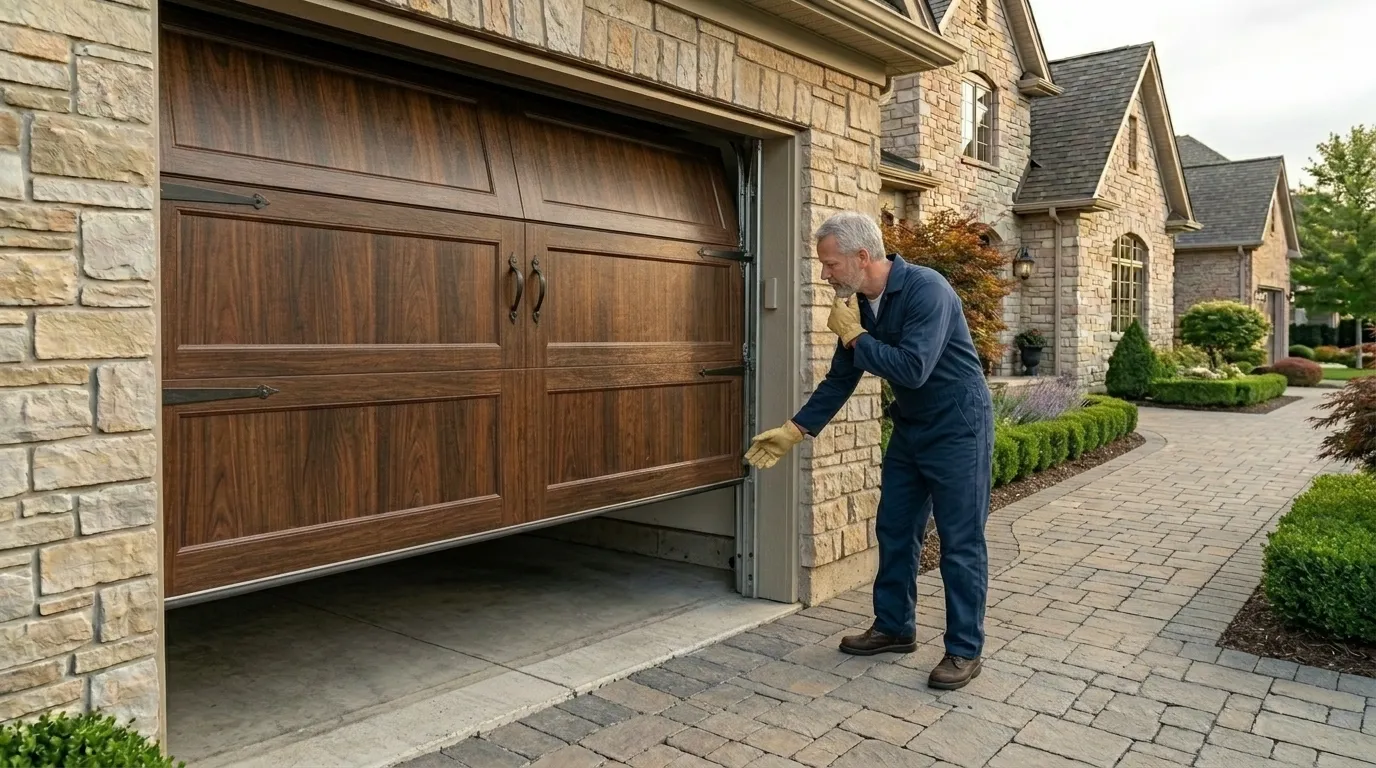
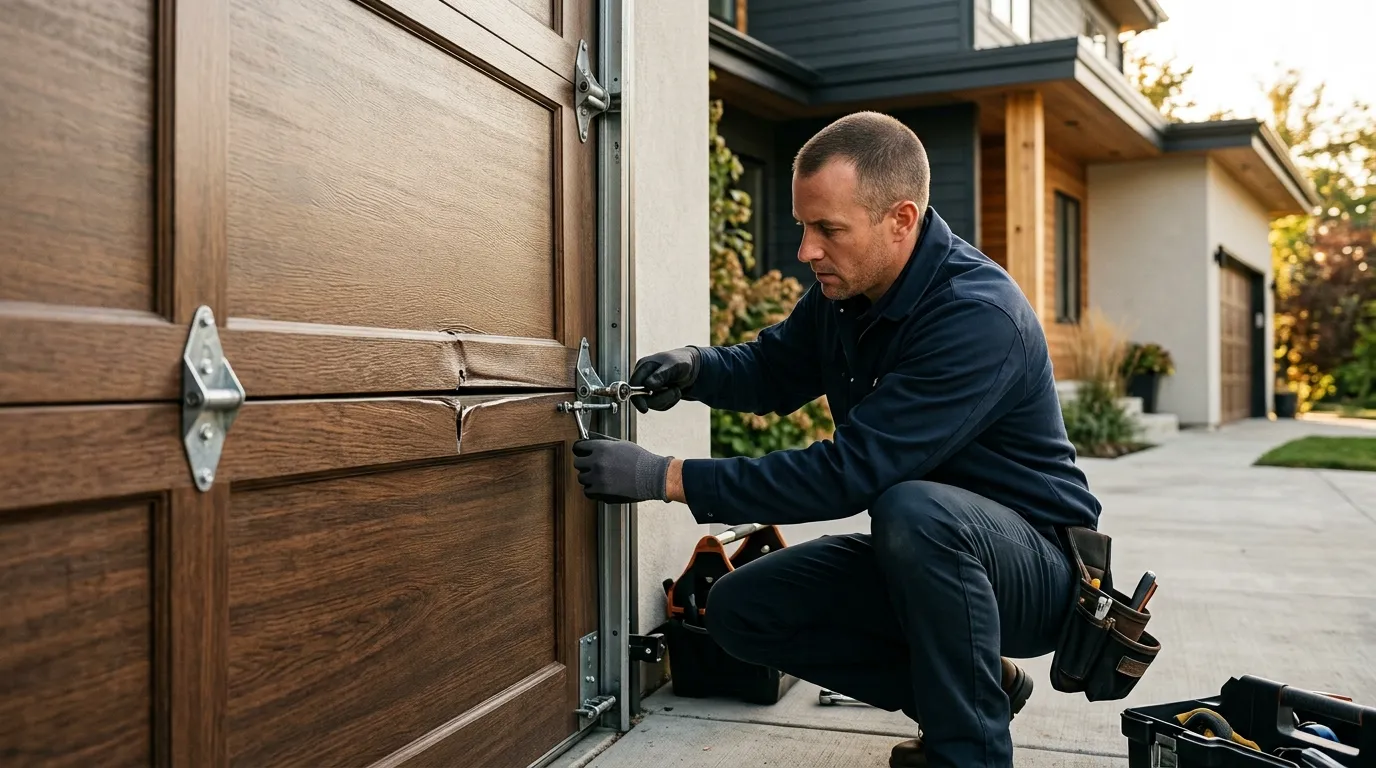
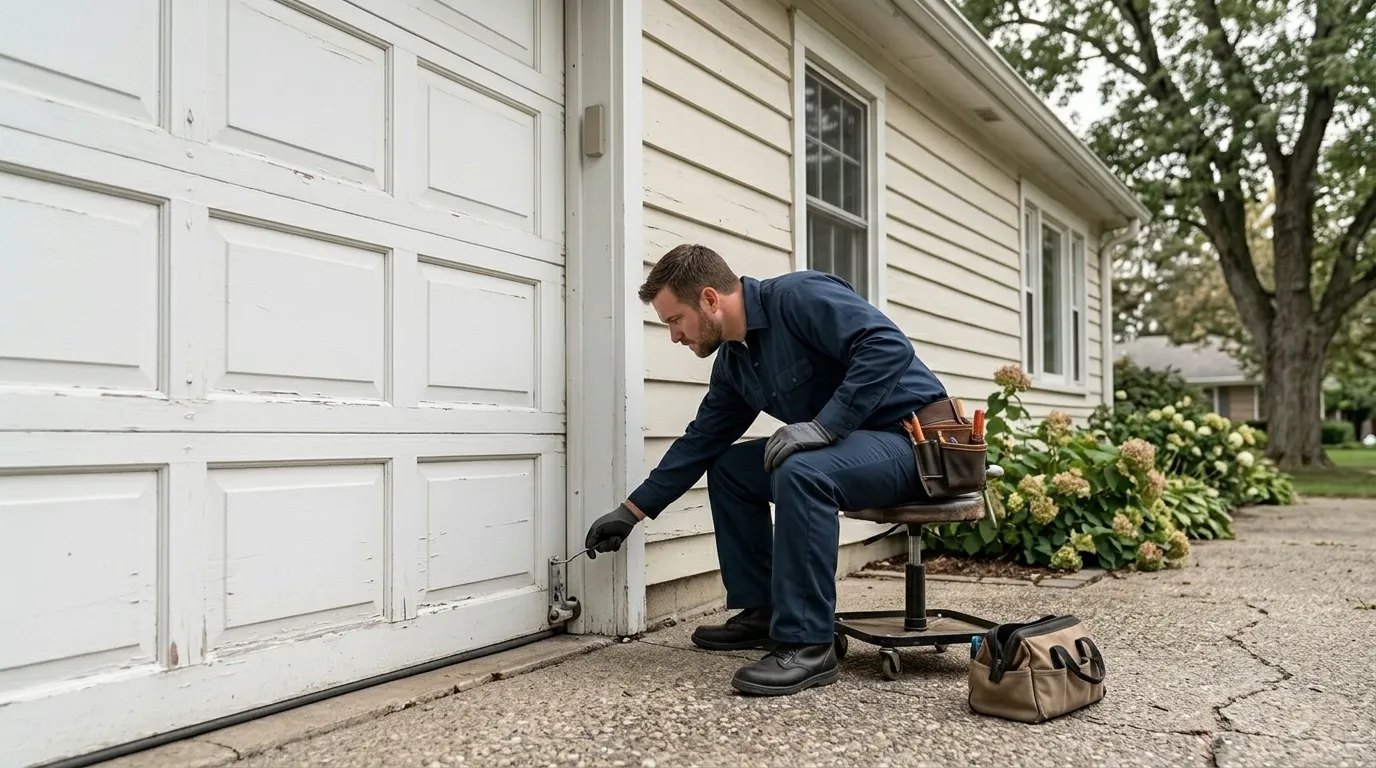
On a door this age, the tells usually show up at the corners before they show up in the middle. Look for rust bleeding out from the hinge pins or roller brackets rather than the panel face - in this climate that's almost always the corrosion getting ahead of the steel. A door that sags visibly at one top corner when it's down, or that needs a shove partway up before the opener can finish the lift, is telling you the spring tension no longer matches the door's actual weight, which drifts as steel doors age and gather moisture inside the panel. Grinding or popping from the track usually means a bent section or worn rollers, not a motor problem, even when the opener is what people notice first. If the garage door remote works fine but the door itself moves in stutters, check the track alignment before assuming the opener's at fault - on original 1958-era openings, a slightly warped frame is common enough that it's worth ruling out first.