Garage Doors Built Before Insulation Rules Existed
Most Miami garage doors date to the 1953-2005 building boom, before insulation codes existed. Here's what that means for your door, spring, and opener today.
Across the 54 named areas we work in, from Riverside out to Kendall and Miami Lakes, most housing went up between 1953 and 2005, with the median build year sitting around 1976. That matters because insulation requirements for garage doors weren't standard in Florida residential code back then. A door installed in a home built in the 1960s or 70s is very likely a single-layer steel or aluminum panel with no thermal break, no vapor barrier, and no rating for keeping heat out of an attached garage.
That's not a defect. It's just what was normal for the era. But it means the door skin is thin, the panels dent easier, and the hardware wasn't spec'd for the load a modern insulated retrofit door carries. If your house falls in that 1953-2005 window - and across this service area, most do - you're probably dealing with original or first-generation replacement equipment that was never built to hold in air conditioning.
How Local Conditions Play In
Miami sits in a mild temperate band, but mild doesn't mean gentle on a garage door. Humidity works on uninsulated steel year-round, and a single-layer panel with no vapor barrier sweats on the inside face when the AC runs against outside air. Over decades that shows up as rust starting from the inside out, along the bottom panel and around roller stems, not just at the weather seal like you'd expect.
Houses built before insulation rules also tend to have lighter-gauge track and hardware, since the door itself was lighter. When an owner in one of these older homes upgrades to a heavier insulated door later without upgrading the track, springs, and opener mount, the new door outlives the old hardware fast. We see this pattern most in the older stock concentrated in the 1960s-70s pockets around the service area, less so in newer sections built after 2000.
What to Look At First
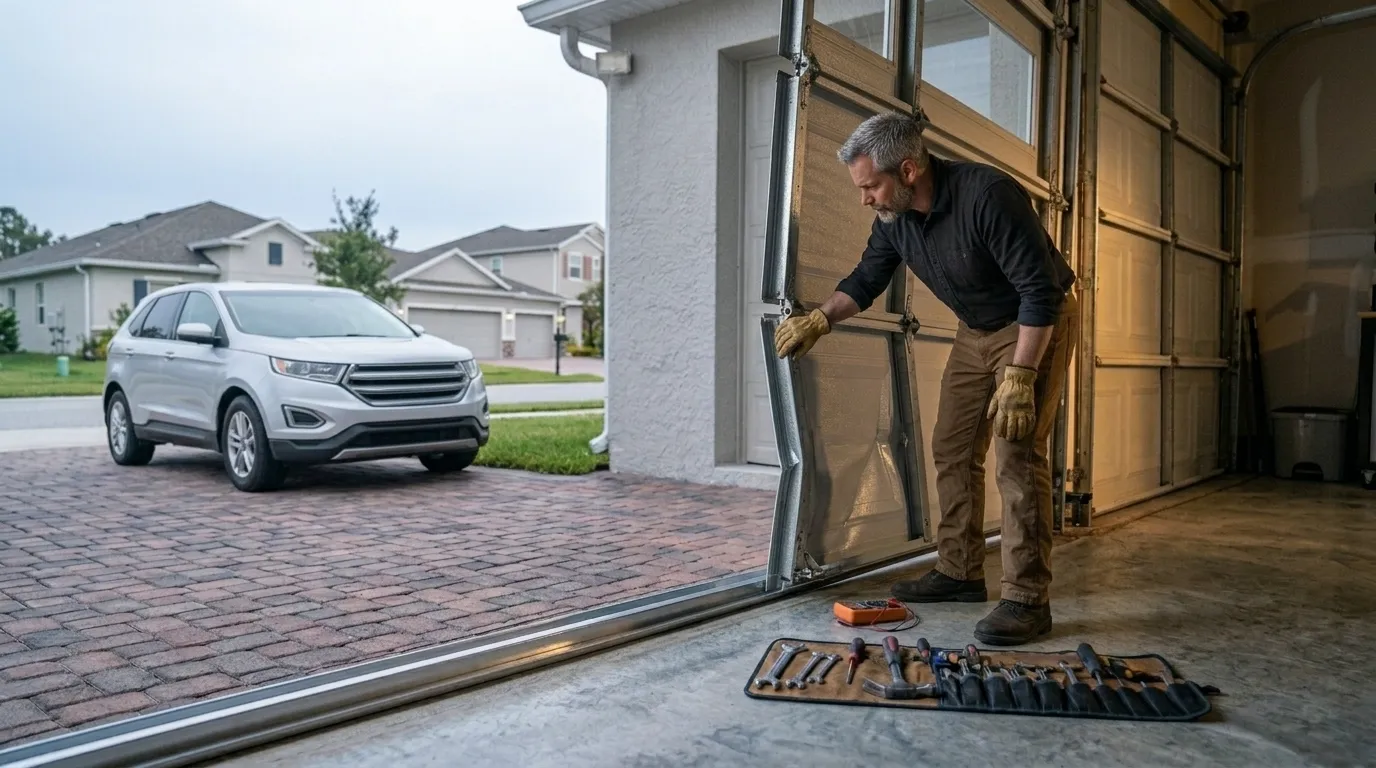
Start with the panel itself. Press on the bottom section - if it flexes a lot or feels cool and slightly damp to the touch on a humid day, it's uninsulated single-layer steel, which is what you'd expect from a pre-code house. Next check the inside of the bottom panel and the roller brackets for rust that started from the interior, not the outside edge. That's the humidity-against-cold-steel pattern specific to older, uninsulated doors in this climate.
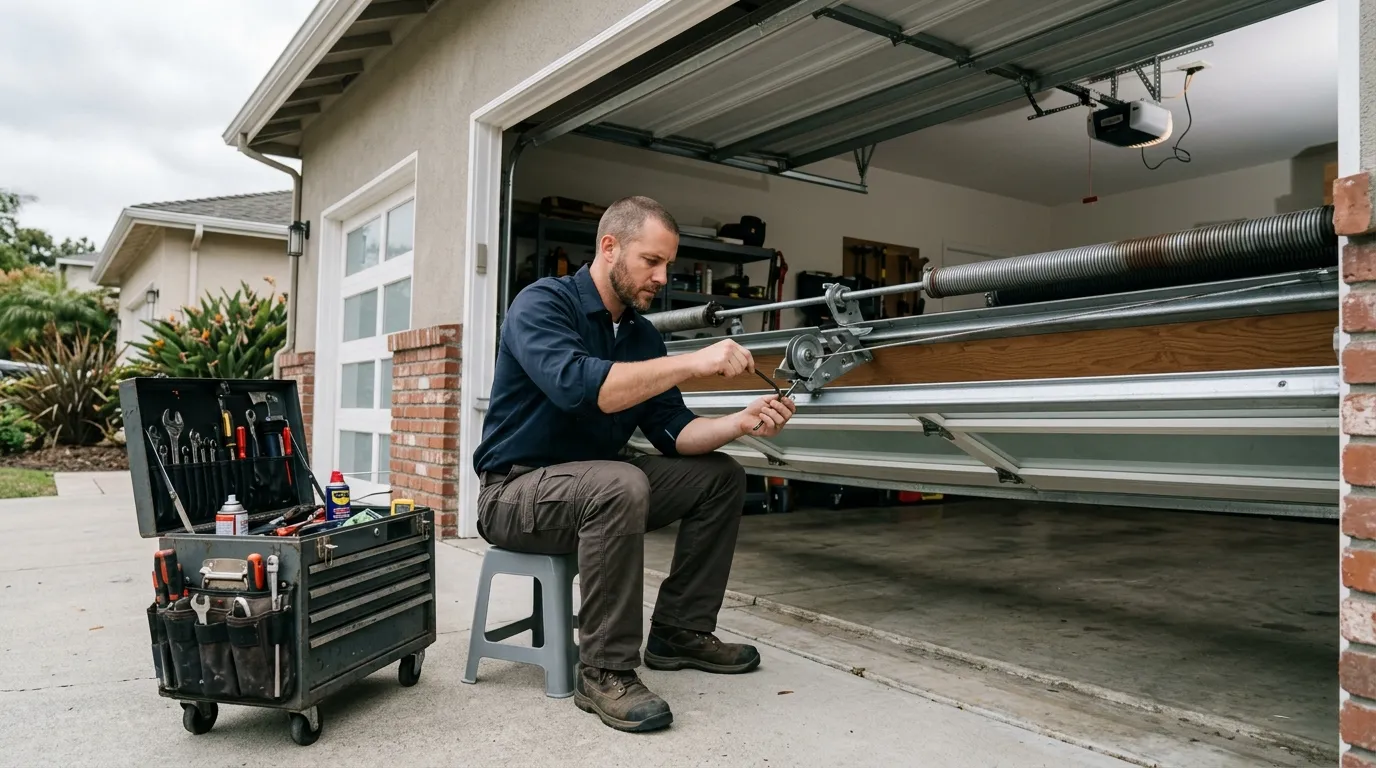
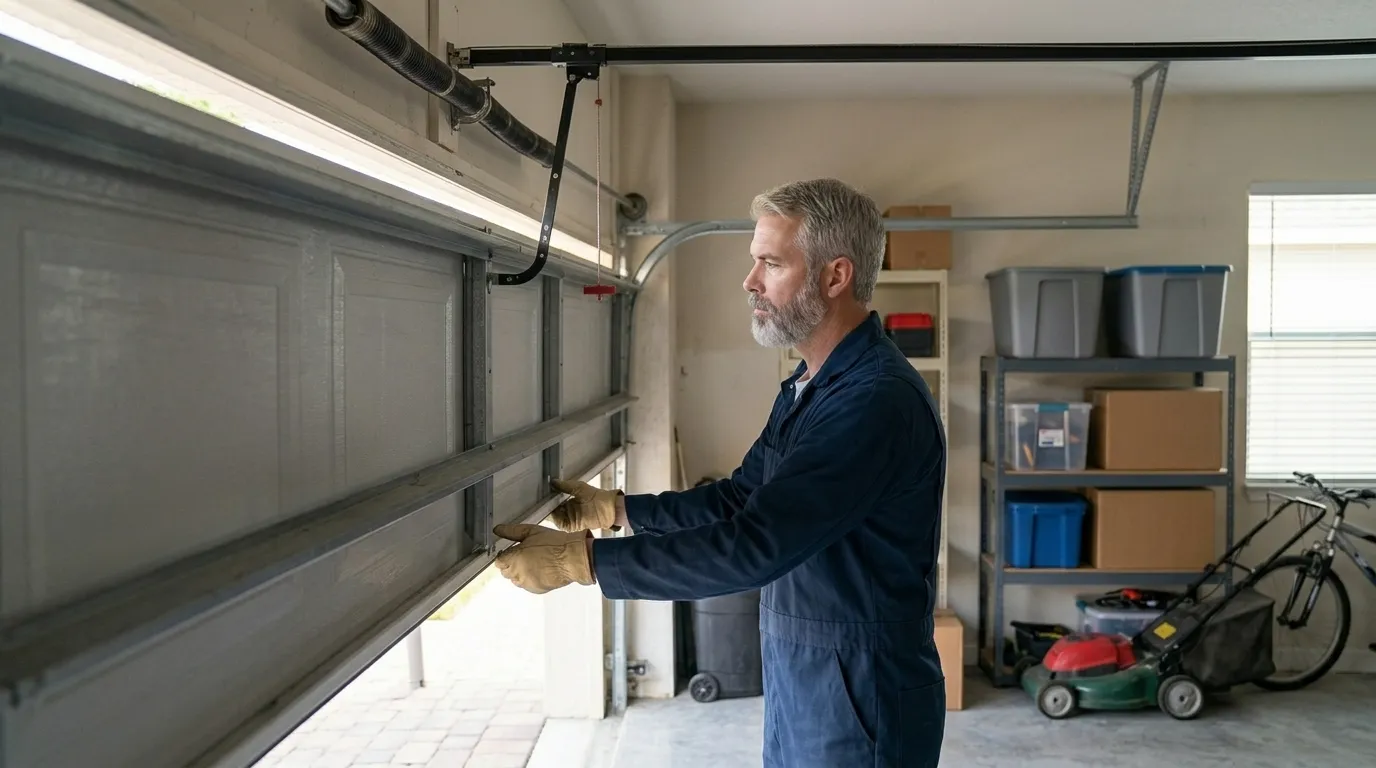
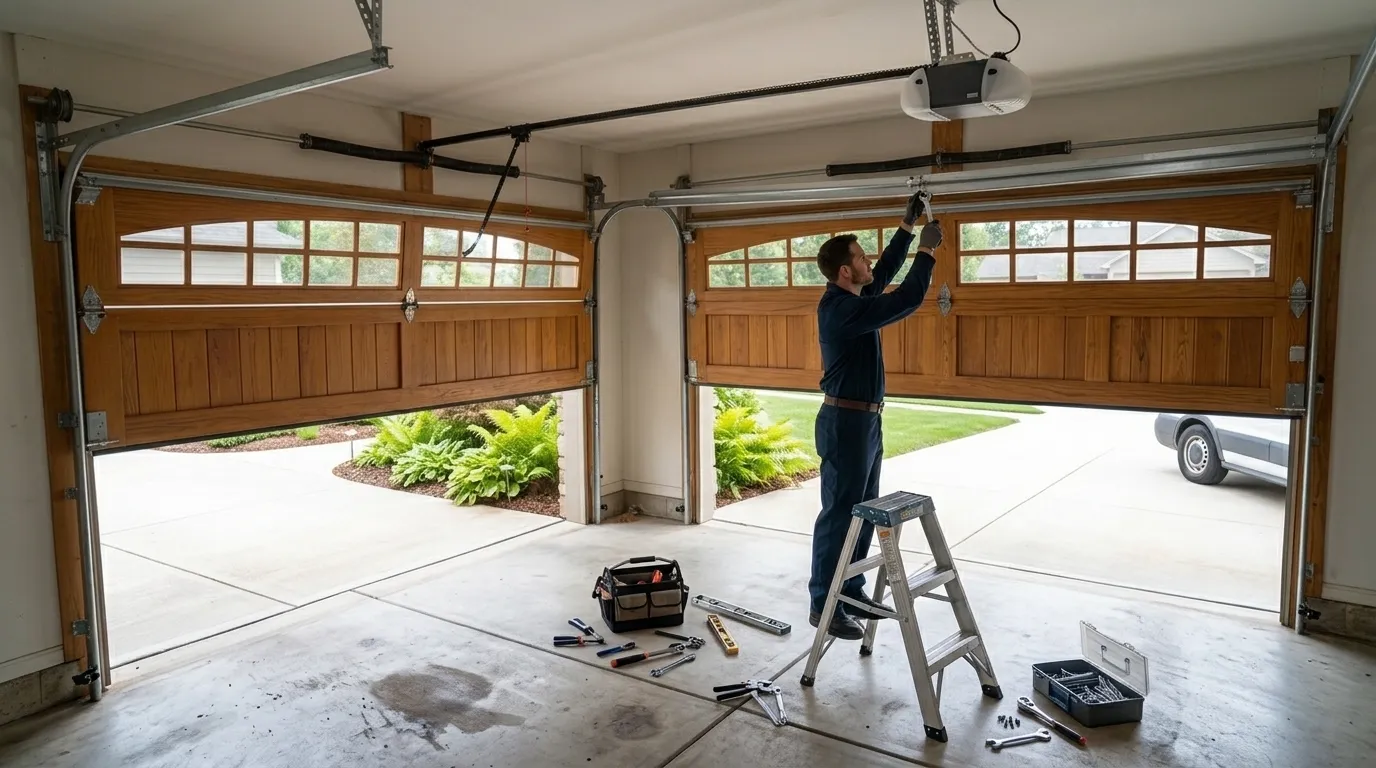
Also look at the track gauge and spring size relative to the door. If a heavier insulated door was swapped in at some point but the track still looks thin and the spring still looks original, that's a mismatch worth having checked before it fails on you. One thing we won't do is tell you a torsion spring is fine just because it's not broken yet - if it's original to a 1970s install, it's decades past its rated cycle count regardless of appearance.
The Cost of This Job
We're not going to quote a number here without knowing what's actually on your house - a full insulated replacement on an older 1960s or 70s opening is a different job than swapping hardware on an otherwise sound original panel. What we can tell you is that the age of the housing stock across this area (median build year 1976) means a lot of jobs here involve matching new components to old, non-standard openings rather than a straightforward drop-in replacement, and that adds labor time compared to a newer home with modern rough openings.
The honest limitation: if your door and opener are both original to a house from that 1953-2005 window and showing wear, patch repairs sometimes cost more over a year or two than replacing the whole unit once. We'll tell you when we think that's the case instead of billing you for repeated service calls on equipment that's done.
How it works
From “it’s stuck” to “it’s fixed”
01
Tell us what’s wrong
Describe the symptom - won’t open, loud bang, opener runs but the door won’t move.
02
On-site diagnosis
A technician tests the door under power and by hand and finds what actually failed.
03
Clear, up-front plan
You get the fix that’s needed and what drives the cost - before any work starts.
04
Repaired & tested
The repair is done, the door is set true and tested, and the work area left clean.
Next step
Serving Miami, FL - tell us what your door’s doing and we’ll take it from there.
How do I know if my garage door has insulation or not
Knock on the bottom panel. A hollow, thin sound with visible flex means single-layer steel, common in houses built before insulation rules were standard here. An insulated door feels solid and won't flex much when pressed. Given the median build year in this area is 1976, a lot of original doors are the uninsulated type.
Is rust on the inside of my door panel normal
On an uninsulated door in a mild, humid climate like Miami's, yes - it's a known pattern. Warm, humid air meets a cold steel panel with no vapor barrier and condenses on the interior face over years. It's more common on older, single-layer doors than on newer insulated ones.
Should I insulate my existing garage door or replace it
Depends on the door's age and hardware condition. If the track and springs are original to a house from the 1960s or 70s, adding insulation panels to an old door won't fix undersized hardware. We'd look at the whole system, not just the panel, before recommending either option.
Ready to get your garage door sorted?
Tell us what it’s doing and where you are in Miami - we’ll take it from there.