How Local Conditions Play In
Miami sits in a mild temperate band, which is a mixed blessing for a garage door. You aren't dealing with freeze-thaw cycling that cracks concrete slabs or swells wood jambs the way a cold-winter town would. That's one less thing working against the door year-round. But mild temperate also means the wind that does show up isn't offset by anything else wearing the door down first - the track, springs, and panel seams take wind load on hardware that's otherwise aged slowly and predictably.
The practical effect: a wide door on a house from the 1960s or 70s wave of construction has had five or six decades to accumulate small slack - a hinge screw backed out a turn, a roller worn oval, a bottom bracket lagged into wood that's dried and shrunk slightly. None of that shows up on a still day. Under wind load, that slack is exactly where the door flexes, and a double-wide panel flexes across a wider span than a single door does. The fix usually isn't a new door. It's tightening and reinforcing the one that's already there before wind finds the weak point for you.
What to Look At First
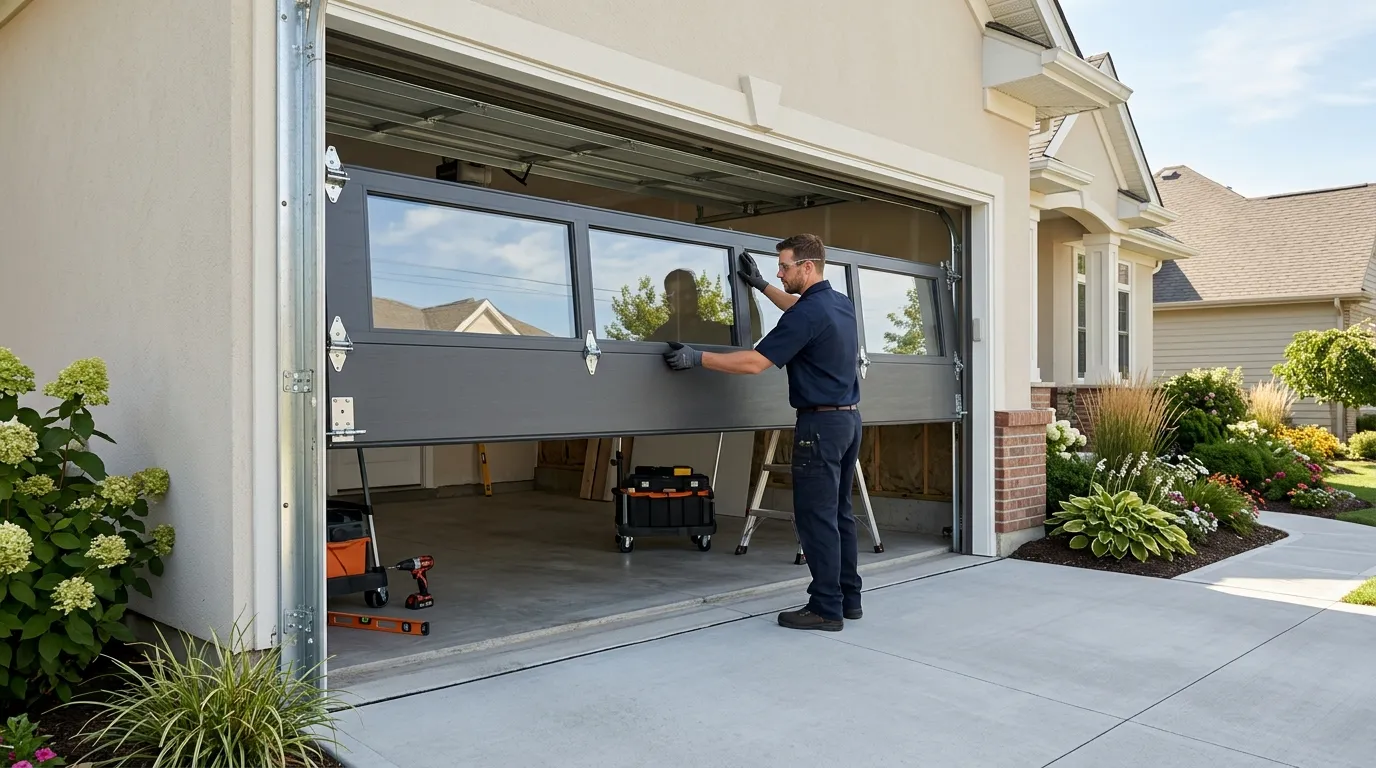
Start at the center of the door, not the edges. On a double-wide door, the vertical seam between panel sections is the first place that shows movement - daylight flexing in and out, a rattle when the wind gusts, or a track that walks slightly out of its bracket. If your house falls in that common 1960s-70s build window for this area, check whether the door has a horizontal strut across the back of the top panel. Many original doors from that period don't, because bracing of that kind wasn't standard when the house was built.
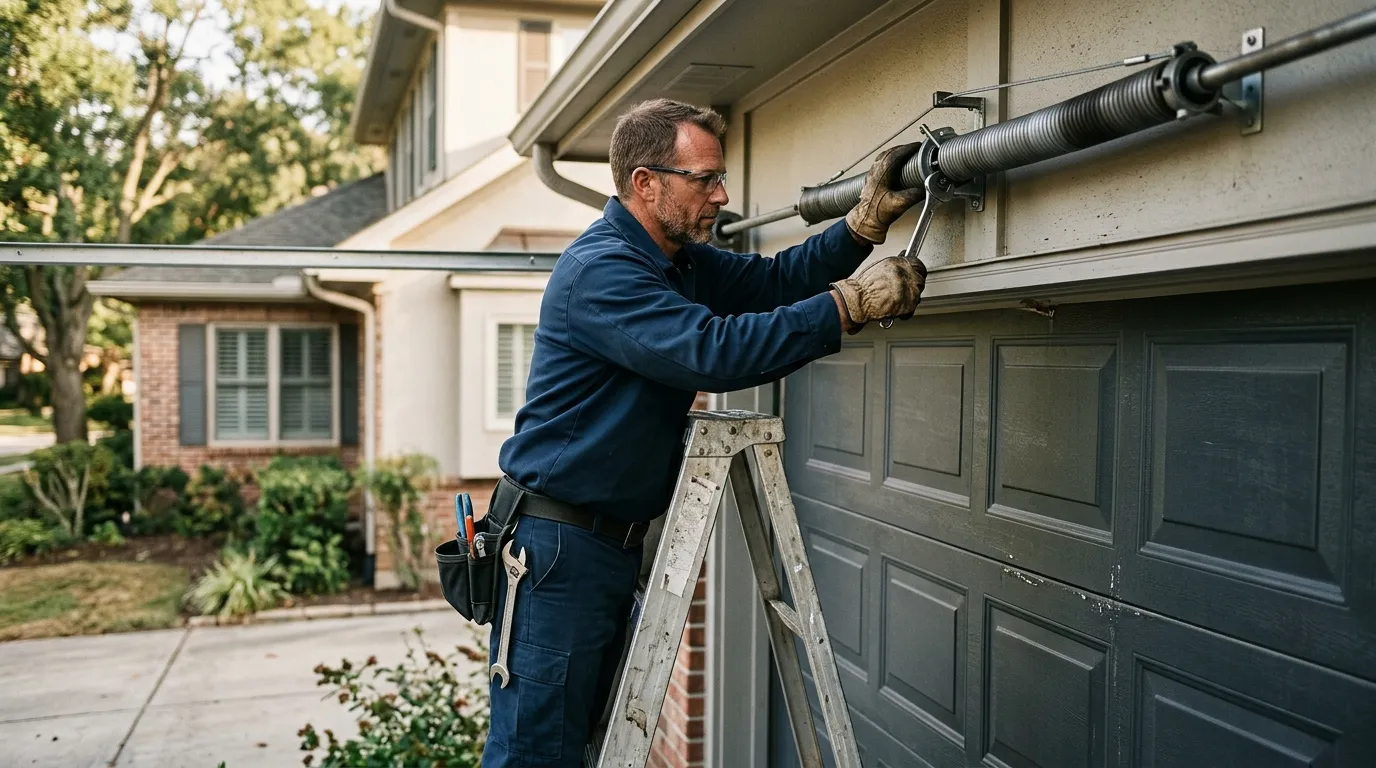
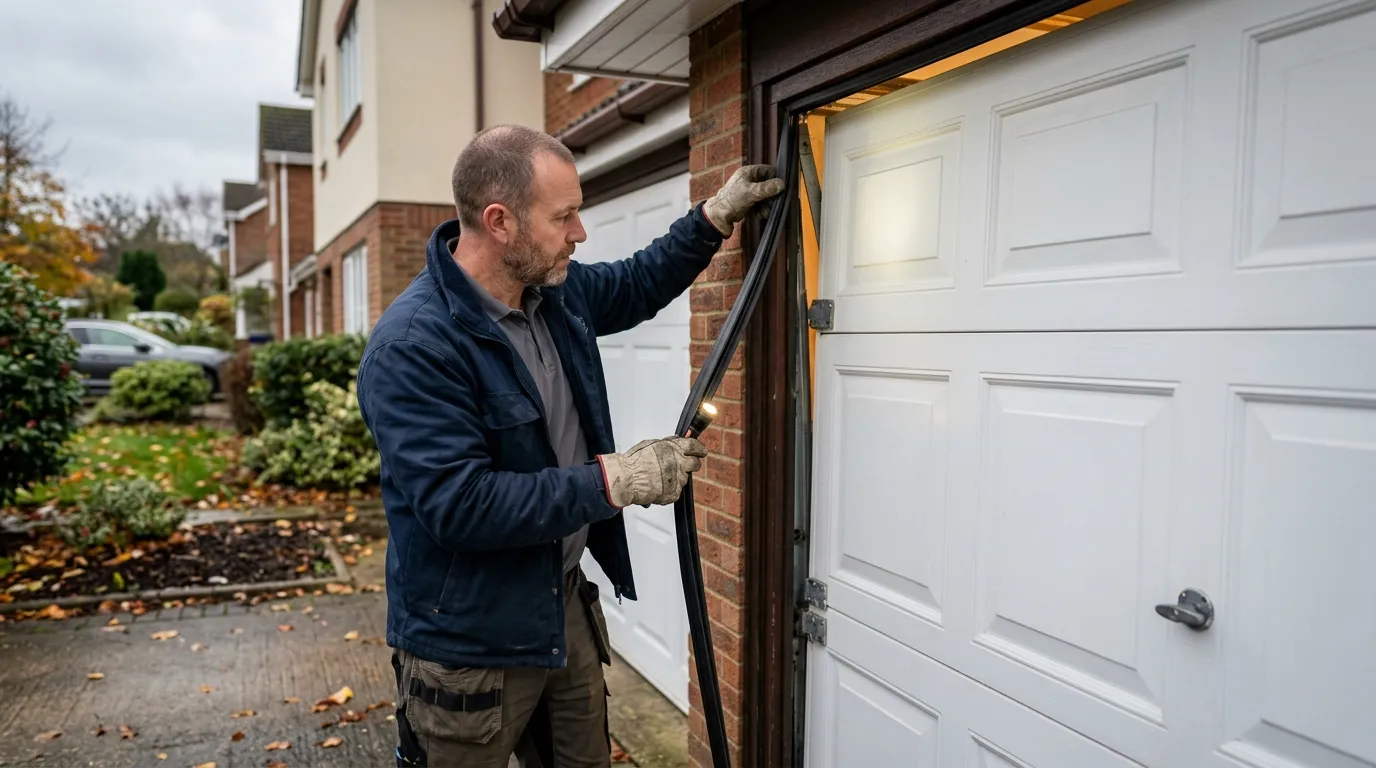
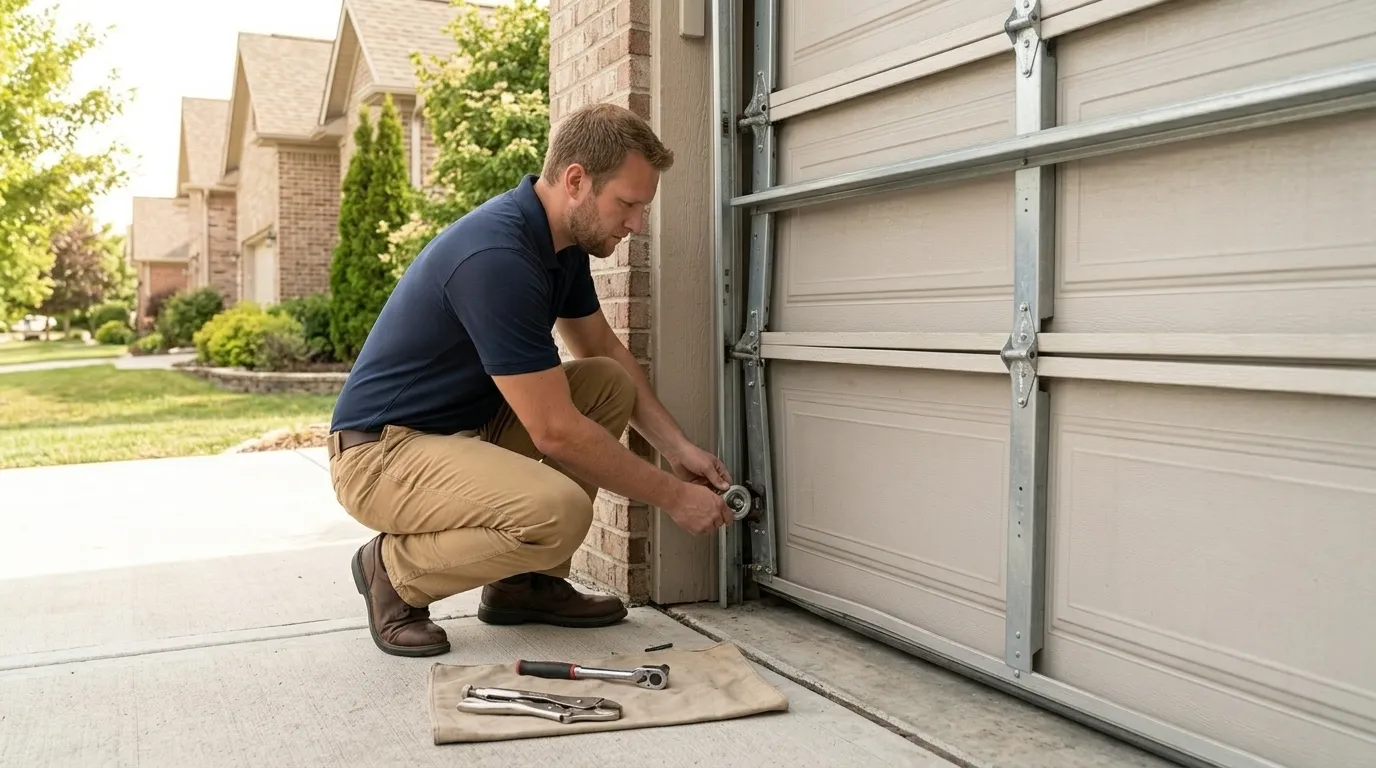
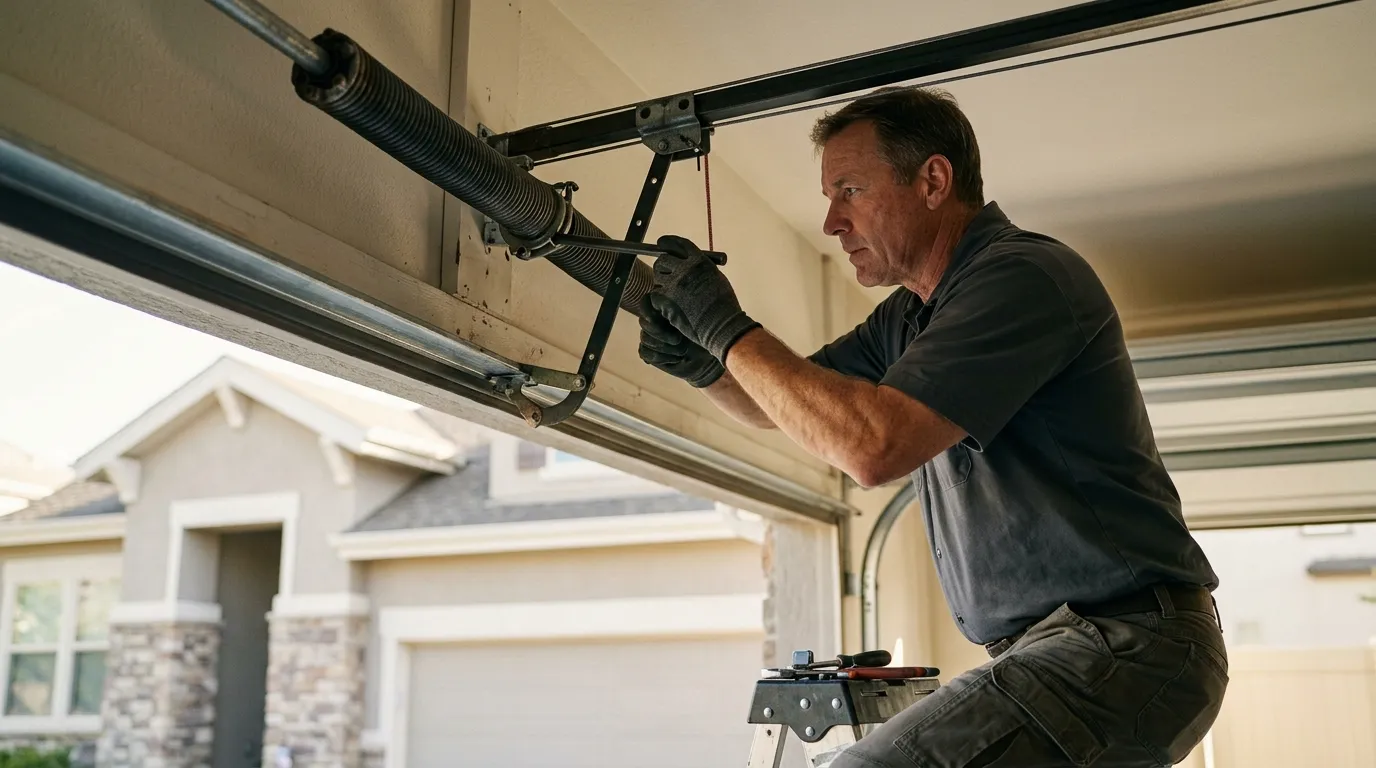
Next, check the track brackets where they lag into the framing. Wood that's dried out over 50-plus years can let a lag bolt sit loose in an oversized hole even though the bolt itself looks fine. Last, look at the end hinges on the top two panels - those carry the most twisting force on a wide door and are usually the first hardware to show wear. None of this requires taking the door apart to check; a flashlight and five minutes will tell you which of the three needs attention.