24/7 Emergency Service Open 7 days · 7am–8pm Serving Miami, FL & nearby
(786) 358-3031
Miami, FL

Why Your Garage Door Seals Fail the Way They Do Here

Miami's mild, humid climate and 1950s-2000s housing stock wear down garage door seals in specific ways. Here's what to check and what replacement actually involves.

Why Your Garage Door Seals Fail the Way They Do Here

What Is Going On

Most houses on this side of Miami-Dade went up somewhere between 1953 and 2005, with the bulk of that stock dating to the 1960s and 70s across the 54 named areas we work in, from Riverside and Little Havana out to Kendall and Doral. That matters because the bottom seal and the side weather-stripping on a door from that era were never built for the kind of wear a mild, humid climate puts on rubber. You don't get the freeze-thaw cracking that ages seals up north. You get a slower breakdown: the vinyl or rubber goes soft, then brittle in the sun-facing sections, then it separates from the track or the bottom retainer. On an original steel door from the 70s, that retainer itself is often bent or rusted at the corners, so a new seal won't seat right even if you swap it. The gap you're feeling under the door on a breezy day usually isn't one bad spot. It's a seal that's given up along its whole length, plus a track or slab that's shifted slightly out of square over 40-plus years.

How Local Conditions Play In

Miami sits in a mild temperate band, so you're not fighting ice or heavy snow load, but you are fighting near-constant humidity and long stretches of direct sun on doors that face west or south. That combination breaks down standard seal material faster than a drier, colder climate would - the material doesn't crack from cold, it fatigues from heat cycling and UV, then tears the first time wind pushes rain sideways under the door. If your house sits in one of the closer-in areas like Brickell, Edgewater, or Little Havana, where a lot of that older housing stock is concentrated, the seal on the sun side of the door is almost always in worse shape than the shaded side. That's not a maintenance failure on your part. It's what the material does after a few decades in this kind of heat and moisture, and it's why a seal that looks fine from the driveway can still be letting water and bugs through underneath.

What to Look At First

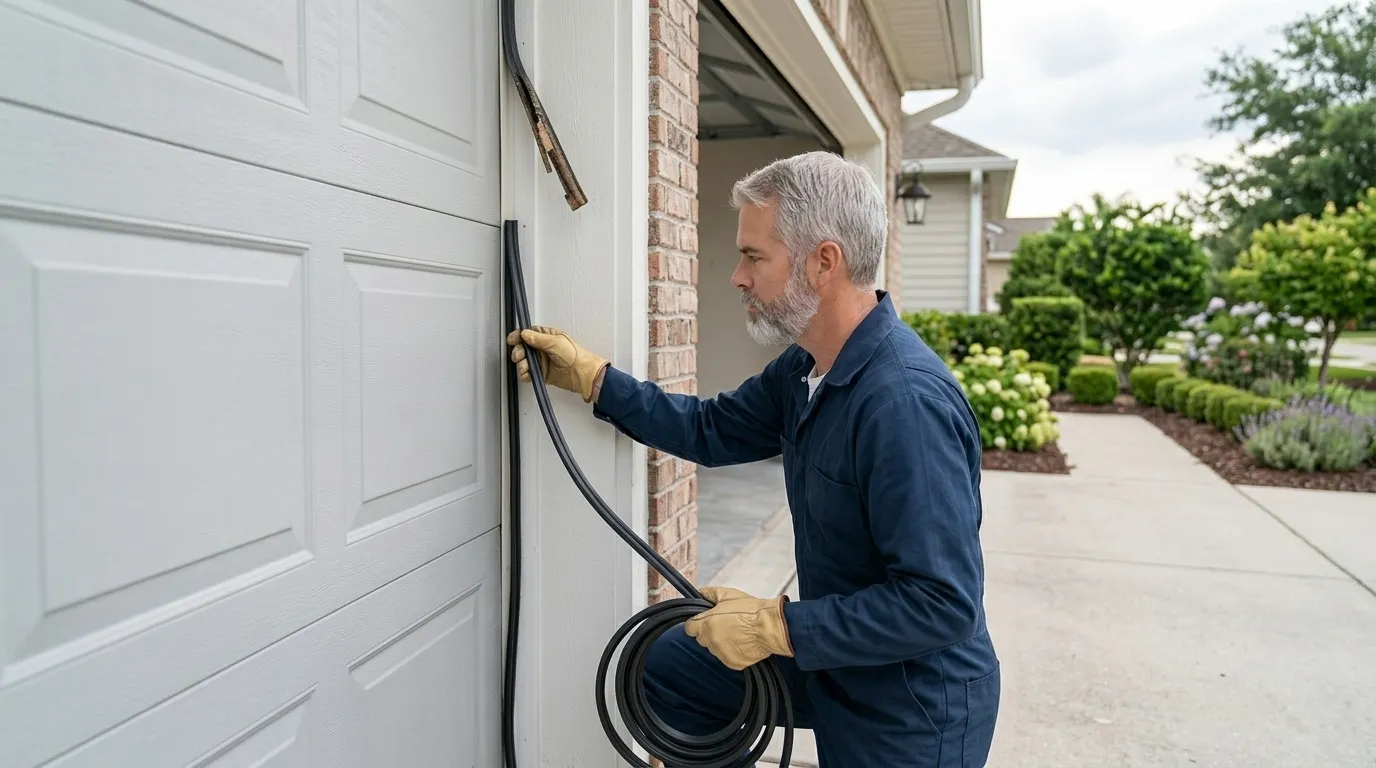
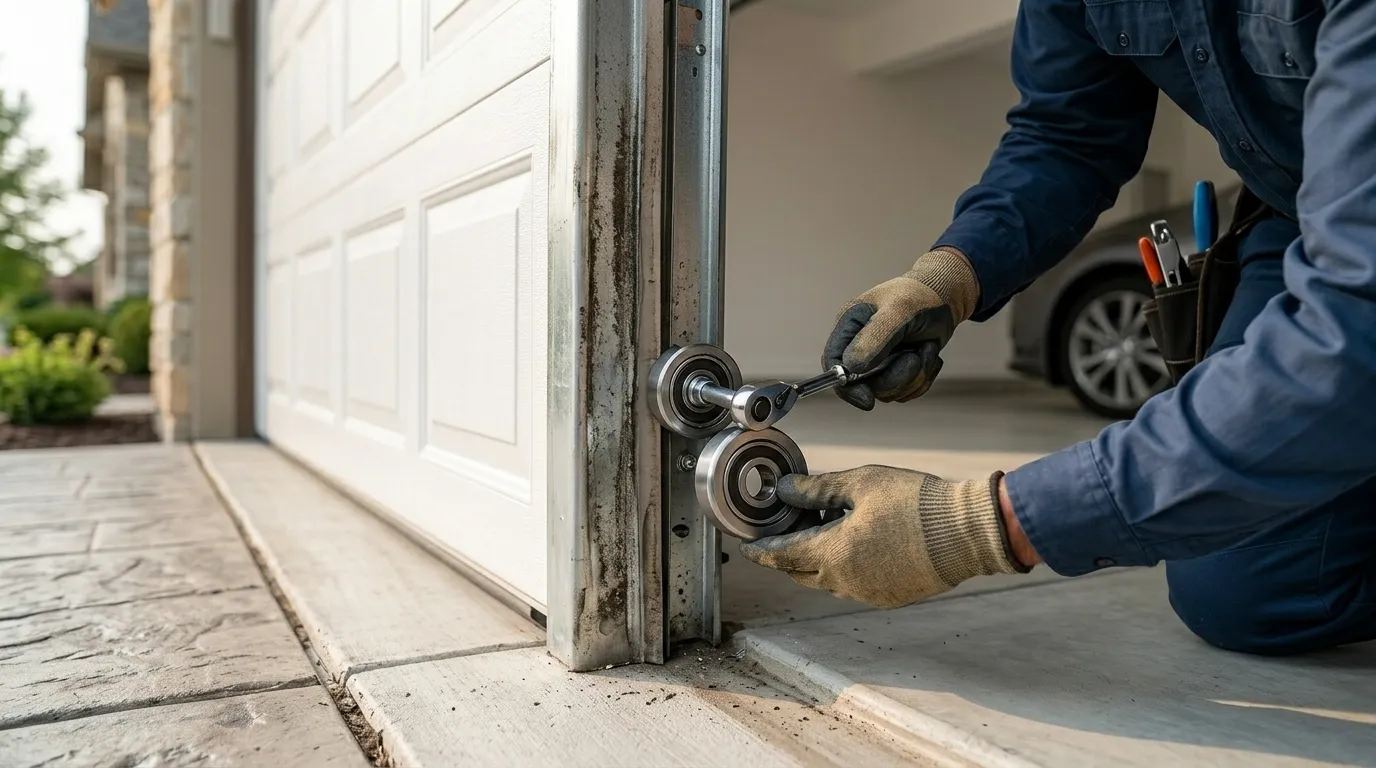
Start at the bottom seal, since it's the part doing the most work and the first to go. Run your hand along the underside with the door down - if you feel gaps, stiffness, or flaking rubber, that's your draught. Next check the retainer track it sits in; on houses from the 1960s-70s stock common across this area, that track is often the original metal and can be bent enough that no replacement seal will sit flat. Then look at the side and top seals where the door meets the frame, especially on any wall that gets afternoon sun. Last, check the slab itself for warping - steel doors from this era can bow slightly after years of heat, and a bowed panel will never seal tight no matter what weather-stripping you put on it. We won't sell you a seal kit if the real problem is a warped panel; in that case replacing the section costs less over time than re-sealing a door that won't hold a seal anyway.
The Cost of This Job

We can't give you a number without seeing the door - a straight seal swap on a door with a sound track and flat panel is a different job than one where the retainer is bent, the track needs re-aligning, or a panel needs replacing outright. What we can tell you is how to think about it: with median household income across the service area at $71,020 and a mix of older and newer housing stock, most of the jobs we see split into either a quick seal-and-retainer fix or a full panel or door replacement once the slab itself is warped. If your door is original to a house built in the 1960s or 70s, budget for the possibility that the seal isn't the whole story. We'll tell you straight if a $30 part will hold or if you're better off putting that money toward a new bottom section instead of chasing a seal that keeps failing.

How it works

From “it’s stuck” to “it’s fixed”

Tell us what’s wrong - Miami garage door service

Tell us what’s wrong

Describe the symptom - won’t open, loud bang, opener runs but the door won’t move.

On-site diagnosis - Miami garage door service

On-site diagnosis

A technician tests the door under power and by hand and finds what actually failed.

Clear, up-front plan - Miami garage door service

Clear, up-front plan

You get the fix that’s needed and what drives the cost - before any work starts.

Repaired & tested - Miami garage door service

Repaired & tested

The repair is done, the door is set true and tested, and the work area left clean.

Next step

Serving Miami, FL - tell us what your door’s doing and we’ll take it from there.

How we work

What to expect

Diagnosis firstEvery visit starts by finding what actually failed - not a pre-written parts list.
The right part for the doorSprings and openers matched to the door’s weight and age, so the fix holds up.
Straight answersWhen a repair makes more sense than a replacement - or the reverse - you hear it plainly.
Clean, careful workTension released safely, hardware set true, the door tested under power before we leave.
Questions

Frequently asked

Straight answers about garage door repair in Miami. Still unsure? Ask us directly.

Why does my garage door seal keep failing even after I replace it?

In Miami's climate, the seal usually isn't the actual failure point - it's a symptom. If the bottom retainer track is bent or rusted, which is common on houses from the 1960s-70s stock in this area, a new seal won't seat properly no matter how many times you swap it. We check the track before we sell you a seal.

Does Miami's weather actually wear out garage door seals faster?

Yes, but not the way cold climates do it. There's no freeze-thaw cracking here since we're in a mild temperate band, but the constant humidity plus direct sun on west- and south-facing doors fatigues rubber and vinyl seals faster through heat cycling and UV, especially on older original doors.

My house is older - is my garage door original?

Housing in this service area was mostly built between 1953 and 2005, with a lot of it dating to the 1960s and 70s. If nobody's replaced the door, there's a real chance the slab, track, and hardware are original, which changes whether a seal fix or a full section replacement makes more sense.

Ready to get your garage door sorted?

Tell us what it’s doing and where you are in Miami - we’ll take it from there.

Request a QuoteCall