Why This Fails Locally
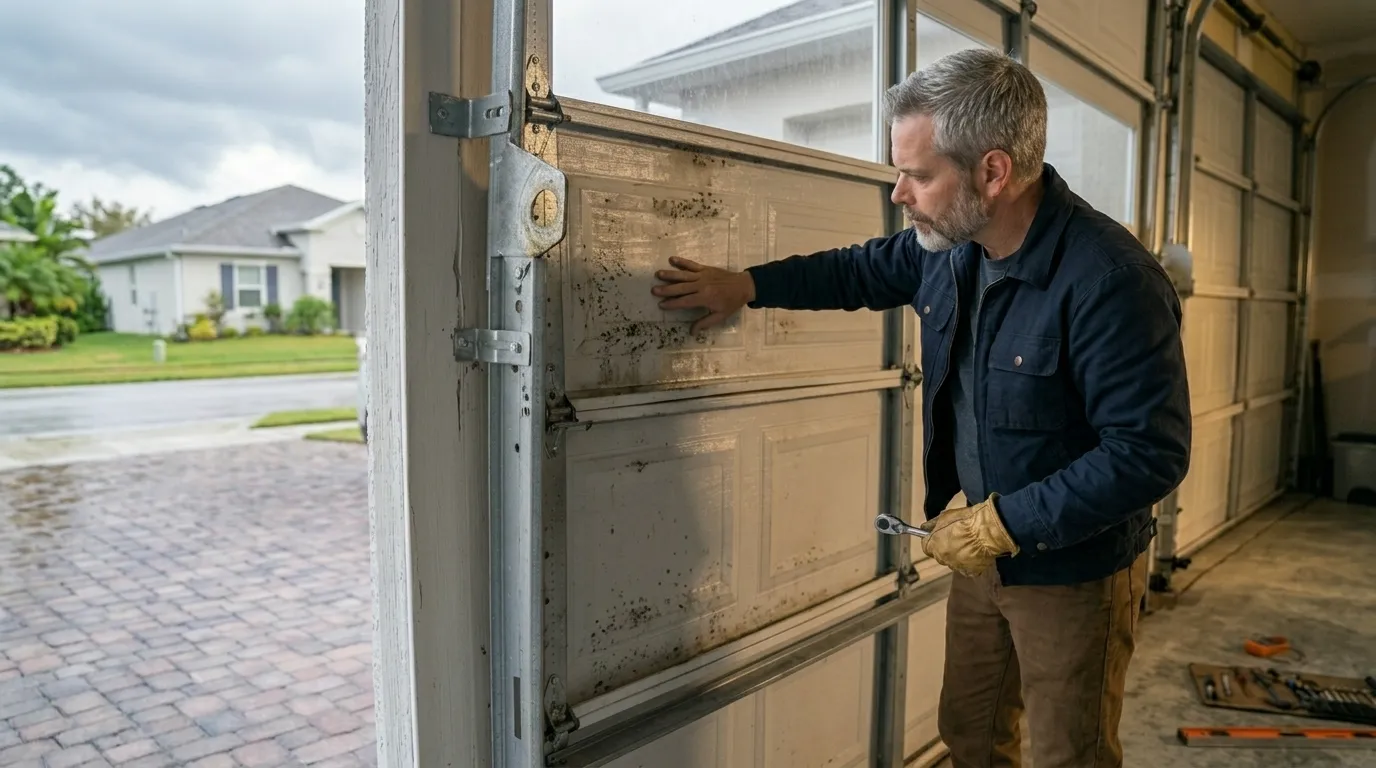
Housing across this service area was built mostly between 1953 and 2005, with the bulk going up in the 1960s and 70s - across all 54 named areas we track, from Riverside and Little Havana near downtown out to places like Kendall and Miami Lakes. That means a lot of the torsion springs, tracks, and drums still in service were sized for door weights and cycle counts that were standard forty or fifty years ago, not for the heavier insulated doors people have swapped in since.
The climate here is mild temperate - no hard freezes, no frost heave under the slab, none of the cracking you'd get in a place with real winters. That's actually part of the problem: nothing forces an early replacement. A spring or a track can limp along for years past when it should have been swapped, because the failure mode here is wear and fatigue, not sudden weather damage. So the hardware just gets older and older until one day it lets go, usually on a door that's been opened tens of thousands of times without anyone touching the springs.
What the Fix Involves
A dead torsion spring means matching the wire size and wind to the door weight - guessing wrong on an older single-panel door throws the balance off and wears out the opener fast. We check both springs even when only one has broken, since they age at close to the same rate and the second one is usually close behind.
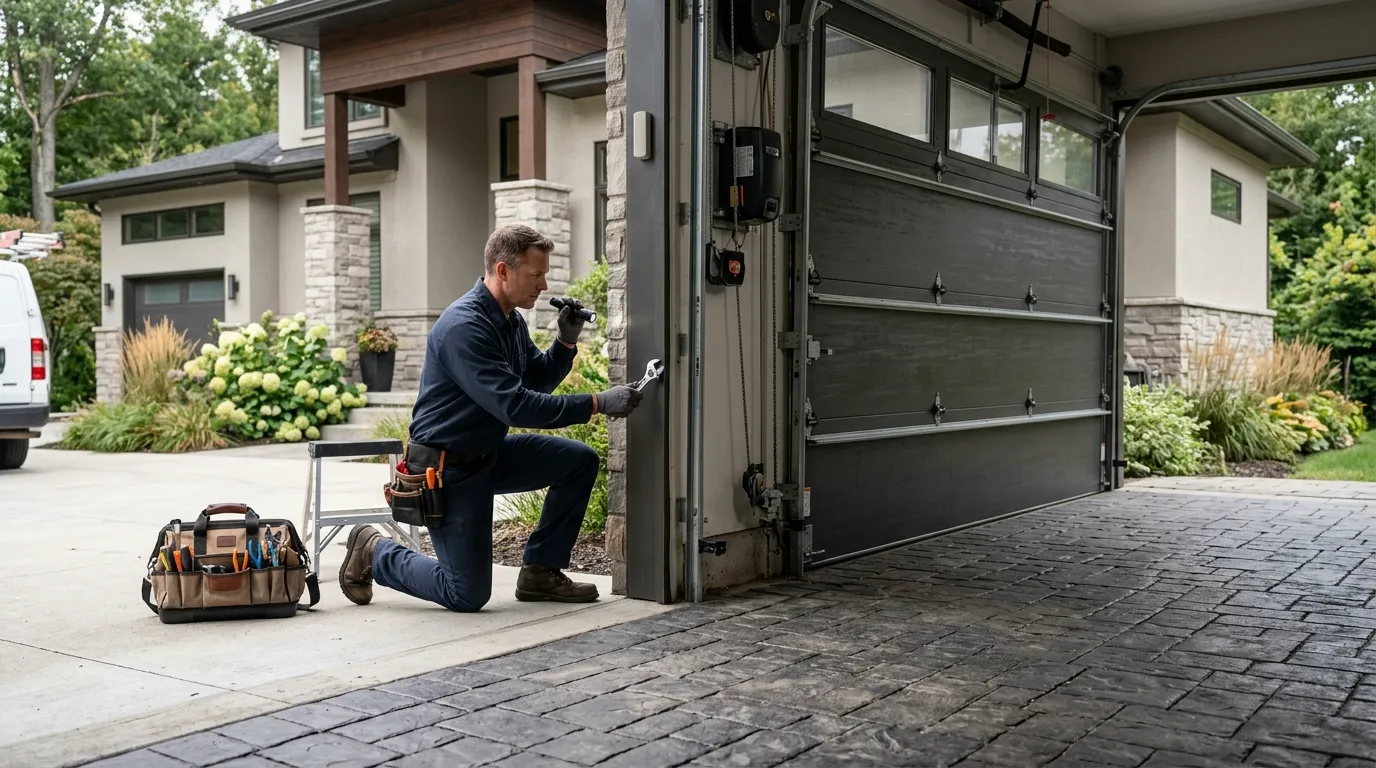
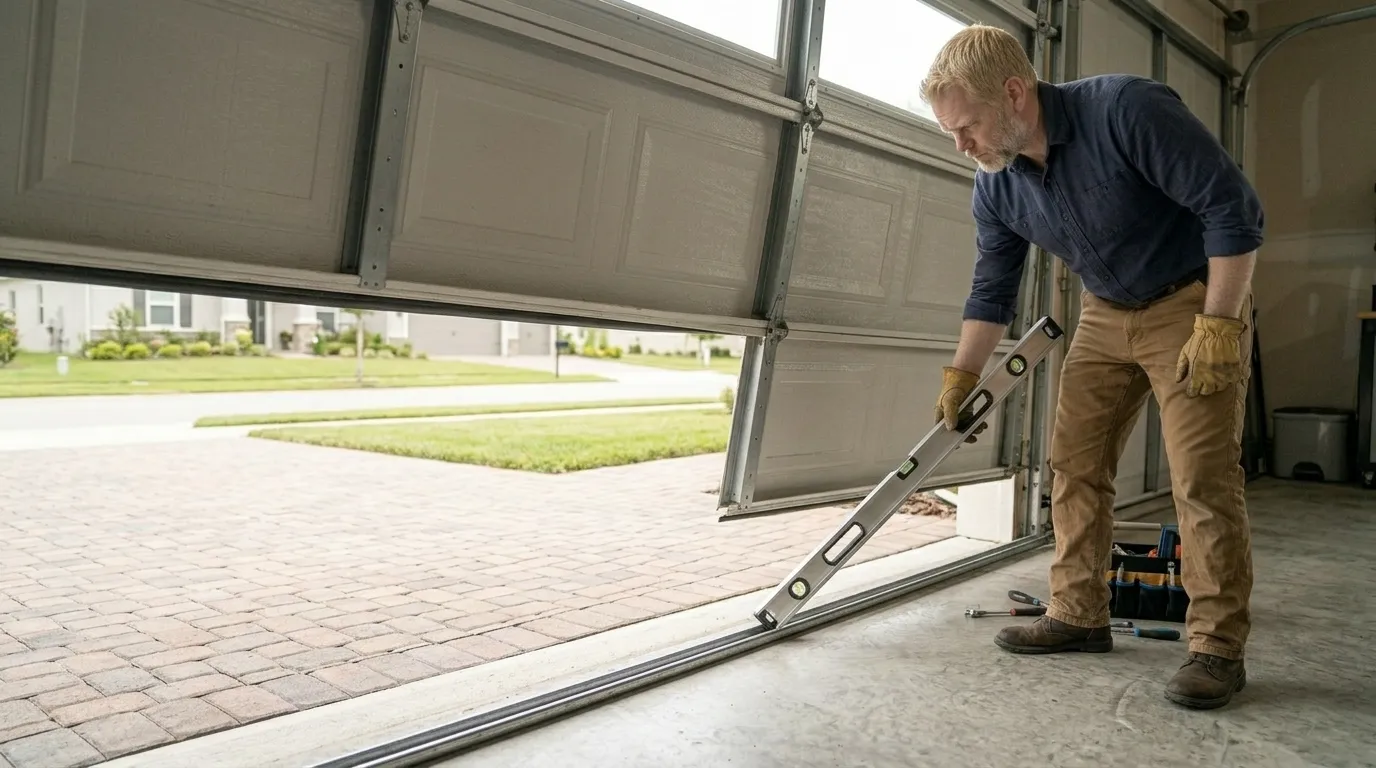
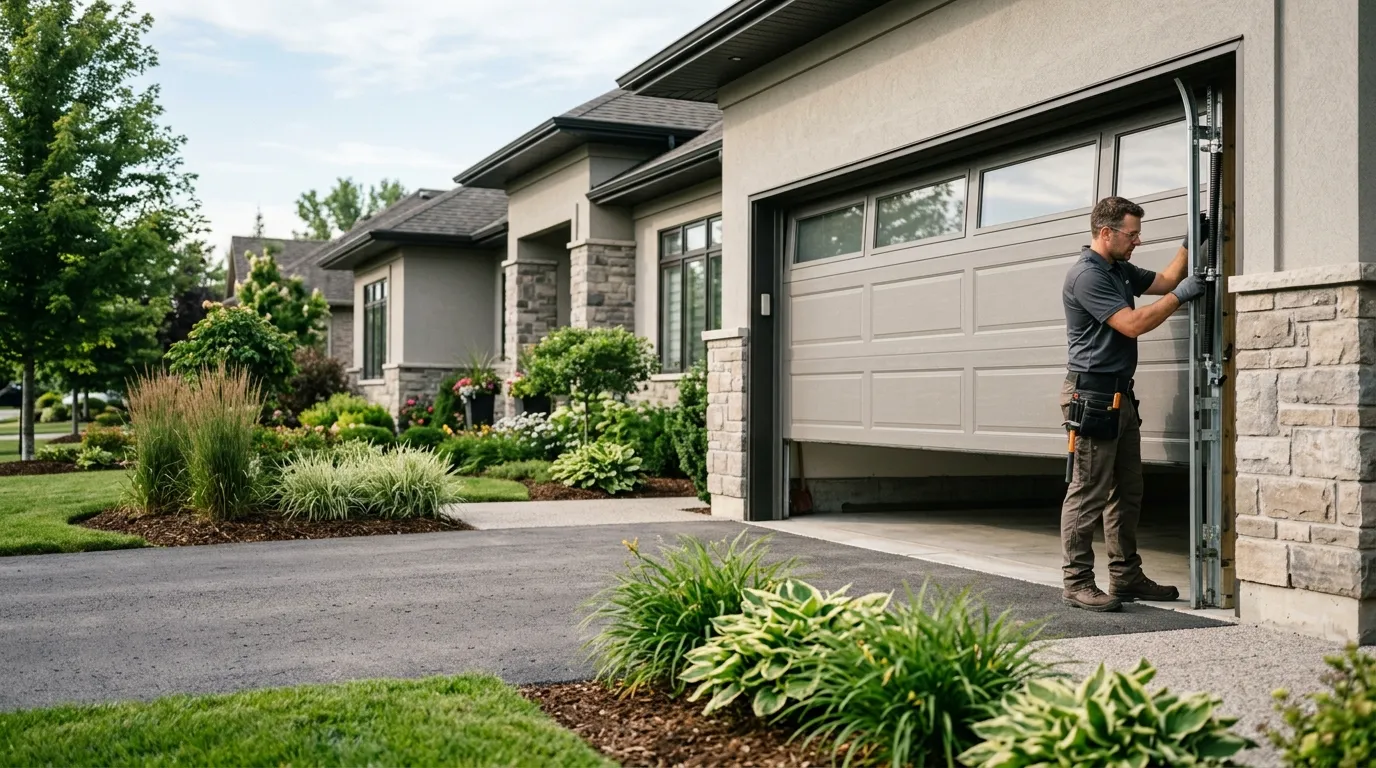
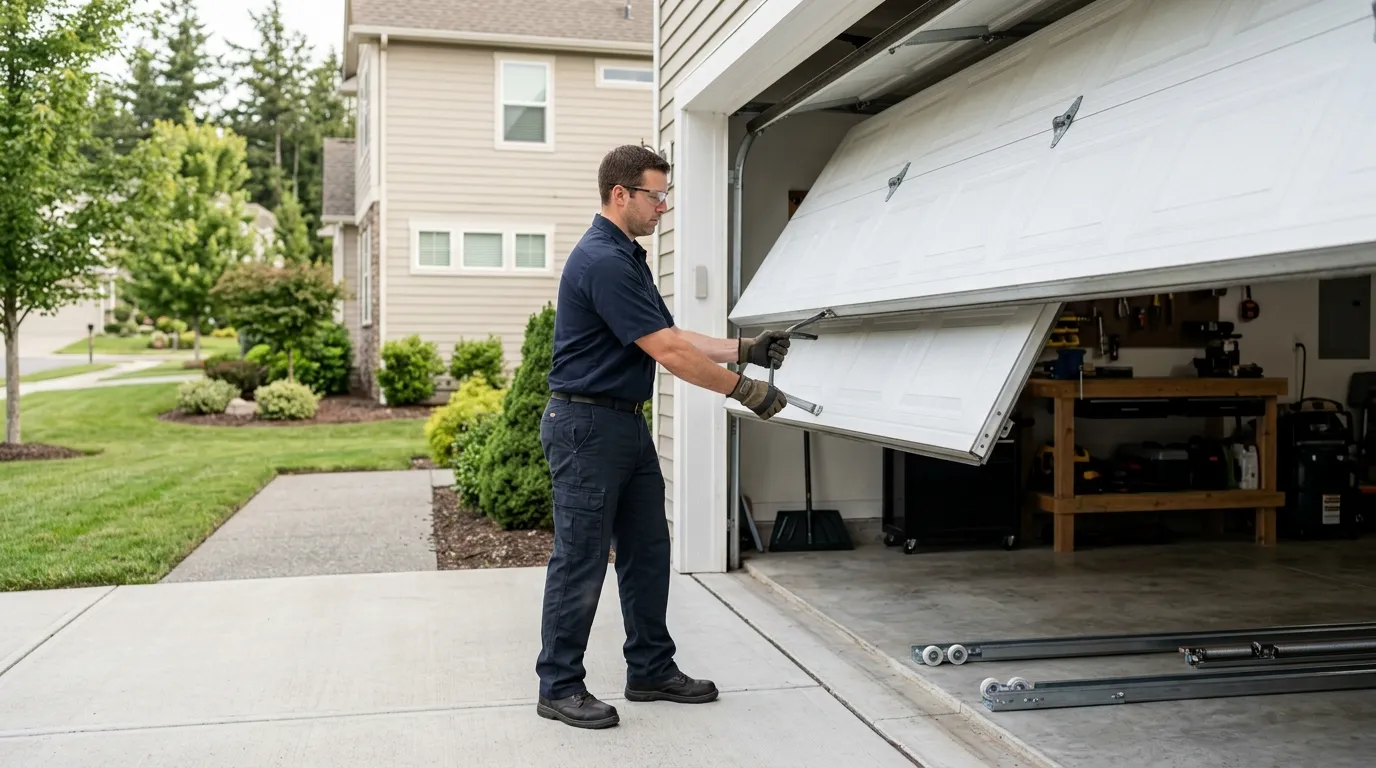
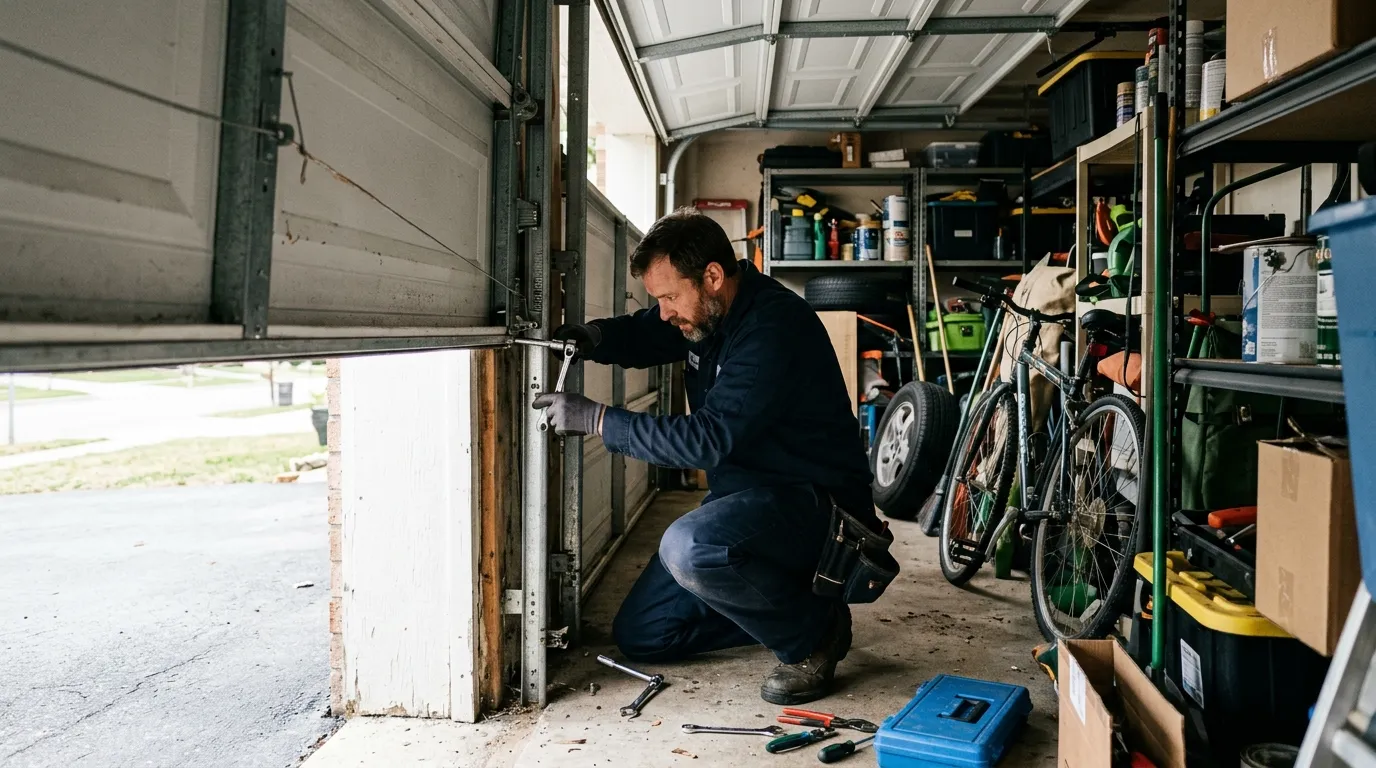
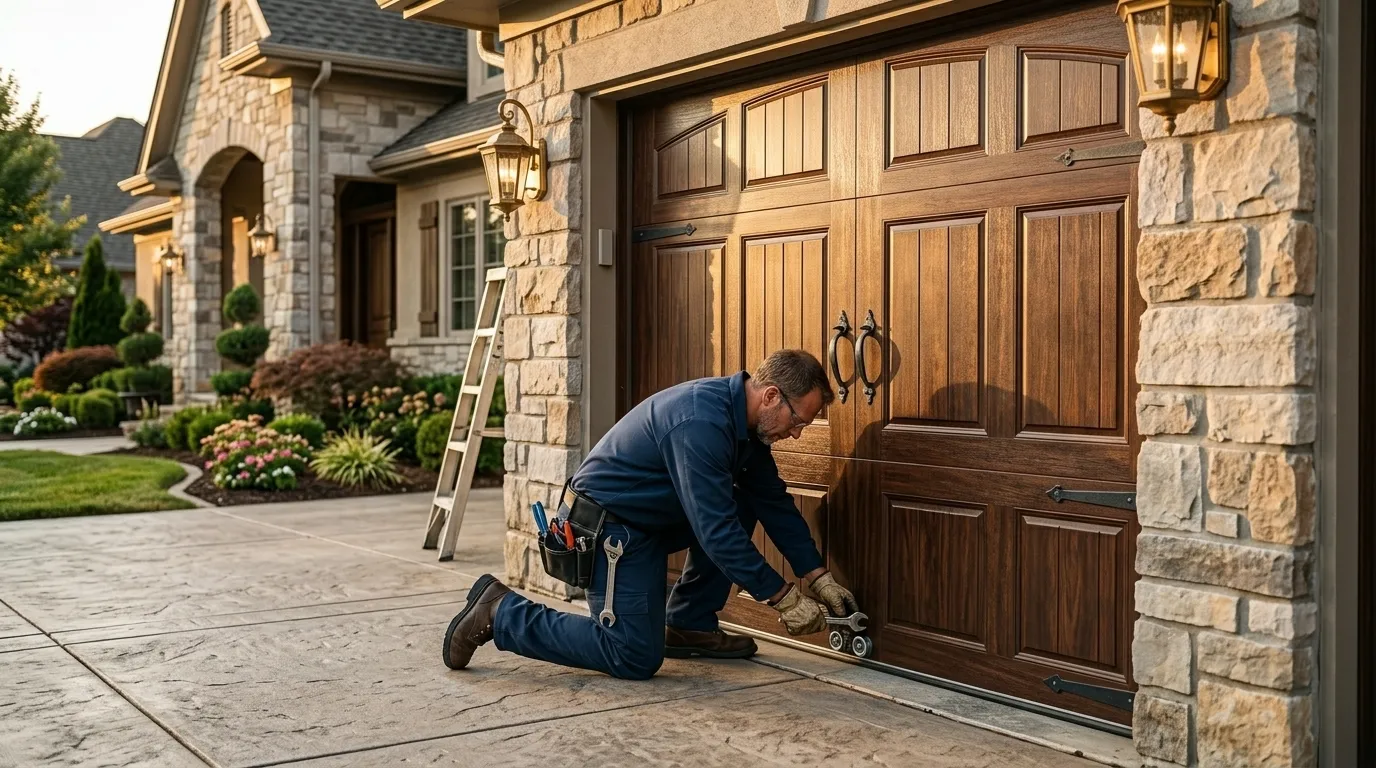
Bent or misaligned track gets straightened or replaced section by section rather than swapping the whole run, if the rest of the track is sound. Rollers get checked one at a time - nylon rollers on steel stems are the usual replacement on houses this age, since they run quieter and don't need the grease the old steel rollers did.
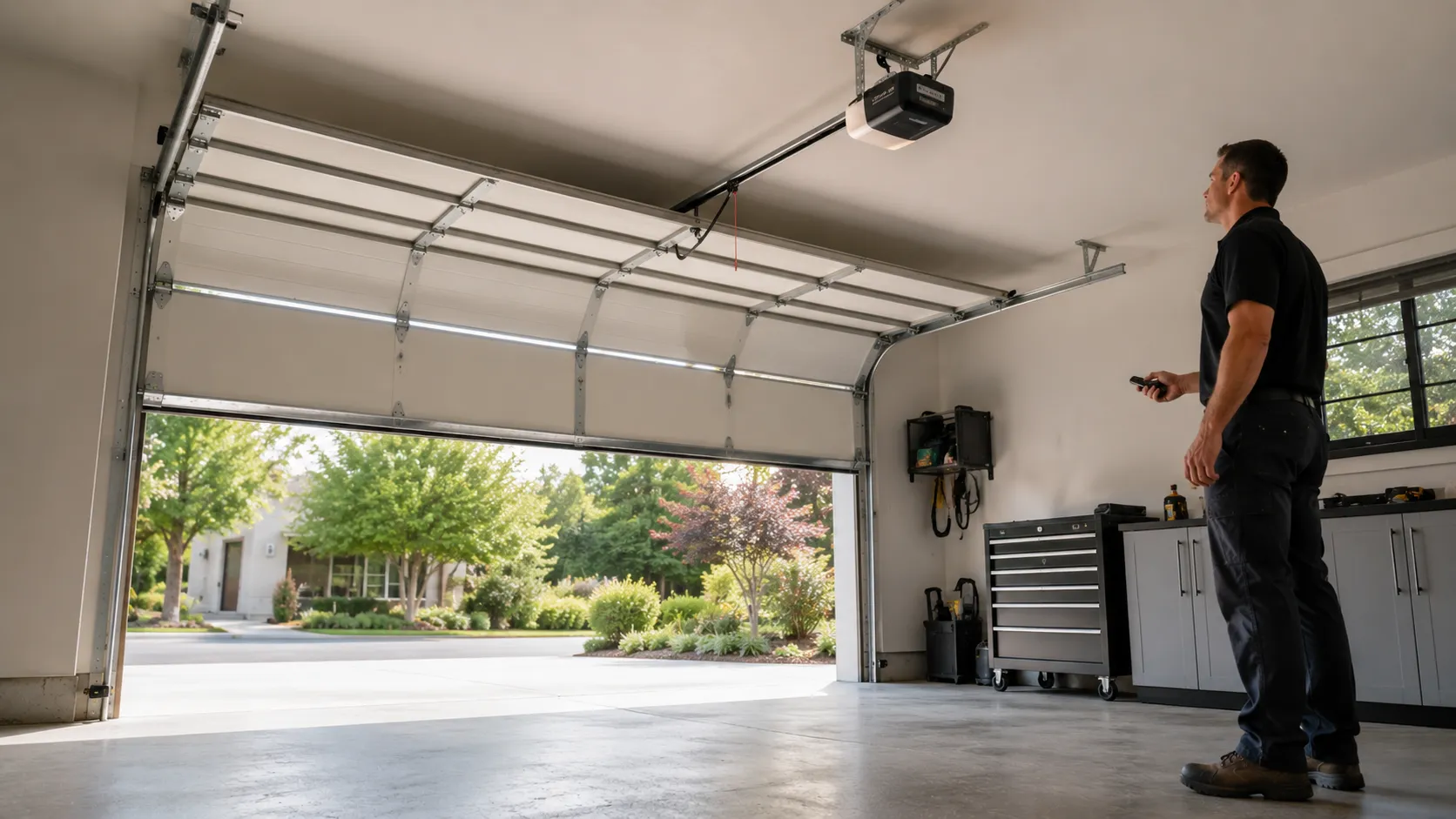
If the opener is original to the house, we test the gear and sprocket before recommending a swap. A stripped gear on a chain-drive unit is a straightforward part, but if the circuit board is also failing, patching the gear alone just buys a few more months. We'll tell you which situation you're in before we open anything up, not after.