24/7 Emergency Service Open 7 days · 7am–8pm Serving Miami, FL & nearby
(786) 358-3031
Miami, FL

Is Your Miami Garage Door Worth Repairing, or Time to Replace It

Miami's housing stock runs 1953-2005 with a lot of 1960s-70s doors. Here's how to tell if yours is worth repairing or replacing, given our climate and building stock.

Is Your Miami Garage Door Worth Repairing, or Time to Replace It

What Is Going On

Most of the calls we get start the same way: a door that used to work fine now sticks, drags, or won't open past halfway. Across the neighborhoods we run trucks through - Riverside, Little Havana, Allapattah, Edgewater - the housing stock was mostly built between 1953 and 2005, with the bulk of it going up in the 1960s and 70s. That means a huge share of the doors we look at are original hardware from that era, or a mid-2000s builder-grade replacement that's now hitting the end of its own run.

An older door isn't automatically a bad door. Steel doors from the 60s and 70s were often built heavier than what gets installed today, and if the track and spring system have been kept lubricated and the panels haven't rusted through, the bones can still be solid. What fails first is almost always the moving parts - springs, rollers, cables - not the door itself. The question worth asking before you replace anything is whether the panel and frame are still square and rust-free, because that's the part that's expensive to redo and the part that, in a lot of these older Miami houses, is still fine.

How Local Conditions Play In

Miami sits in a mild temperate band, which sounds like it should be easy on garage doors, and in some ways it is - we don't get the freeze-thaw cycles that crack concrete slabs or seize up hardware in colder cities. But mild and dry are not the same thing. Humidity here works on steel and on wood trim year-round, not just in a wet season, and doors installed in the 1960s-70s wave of construction have had decades of that slow corrosion working on hinges, bottom brackets, and any exposed fasteners.

What we see most often on these older units is surface rust starting at the bottom panel, where water sits after rain, and stiffness in springs that have never been replaced. On a door that's otherwise sound, that's a repair, not a replacement. On a door where the rust has gone through the metal at the bottom corners, or the panels have started to bow, no amount of new hardware fixes the underlying structure. The climate here doesn't destroy doors fast, but it doesn't forgive neglect either - a door that's been ignored for twenty years shows it in ways a door that's been serviced doesn't.

What to Look At First

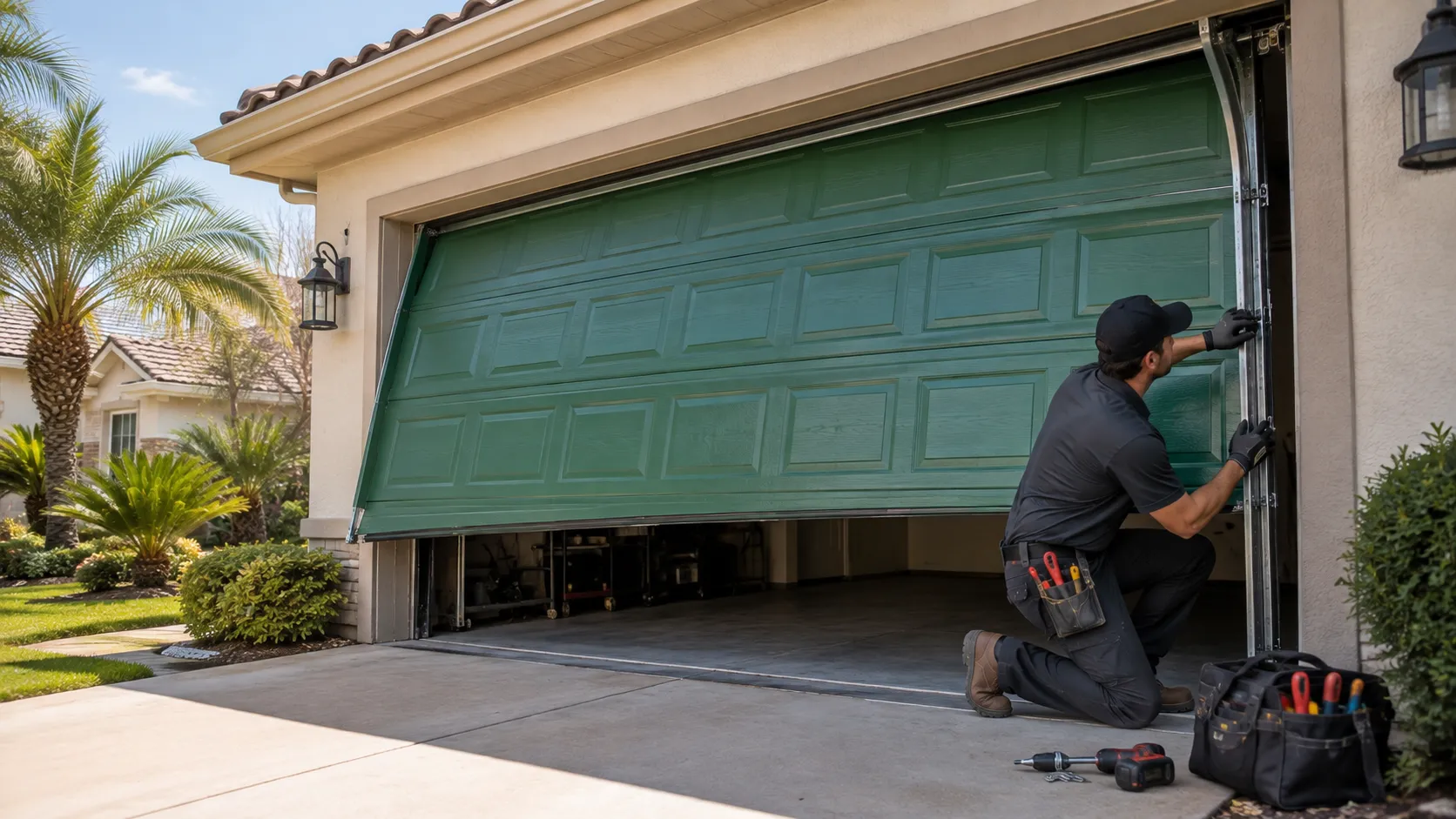
Before you decide anything, check three things. First, the springs - if the door is from the original 1960s-70s build in your neighborhood, the torsion or extension springs have almost certainly been replaced at least once, and if you don't know when, that's your starting point, not the opener or the panels. Second, the bottom panel and corner brackets, since that's where humidity does its worst work over the decades these houses have stood. Third, whether the door still sits square in the track when it's down - if one side is noticeably lower or the door racks when it moves, that's a structural issue, not a maintenance one.

Here's the honest limitation: we can't tell you which of these applies to your door without looking at it. A door that's 40 years old with clean rollers and no rust at the bottom can outlast a ten-year-old door that's been left un-serviced. Age alone isn't the deciding factor for a house built in this era - condition is.
The Cost of This Job

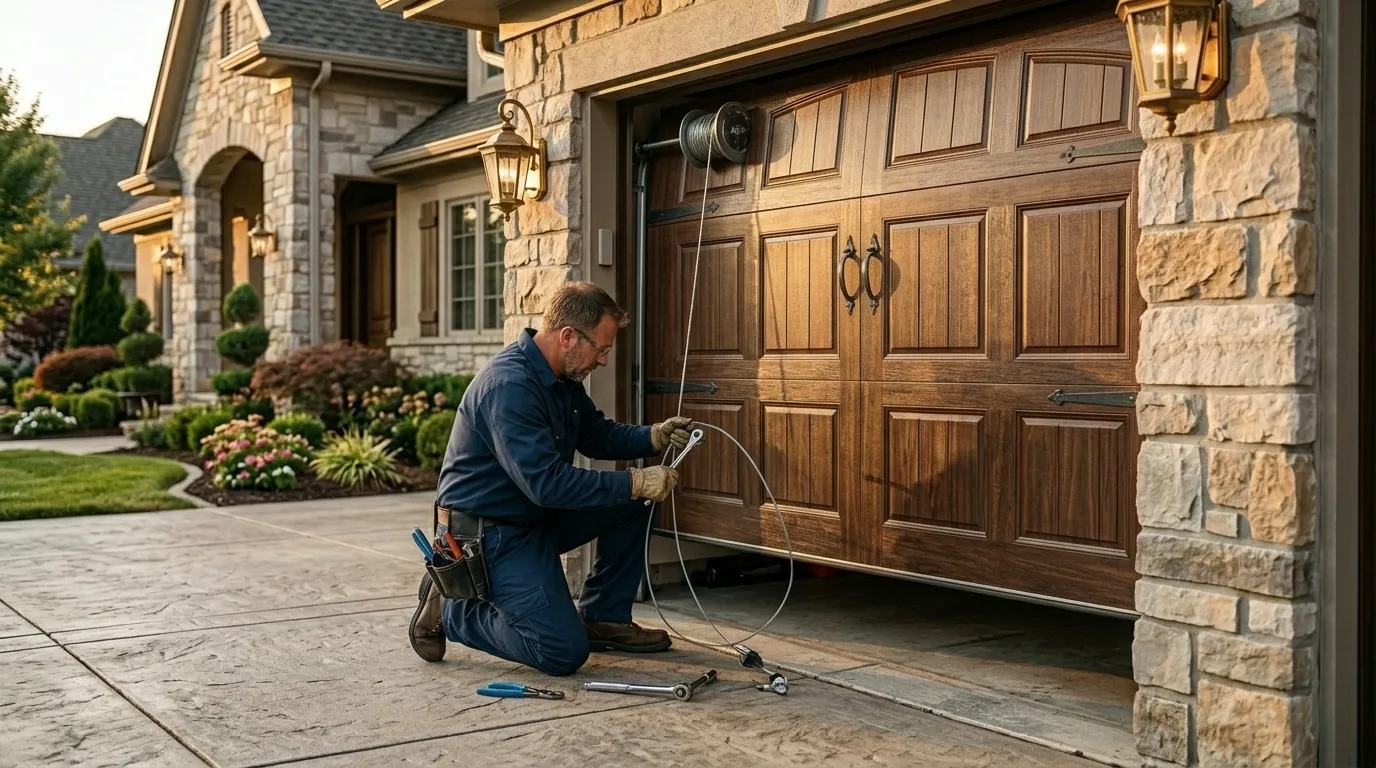
We don't have a set price to hand you here, because a spring swap on an original door and a full panel replacement are two different jobs with two different bills, and quoting one number for both would be dishonest. What we can tell you is how to think about it: if the frame is square, the panels aren't rusted through, and the fix is springs, cables, or rollers, repair is almost always the cheaper and faster path, and it's what we recommend for most of the older doors we see across households in this service area. If the bottom corners are rusted out or the panels are bowed, you're pricing against a full replacement anyway, and patching it just delays that spend without solving it. Median household income across our service area runs around $71,020, and most homeowners we talk to want a straight answer on which category their door falls into before they commit to either path - that's the conversation worth having before any work starts.

How it works

From “it’s stuck” to “it’s fixed”

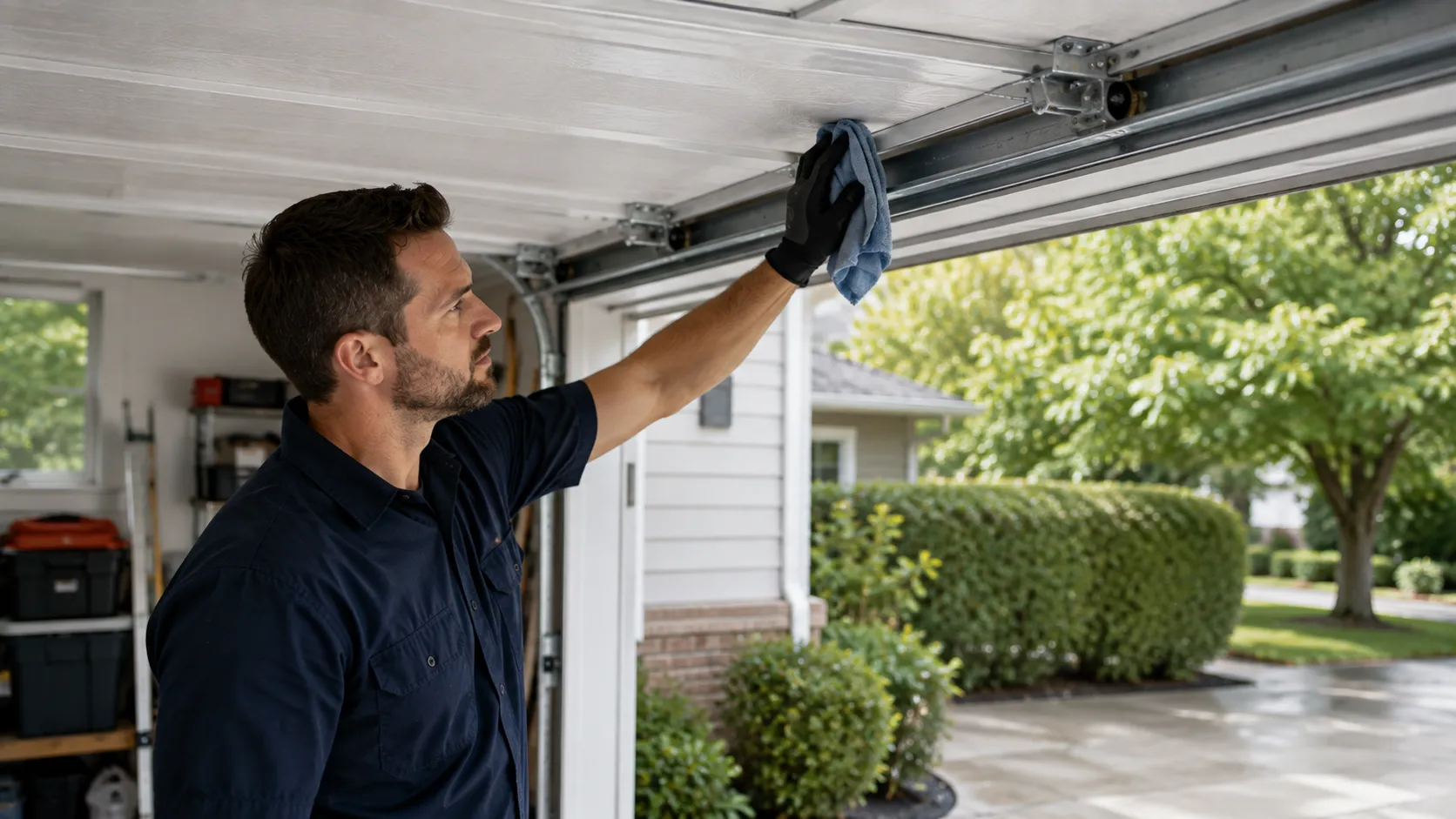
Tell us what’s wrong - Miami garage door service

Tell us what’s wrong

Describe the symptom - won’t open, loud bang, opener runs but the door won’t move.

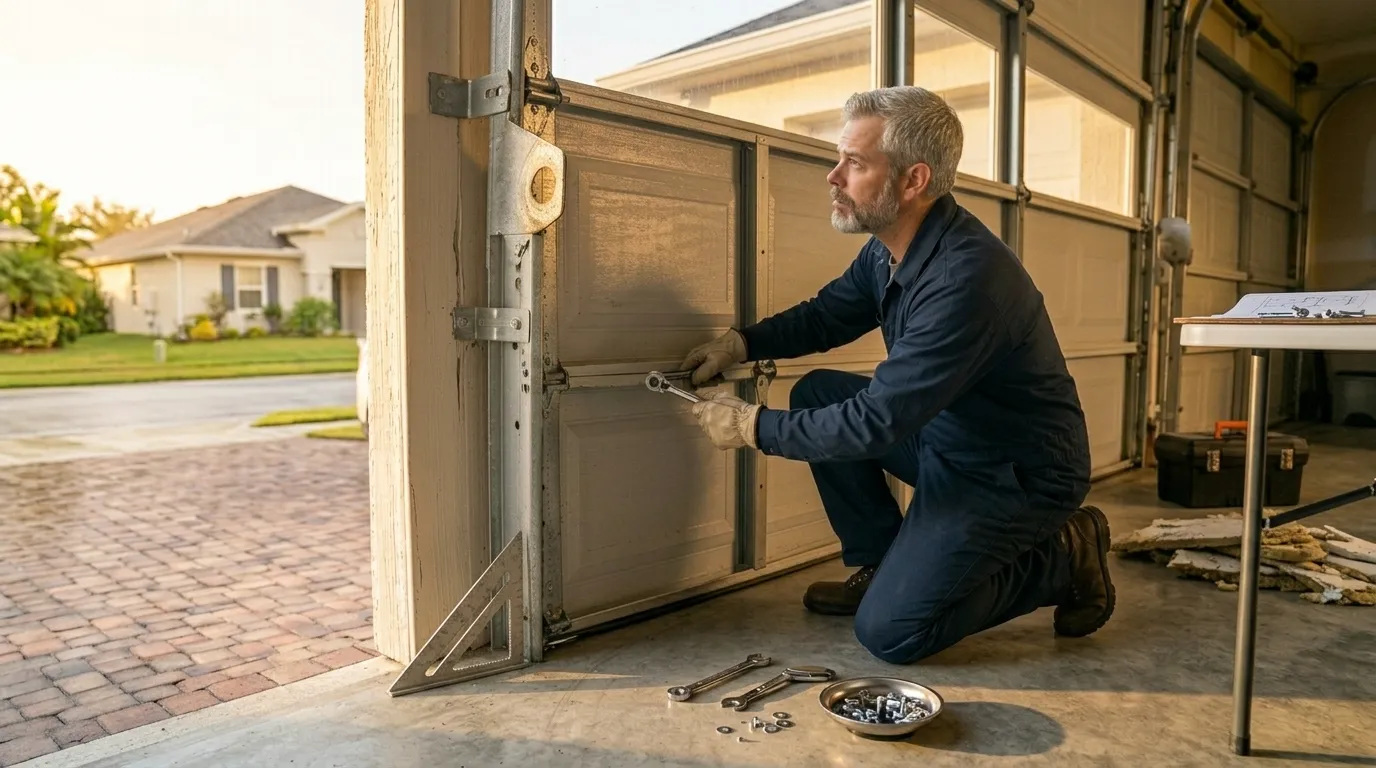
On-site diagnosis - Miami garage door service

On-site diagnosis

A technician tests the door under power and by hand and finds what actually failed.

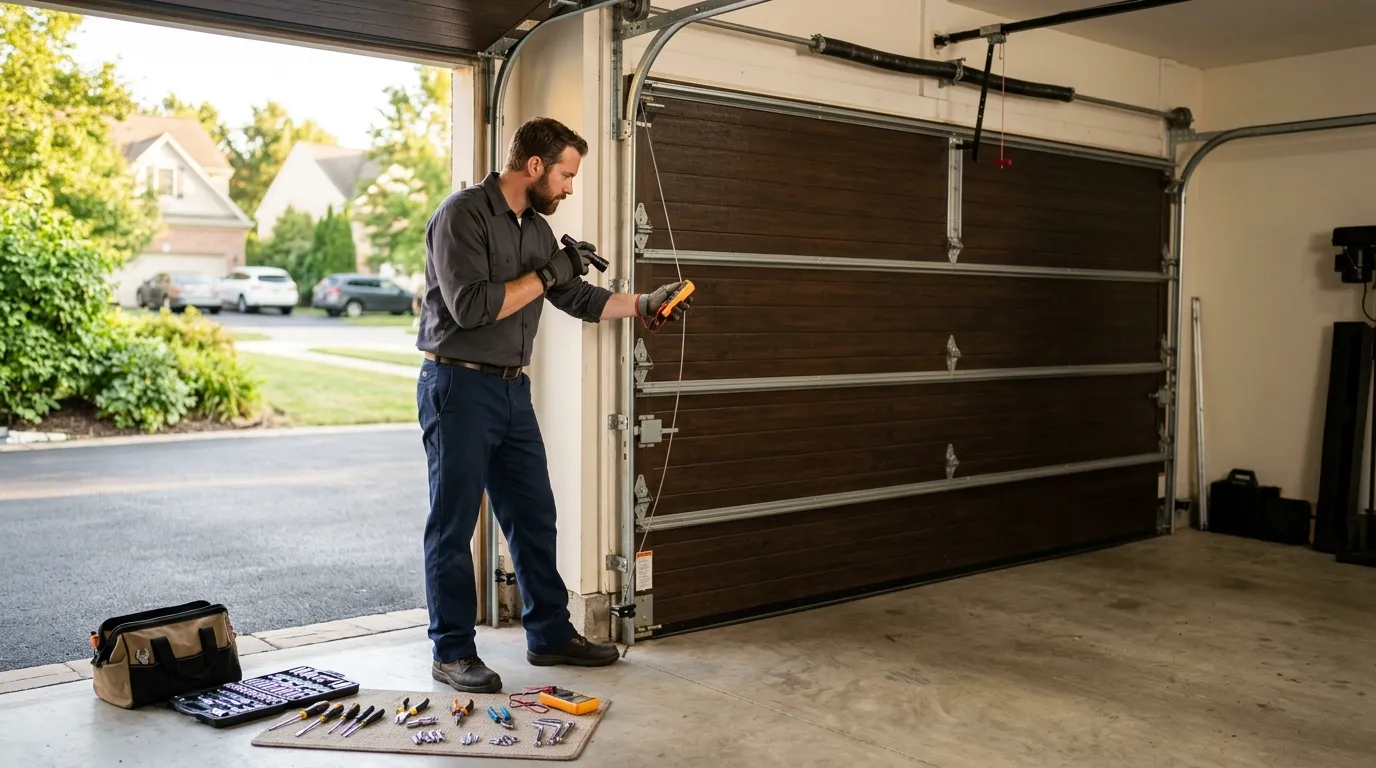
Clear, up-front plan - Miami garage door service

Clear, up-front plan

You get the fix that’s needed and what drives the cost - before any work starts.

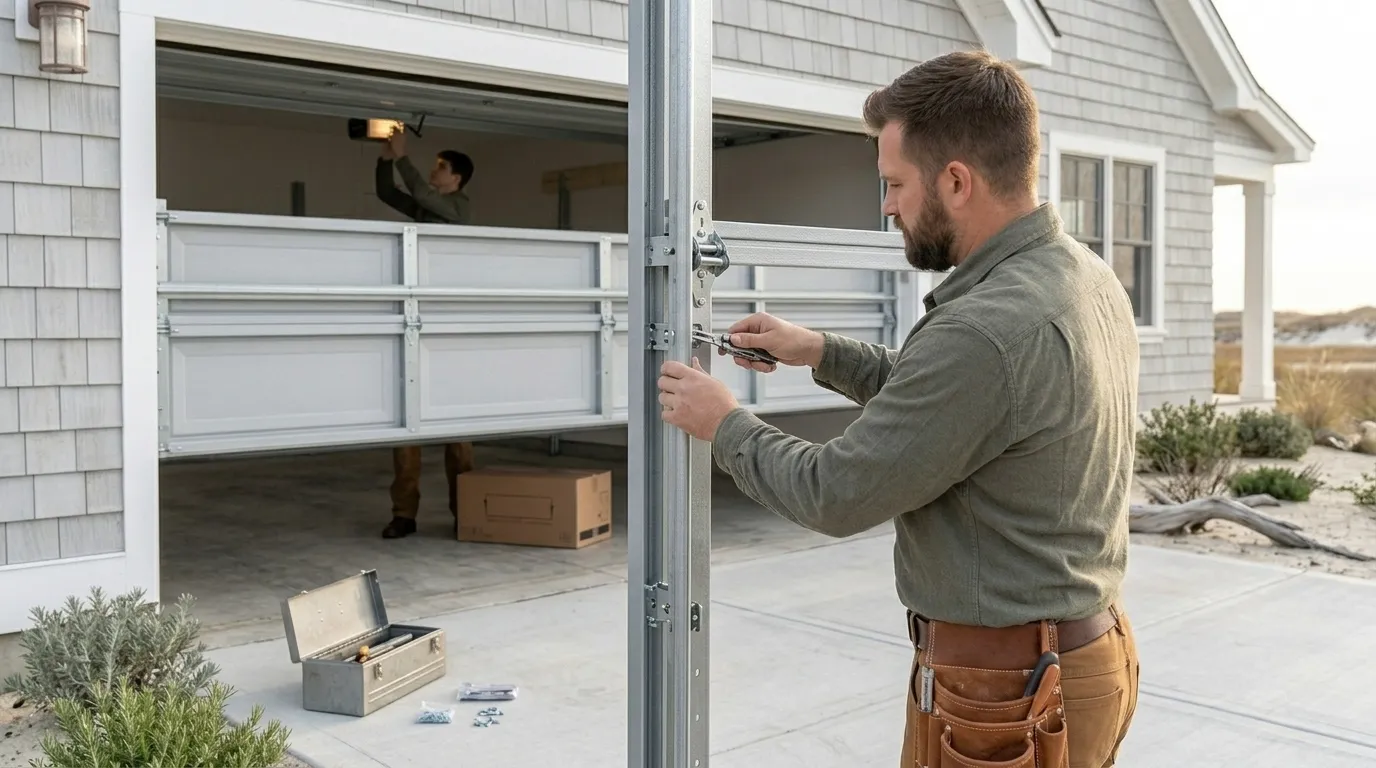
Repaired & tested - Miami garage door service

Repaired & tested

The repair is done, the door is set true and tested, and the work area left clean.

Next step

Serving Miami, FL - tell us what your door’s doing and we’ll take it from there.

How we work

What to expect

Diagnosis firstEvery visit starts by finding what actually failed - not a pre-written parts list.
The right part for the doorSprings and openers matched to the door’s weight and age, so the fix holds up.
Straight answersWhen a repair makes more sense than a replacement - or the reverse - you hear it plainly.
Clean, careful workTension released safely, hardware set true, the door tested under power before we leave.
Questions

Frequently asked

Straight answers about garage door repair in Miami. Still unsure? Ask us directly.

My garage door is original to the house from the 1960s or 70s - is that too old to fix?

Not by itself. Age doesn't fail a door here, condition does. If the panels aren't rusted through and the frame is still square, replacing springs, rollers, or cables is often enough to get another good stretch out of it. What matters is whether the structure has held up, not the year it was installed.

Does Miami's humidity really affect garage doors that much?

It works on steel and hardware steadily, year-round, not in bursts. We're in a mild temperate band so you won't see freeze damage, but bottom panels and brackets that sit near ground moisture corrode over the decades. On a door from the 1960s-70s wave of construction, that's usually where problems start first.

How do I know if it's cheaper to repair or replace?

Check whether the frame is still square and the bottom corners are free of rust-through. If yes, repair is usually the cheaper route. If the panels are bowed or corroded at the base, you're likely looking at replacement regardless, and repair work just delays that cost.

Ready to get your garage door sorted?

Tell us what it’s doing and where you are in Miami - we’ll take it from there.

Request a QuoteCall