24/7 Emergency Service Open 7 days · 7am–8pm Serving Miami, FL & nearby
(786) 358-3031
Miami, FL

What Your Garage Door Is Trying to Tell You

Grinding, popping, or banging garage door in Miami? Here's what each sound means on the 1953-2005 housing stock common across this service area, and what to check first.

What Your Garage Door Is Trying to Tell You

What Is Going On

A garage door doesn't fail quietly. Before a spring lets go or an opener burns out, it usually tells you first, and it tells you in sound. A sharp bang on the way up is almost always a torsion spring giving out, not a mystery. A rhythmic thump once per rotation is a flat spot on a roller or a bent track section catching it. Grinding that rises and falls with the door's travel points at worn bearing plates on the torsion shaft.

The reason this matters more here than it might elsewhere: Miami-area homes span a wide build range, roughly 1953 through 2005 with a median around 1976 across the 54 named areas this shop covers, from Riverside and Little Havana out to Kendall and Doral. That range means we're working on original 1970s galvanized track next to 2000s-era steel doors on the same street, sometimes the same block. Each era has its own failure pattern, and a noise that's normal wear on a newer door can mean something closer to end-of-life on a door installed when Nixon was in office.

A squeal on opening is usually just dry rollers or hinges - the cheapest fix on this list, and worth ruling out before assuming anything worse.

How Local Conditions Play In

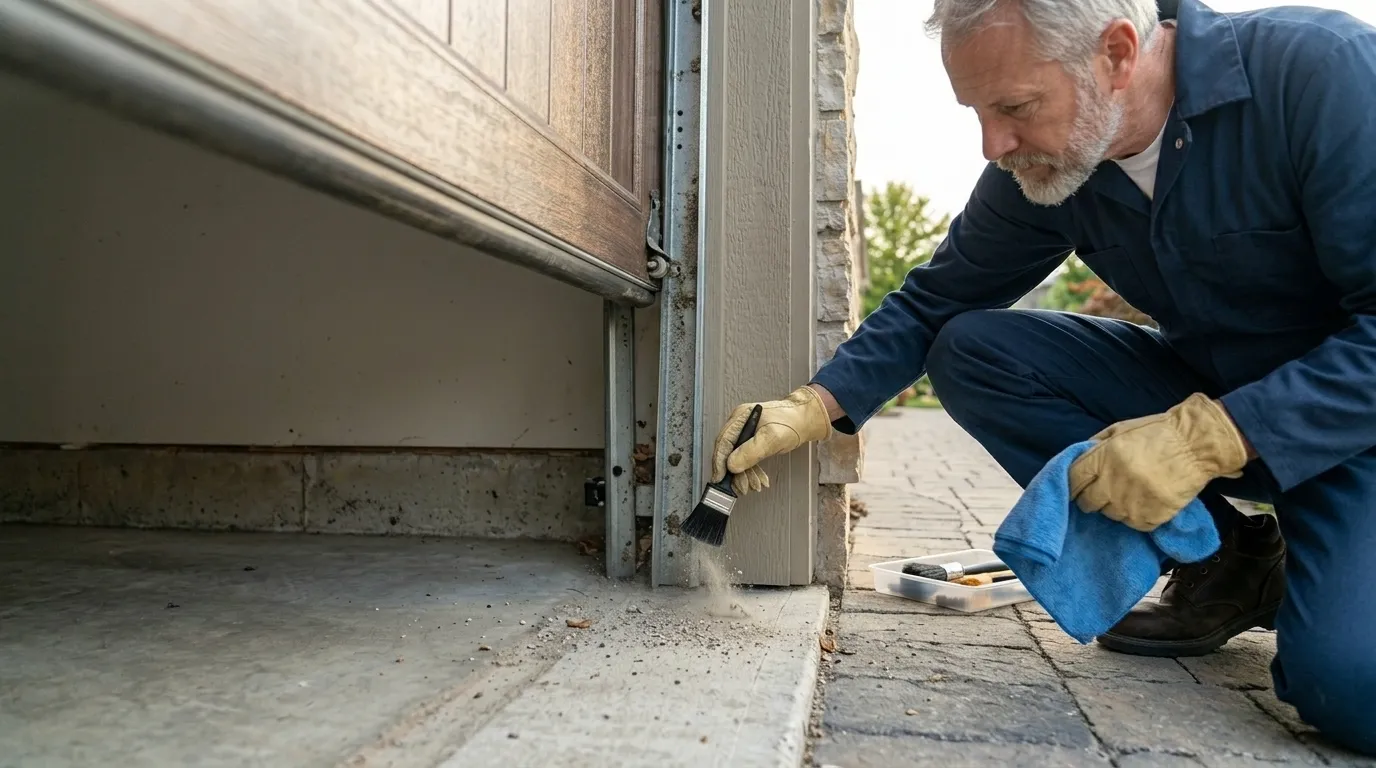
Miami sits in a mild temperate band, not the freeze-thaw cycle that cracks hardware up north. That's the good news: springs and tracks here don't suffer the same cold-snap stress fractures. The trade-off is humidity and salt air, which work slower but just as steadily on exposed steel - torsion springs losing their coating, hinges pitting, track fasteners loosening as galvanizing wears thin.

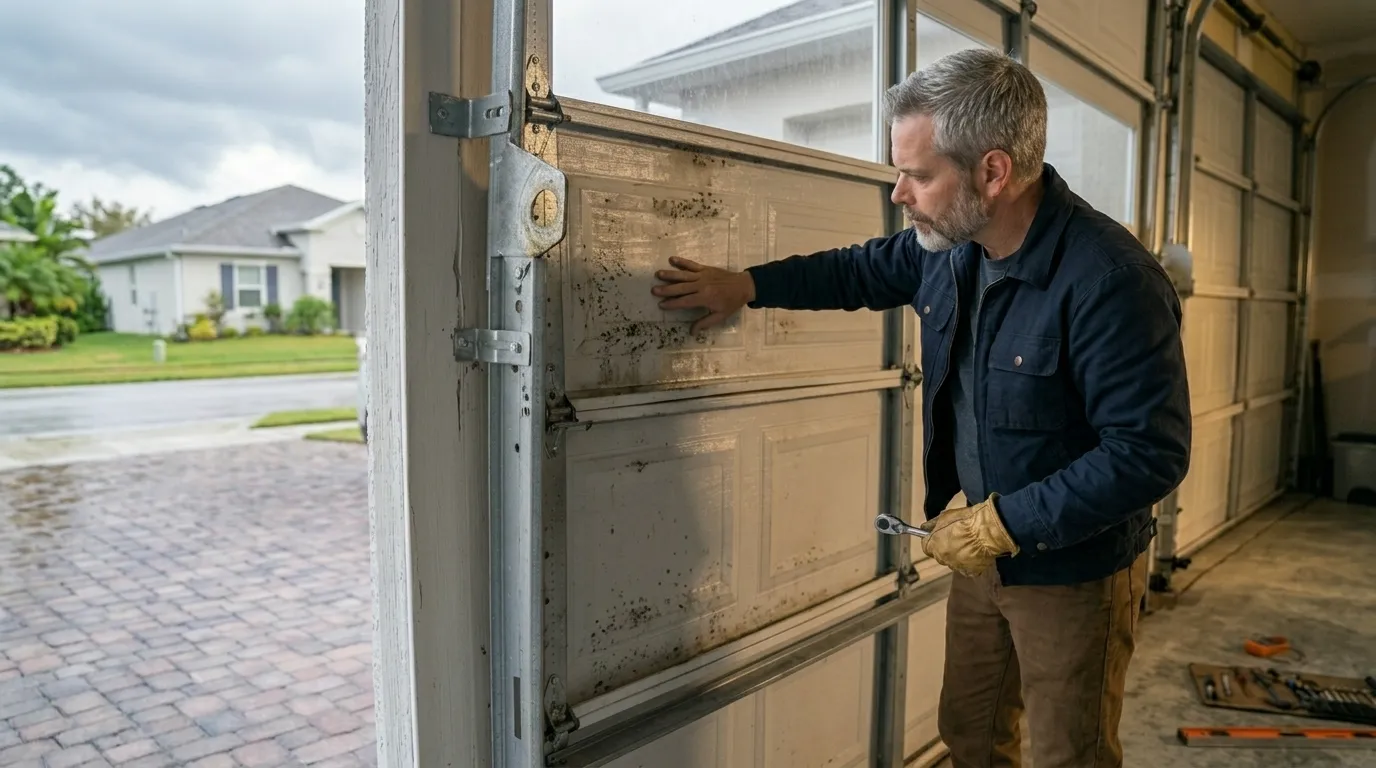
On a door installed in the 1960s or 70s, which describes a large share of the stock across this service area, that slow corrosion has had decades to work. A noise that would be cosmetic on a five-year-old door - a light rattle, a faint squeak - can be the first sign that a bracket or hinge pin has thinned enough to matter on an older one. We don't get the dramatic winter failures some regions do; we get a steadier, quieter kind of wear that homeowners tend to write off because nothing ever seems urgent until it is.

If your door groans more on humid mornings than dry afternoons, that's not your imagination - it's moisture working into hardware that's been sitting in it for forty-plus years.

What to Look At First

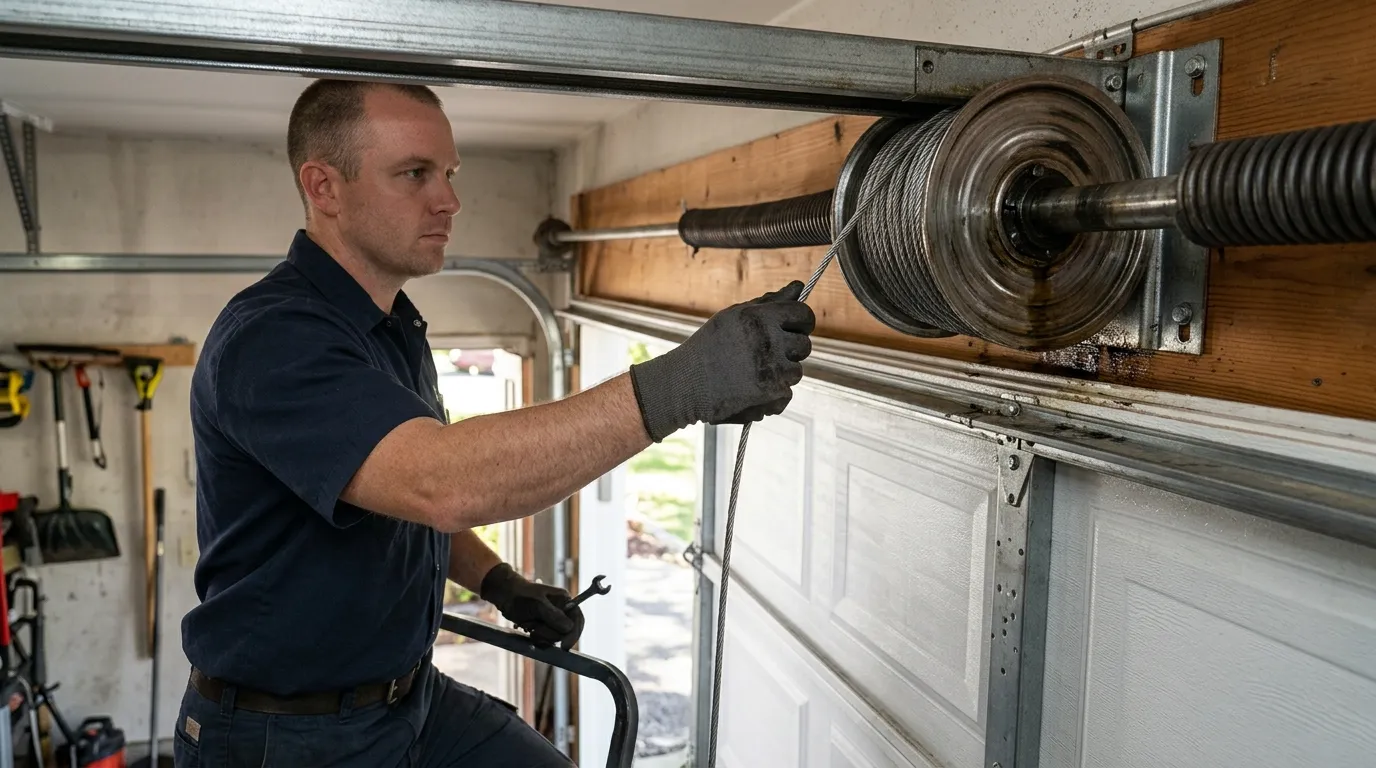
Start at the springs. If you hear a single loud pop or bang, especially followed by the door feeling heavy or refusing to open, that's a broken torsion spring - stop using the opener and don't force it by hand either. This is not a tighten-a-bolt fix.

Next, rollers and hinges. A steady clack-clack-clack as the door moves is almost always here, and on older track systems common across the 1960s-70s housing stock in this area, the fix is often roller replacement rather than a full track swap.

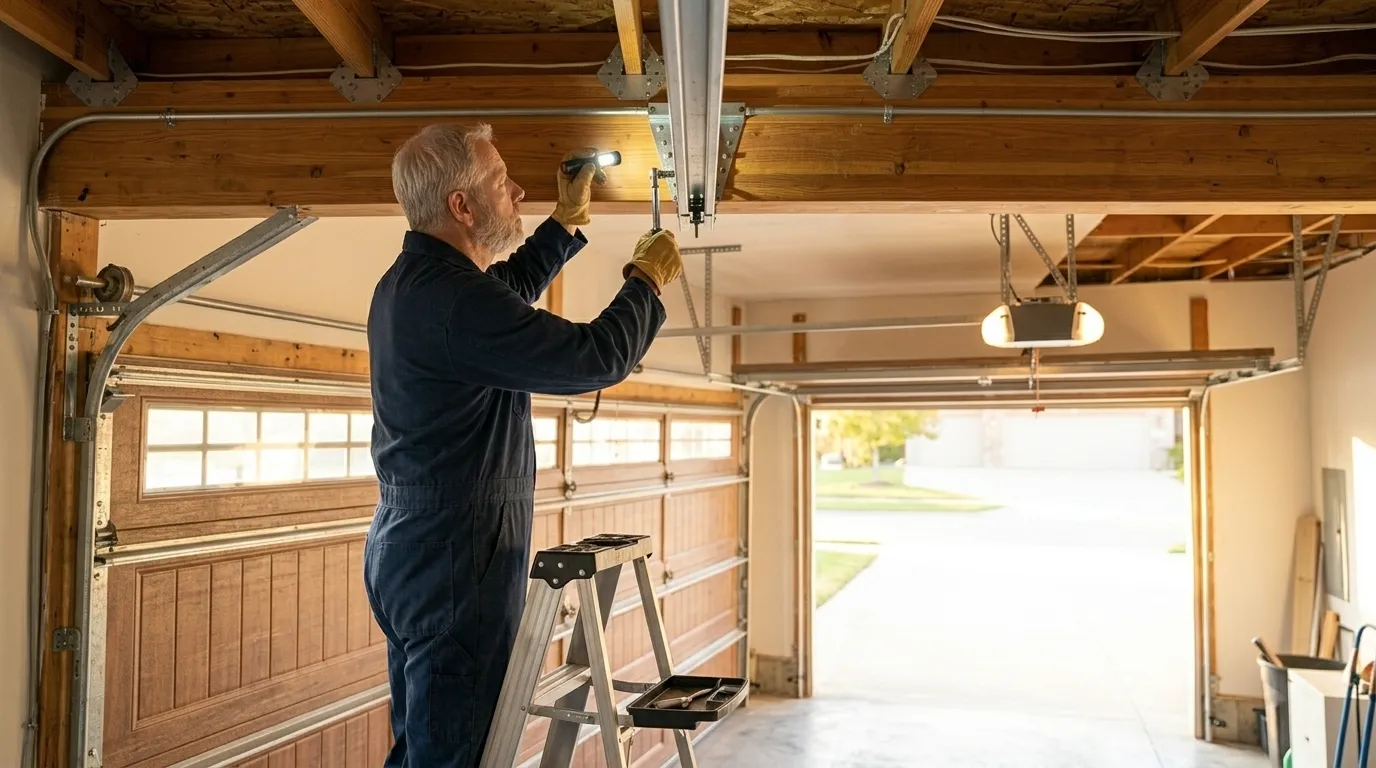
Third, the opener's drive mechanism. A grinding sound coming from the motor unit itself, not the door, points to a worn gear or chain slipping on its sprocket - common once an opener has logged fifteen-plus years, which lines up with a lot of units installed during remodels on homes built well before 2000.

Last, listen for where the sound starts and stops relative to door position. A noise only at the very top or bottom usually means a track alignment issue at that specific point, not a system-wide problem.
The Cost of This Job

We don't have a posted price list here, so I won't invent one - what a repair runs depends on whether it's a roller, a spring, or an opener gear, and on whether your hardware is the older galvanized style or a newer coated system. What I can tell you: with median household income across the area around $71,020 and a service area covering 183,376 owner-occupied houses, we see the full range from quick roller swaps to full spring and cable replacements on the same day, on doors of every age from the 1950s up through the 2000s.

One honest limitation: if your door is original to a house built in the 1950s or 60s and the track or drum hardware is no longer made, sometimes a repair costs close to what a new door would, once you account for the parts search. In those cases we'll tell you straight rather than run up a bill chasing obsolete parts. A noise diagnosis over the phone only goes so far - the real answer comes from someone standing in front of the door.

How it works

From “it’s stuck” to “it’s fixed”

Tell us what’s wrong - Miami garage door service

Tell us what’s wrong

Describe the symptom - won’t open, loud bang, opener runs but the door won’t move.

On-site diagnosis - Miami garage door service

On-site diagnosis

A technician tests the door under power and by hand and finds what actually failed.

Clear, up-front plan - Miami garage door service

Clear, up-front plan

You get the fix that’s needed and what drives the cost - before any work starts.

Repaired & tested - Miami garage door service

Repaired & tested

The repair is done, the door is set true and tested, and the work area left clean.

Next step

Serving Miami, FL - tell us what your door’s doing and we’ll take it from there.

How we work

What to expect

Diagnosis firstEvery visit starts by finding what actually failed - not a pre-written parts list.
The right part for the doorSprings and openers matched to the door’s weight and age, so the fix holds up.
Straight answersWhen a repair makes more sense than a replacement - or the reverse - you hear it plainly.
Clean, careful workTension released safely, hardware set true, the door tested under power before we leave.
Questions

Frequently asked

Straight answers about garage door repair in Miami. Still unsure? Ask us directly.

My door bangs loudly once and now won't open. What is that?

That's almost certainly a broken torsion spring, one of the most common calls we get on the older galvanized-hardware doors still common across this area. Don't try to force the door open by hand or with the opener - a broken spring means the door is unbalanced and heavy, and it's a job for someone who works with that hardware, not a DIY fix.

Does Miami's humidity really affect garage door hardware?

Yes, though it works differently than cold-climate wear. Instead of sudden cracking from freeze-thaw cycles, humid and salt-laden air slowly corrodes springs, hinges, and fasteners over years. On hardware original to homes built in the 1960s and 70s, that slow corrosion has often had decades to work, which is why noises that seem minor can point to real wear.

Is a grinding opener worth repairing or replacing?

It depends on the opener's age and whether the noise is coming from a worn gear versus a failing motor. A gear replacement is usually cheap; a motor on its way out often isn't worth chasing with repairs. We look at the specific unit before recommending either way rather than guessing over the phone.

Ready to get your garage door sorted?

Tell us what it’s doing and where you are in Miami - we’ll take it from there.

Request a QuoteCall