24/7 Emergency Service Open 7 days · 7am–8pm Serving Miami, FL & nearby
(786) 358-3031
Miami, FL

Why Your Garage Door Sensors Keep Drifting Out of Alignment

Miami's mild temperate climate and older housing stock push safety sensor brackets out of alignment. Here's what's really going on and what a fix costs.

Why Your Garage Door Sensors Keep Drifting Out of Alignment

What Is Going On

Your garage door has two safety sensors, one on each side of the track near the floor, aimed at each other. When the beam between them breaks, the door won't close. When the beam is even slightly off, it acts erratic - reversing for no reason, or refusing to close at all even with a clear driveway.

Most of the calls we get about this aren't wiring failures. They're bracket drift. The plastic or thin-metal bracket holding the sensor eye slowly rotates a few degrees off true, and a beam that has to travel across a full garage width doesn't forgive a few degrees.

Across the area we serve - homes built anywhere from 1953 up to 2005, with the bulk of that stock going up through the 1960s and 70s - the original sensor brackets are often decades newer than the door itself, since sensors weren't federally required until 1993 and got retrofitted onto a lot of older openers. That retrofit hardware is usually the lightest gauge in the whole assembly, which is exactly why it's the first thing to move.

This isn't a defect. It's a wear pattern, and once you know to look for it, it's usually a five-minute fix instead of a service call for a whole new opener.

How Local Conditions Play In

We're in a mild temperate band here, not the wide freeze-thaw swings that crack concrete slabs up north. That actually works in your favor on some fronts - you won't see the frost heave that racks a track out of square. But mild and stable still means the garage floor slab and the track mounting posts expand and contract daily with sun exposure on the door itself, especially on west- and south-facing bays that catch afternoon sun most of the year.

That daily cycle is small, a fraction of a degree at a time, but it's constant, and constant beats occasional. Over years, the bracket screws work themselves a hair looser, the bracket rotates, and the beam that used to line up dead-on now clips the edge of the receiving eye. You'll notice it first on the door that gets the most sun, not the one in the shaded side of the garage.

Humidity plays a secondary role - condensation on the sensor lens itself can mimic a misalignment symptom, showing an intermittent fault that clears up once the lens dries. If your door only misbehaves in the early morning, check the lens for moisture before you touch the bracket at all.

What to Look At First

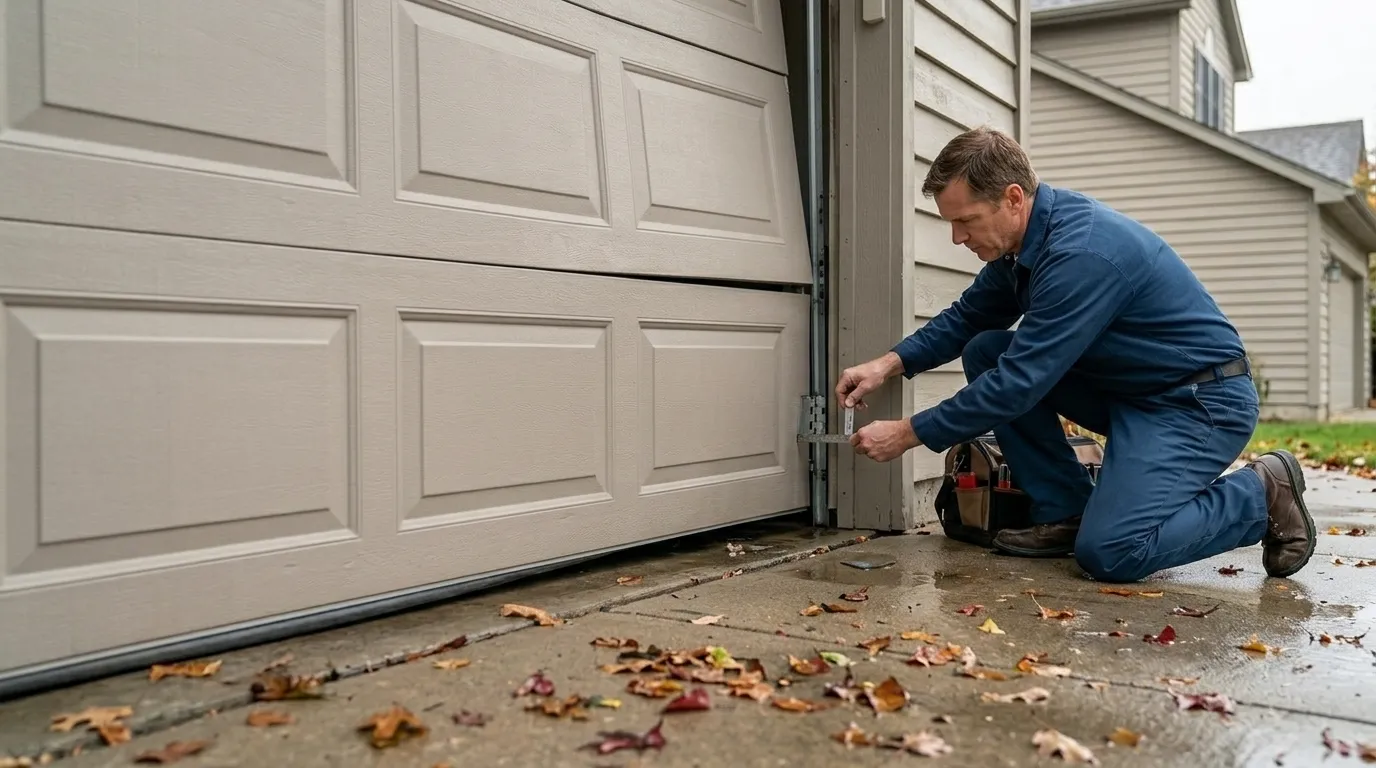
Before you call anyone, look at the two sensor eyes yourself. They should be pointed straight at each other, roughly six inches off the garage floor. A small LED on each unit tells you the story: solid means it's receiving a clean beam, and most units flicker or go dark when misaligned.

Check the bracket itself for play - grab it and see if it wiggles. On a lot of the older openers common in homes from the 1960s and 70s stock in this area, the bracket is held by a single sheet-metal screw into a wood jamb that's had sixty-plus years to shrink and loosen its grip on any fastener. If the bracket rocks in your hand, that's your answer, and it's a fastener problem before it's an electronics problem.

Next, wipe both lenses with a dry cloth. Spiderwebs and dust film cut the beam strength enough to cause intermittent faults that look identical to misalignment. Only after you've ruled out a loose bracket and a dirty lens does it make sense to check the wiring at the sensor base for a corroded or pinched connection.

One honest limitation: if the bracket mount itself has rotted or split, tightening the screw won't hold - that's a bracket replacement, not an adjustment, and it's worth saying so before you spend an hour chasing an alignment that won't stay put.
The Cost of This Job

We don't have a fixed price to quote here without seeing the door, and giving you a number without knowing whether this is a five-minute bracket tightening or a full sensor and bracket replacement wouldn't be honest. What we can tell you is how to think about it.

A loose-bracket realignment is the cheapest outcome - it's labor, not parts. A cracked or rotted bracket mount, common enough on the older end of our housing stock (units built well before 2005 with original hardware still in place), means a new bracket and possibly a new mounting point in the jamb, which adds material and time. A failed sensor unit itself, as opposed to a bracket or wiring issue, is the most expensive of the three because it's a part replacement plus labor.

Given the median household income across our service area sits around $71,020 and most of the roughly 183,376 owner-occupied houses here are past the age where original hardware still performs like new, a lot of homeowners find it makes more sense to replace both sensors and brackets together rather than patch one side and wait for the other to fail six months later. That's a judgment call we'll walk through with you on site, not over the phone.

How it works

From “it’s stuck” to “it’s fixed”

Tell us what’s wrong - Miami garage door service

Tell us what’s wrong

Describe the symptom - won’t open, loud bang, opener runs but the door won’t move.

On-site diagnosis - Miami garage door service

On-site diagnosis

A technician tests the door under power and by hand and finds what actually failed.

Clear, up-front plan - Miami garage door service

Clear, up-front plan

You get the fix that’s needed and what drives the cost - before any work starts.

Repaired & tested - Miami garage door service

Repaired & tested

The repair is done, the door is set true and tested, and the work area left clean.

Next step

Serving Miami, FL - tell us what your door’s doing and we’ll take it from there.

How we work

What to expect

Diagnosis firstEvery visit starts by finding what actually failed - not a pre-written parts list.
The right part for the doorSprings and openers matched to the door’s weight and age, so the fix holds up.
Straight answersWhen a repair makes more sense than a replacement - or the reverse - you hear it plainly.
Clean, careful workTension released safely, hardware set true, the door tested under power before we leave.
Questions

Frequently asked

Straight answers about garage door repair in Miami. Still unsure? Ask us directly.

Why does my garage door only act up in the morning?

Condensation on the sensor lens is a common cause here given our mild, humid mornings. Moisture on the lens can block or scatter the beam just enough to cause a false reversal. Wipe both lenses dry and test again before assuming the bracket has drifted out of alignment.

Can I fix sensor drift myself?

If it's a loose bracket, yes - loosen the wing nut or screw, realign the eyes so the LEDs go solid, and retighten. If the bracket mount itself is cracked or rotted, which happens more on older jamb material, that's a replacement job, not an adjustment.

Does Miami's climate cause more sensor problems than other places?

Our mild temperate climate spares garages the freeze-thaw cracking that racks tracks out of square elsewhere. But steady daily sun exposure on south- and west-facing doors still causes slow bracket loosening over years, which is the main driver of drift we see on service calls.

How do I know if it's the sensor or the opener logic board?

Check the LED indicators on both sensor units first. If either is dark or flickering, start there - a dirty lens, loose bracket, or misalignment. If both LEDs read solid and the door still won't close, the problem is more likely in the opener's logic board or wiring, not the sensors.

Ready to get your garage door sorted?

Tell us what it’s doing and where you are in Miami - we’ll take it from there.

Request a QuoteCall