Straight Answers
The area's climate is mild temperate, which is a break for the doors themselves - no freeze-thaw cycles cracking seals, no snow load on the header. But it also means salt air and steady humidity are the steady wear factors here, not cold. Springs and exposed hardware corrode faster in this air than they would somewhere drier, even without a house being near the coast directly.
Household income in the broader service area runs a median of $71,020, and across the area there are roughly 183,376 owner-occupied houses out of 616,237 households total. That's a lot of owned homes carrying original garage hardware from a build era that predates almost every part number still in production. We don't stock parts for doors that haven't been made in 40 years - nobody does - but we can usually source or adapt what's needed rather than telling a homeowner the whole door has to go.
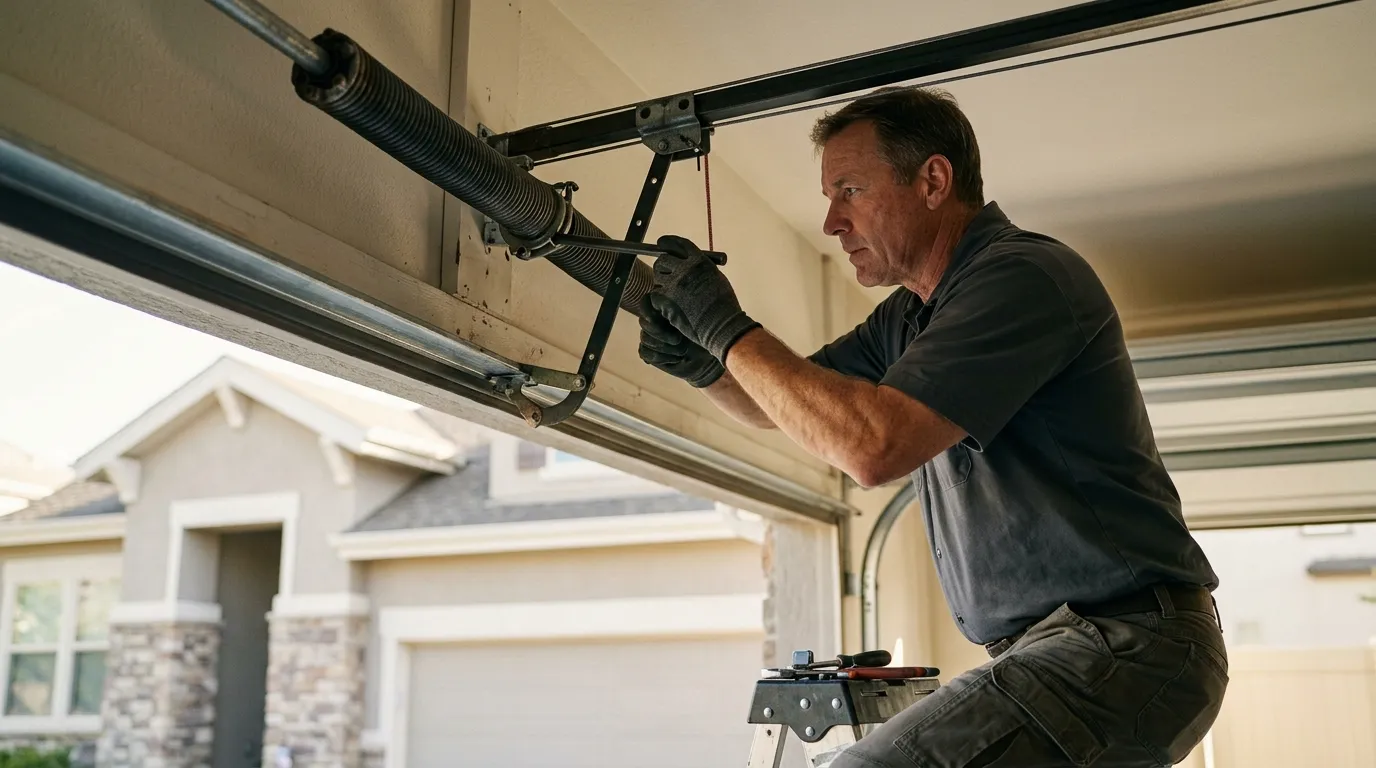
We're straight about when a repair isn't worth the money. If a torsion system is original to a 1960s house and one spring goes, replacing both springs at once usually costs less over time than coming back out again in a year or two for the second one. We'll lay out that math rather than just replace the one that broke.
Where This Is
Little Havana sits a mile west of downtown Miami, with Riverside right at the center of the city itself and Brickell a mile southeast on the other side of the river. Overtown is about a mile northeast, and Allapattah sits roughly two miles to the north-northwest. Coconut Grove is about three miles to the south-southwest if you keep going past the western edge of the neighborhood.
We work this stretch of the city as part of a wider service area that reaches out to places like Coral Gables, Hialeah, and Doral, but Little Havana's own housing - that dense run of 1960s and 70s construction a mile off downtown - is what shapes most of the calls we get from here specifically. It's an older, tighter-built part of the city, and the garage doors in it reflect that.