Why This Fails Locally
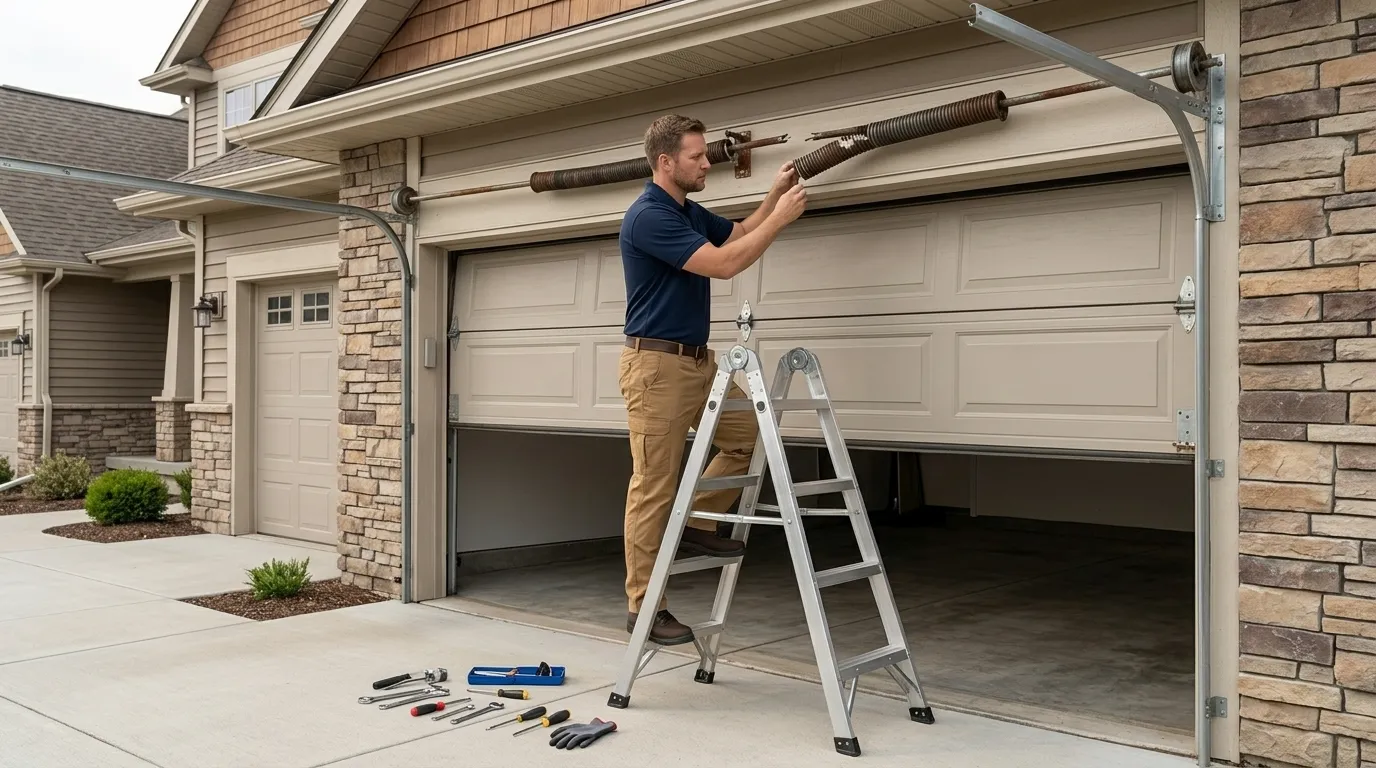
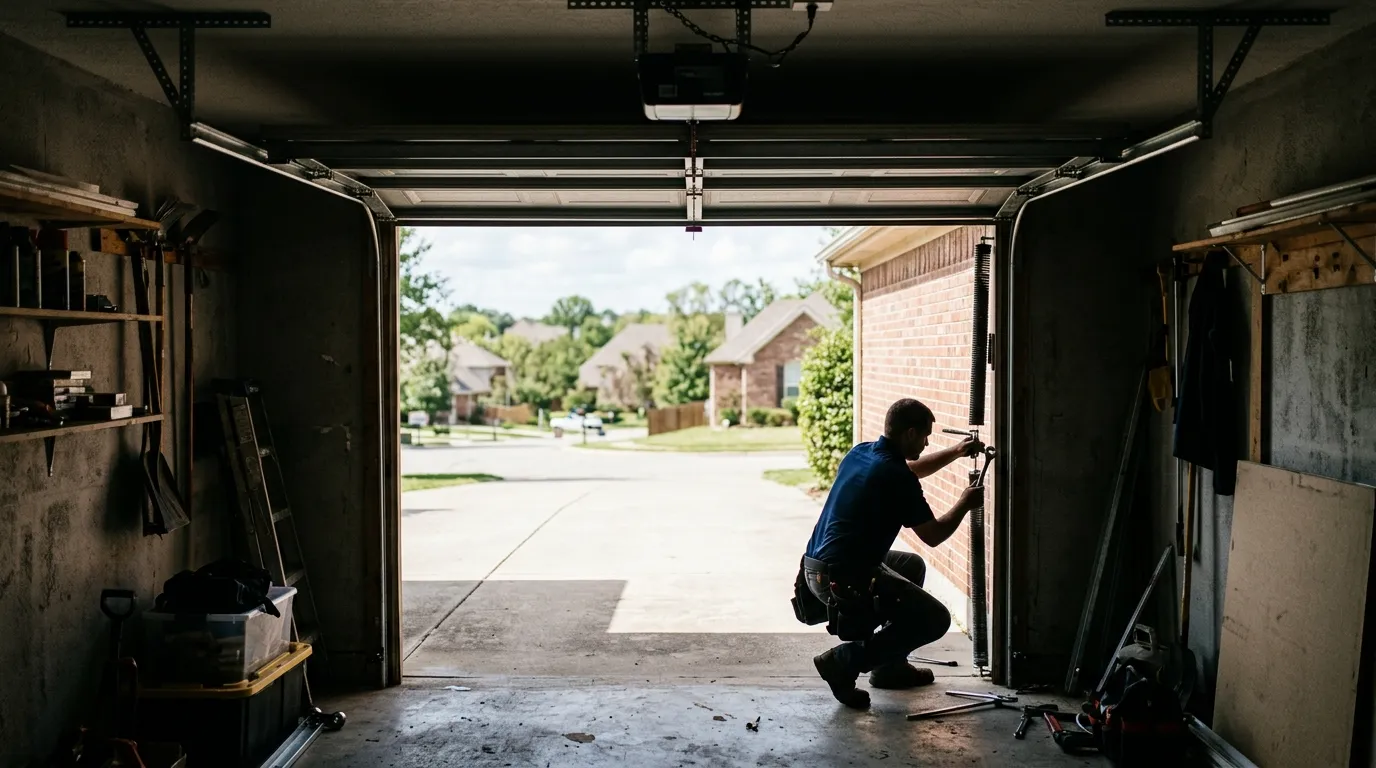
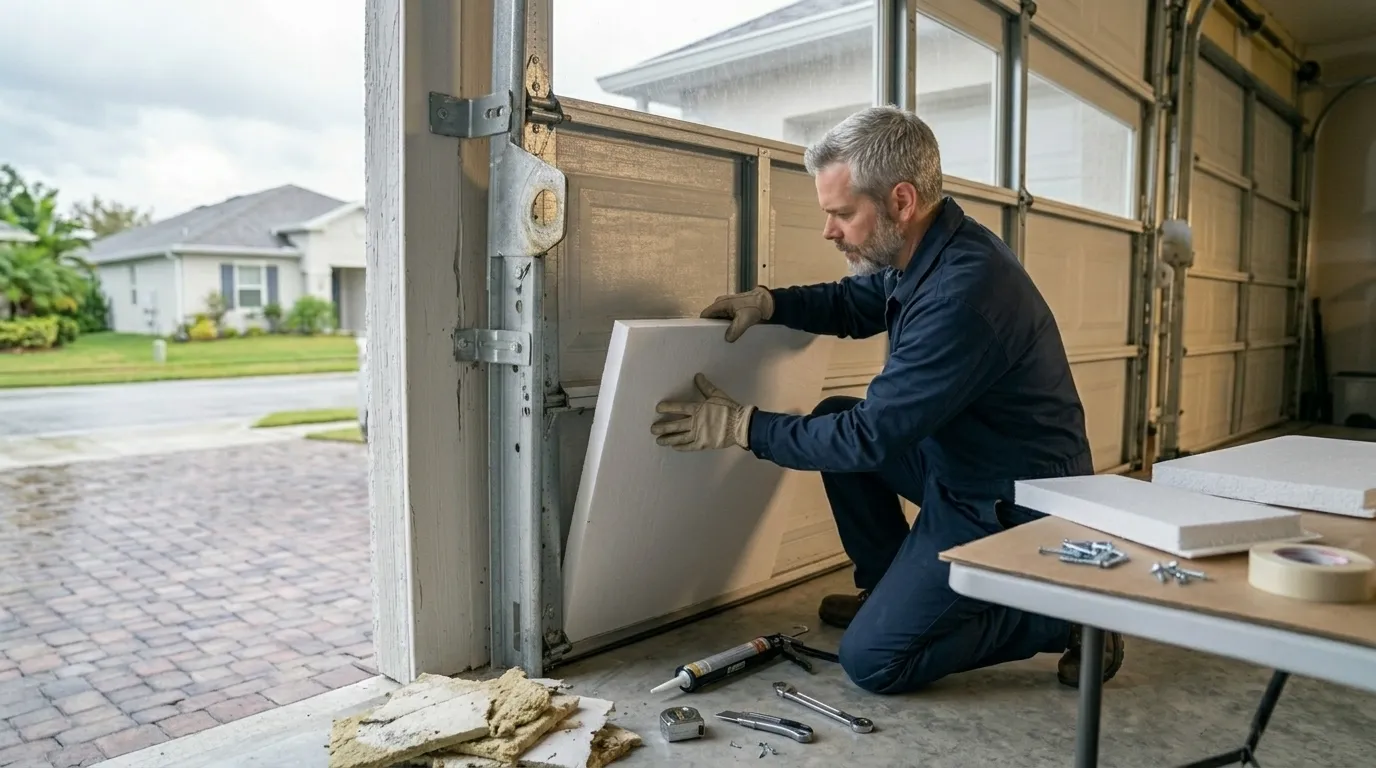
Miami sits in a mild temperate band with no hard freeze to worry about, but that same climate keeps humidity and salt content in the air high year-round, and it never lets up long enough for hardware to fully dry out or for lubrication to hold. On a house built in the 1960s or 70s, the steel track brackets and spring coils have had five or six decades of that exposure, and galvanized coatings that were adequate when the door went in are thinner now than the spec sheet assumed. Add in that the original doors on this vintage of house were sized and hung for the standard weight of their era - a door that's since been replaced with a heavier insulated panel often ends up running on springs that were never rated for it. That mismatch is common enough across the 54 named areas we work in, from older single-family blocks near Little Havana and Allapattah out toward Westchester and Kendall, that it's one of the first things we check before touching anything else. It's not a manufacturing defect. It's original-era hardware doing exactly what fifty-plus years of humid air and an upsized door will do to it.
What the Fix Involves
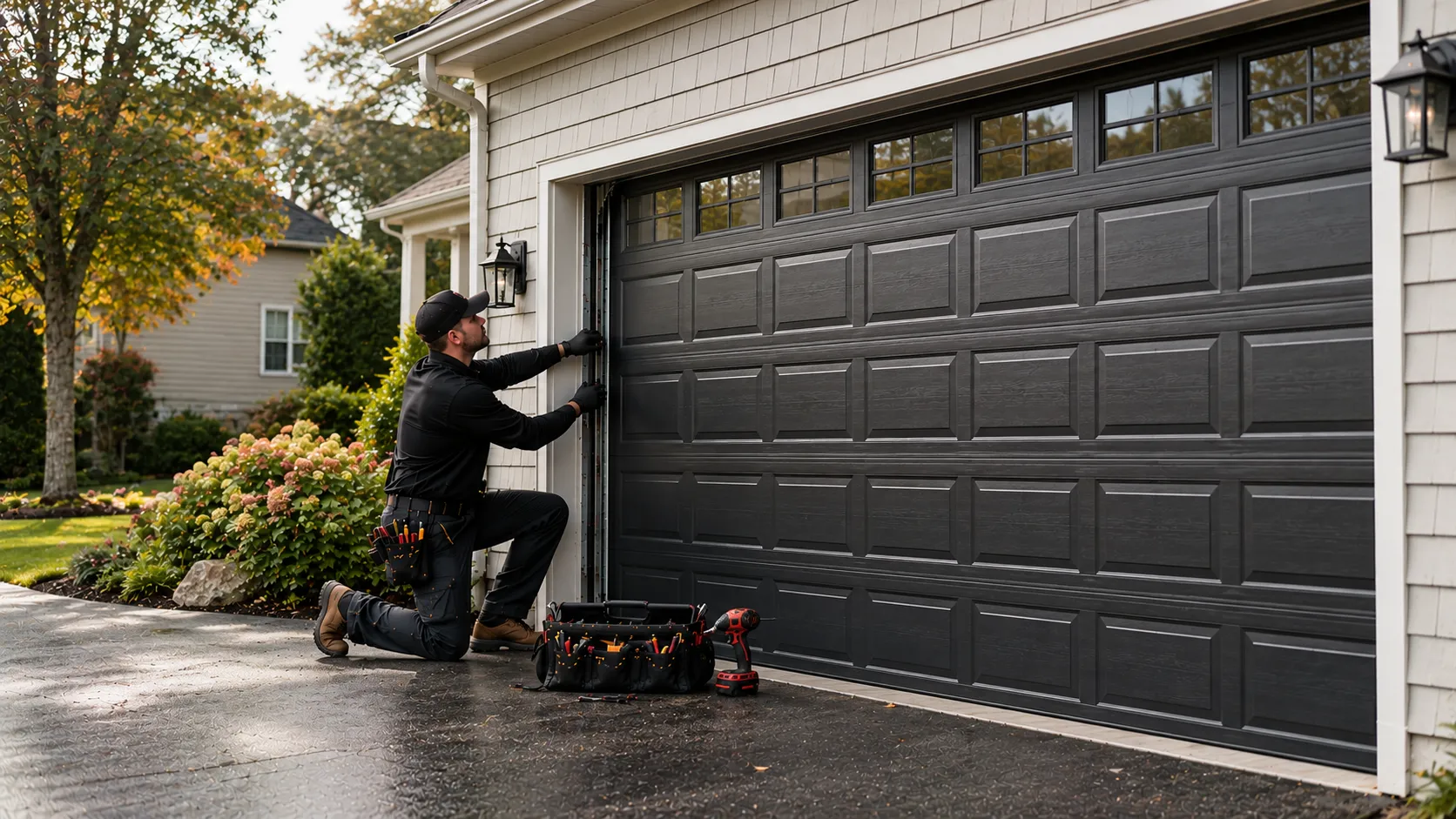
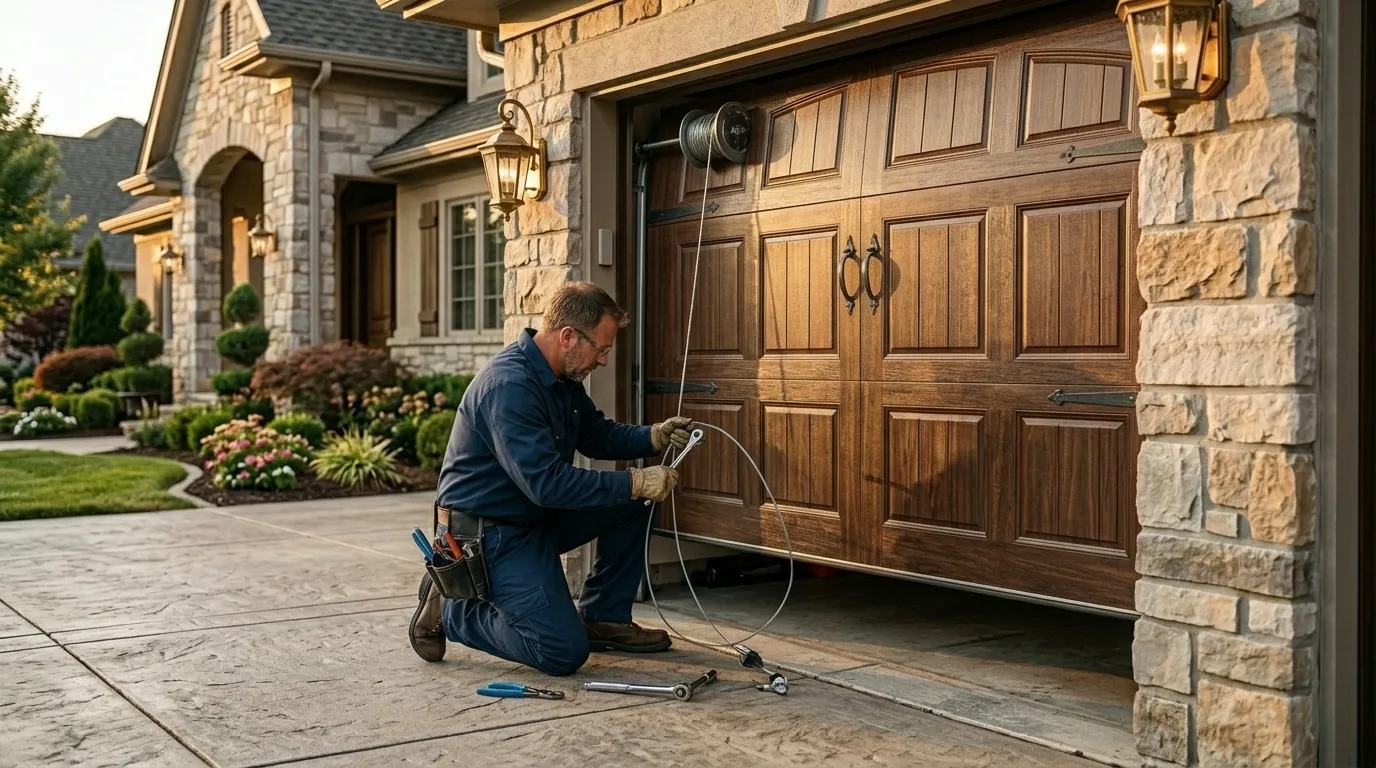
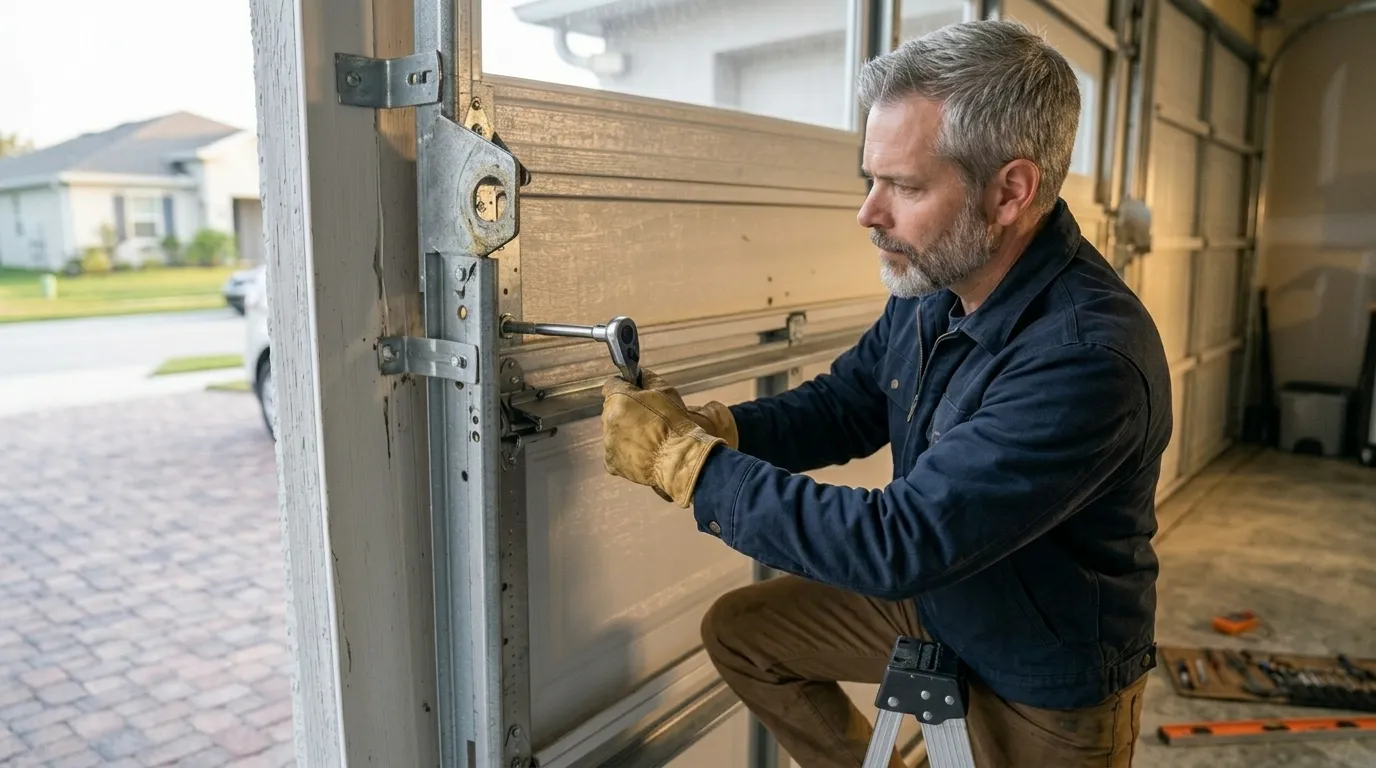
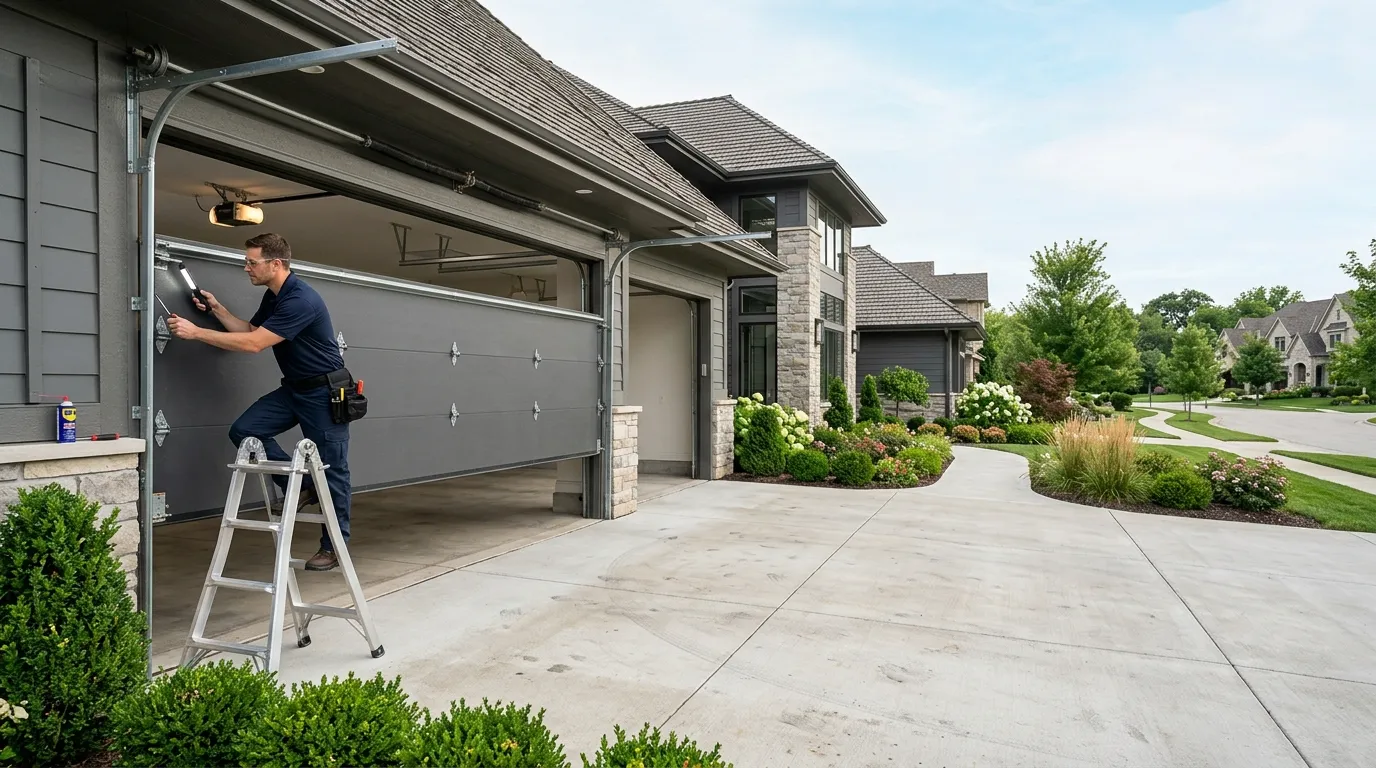
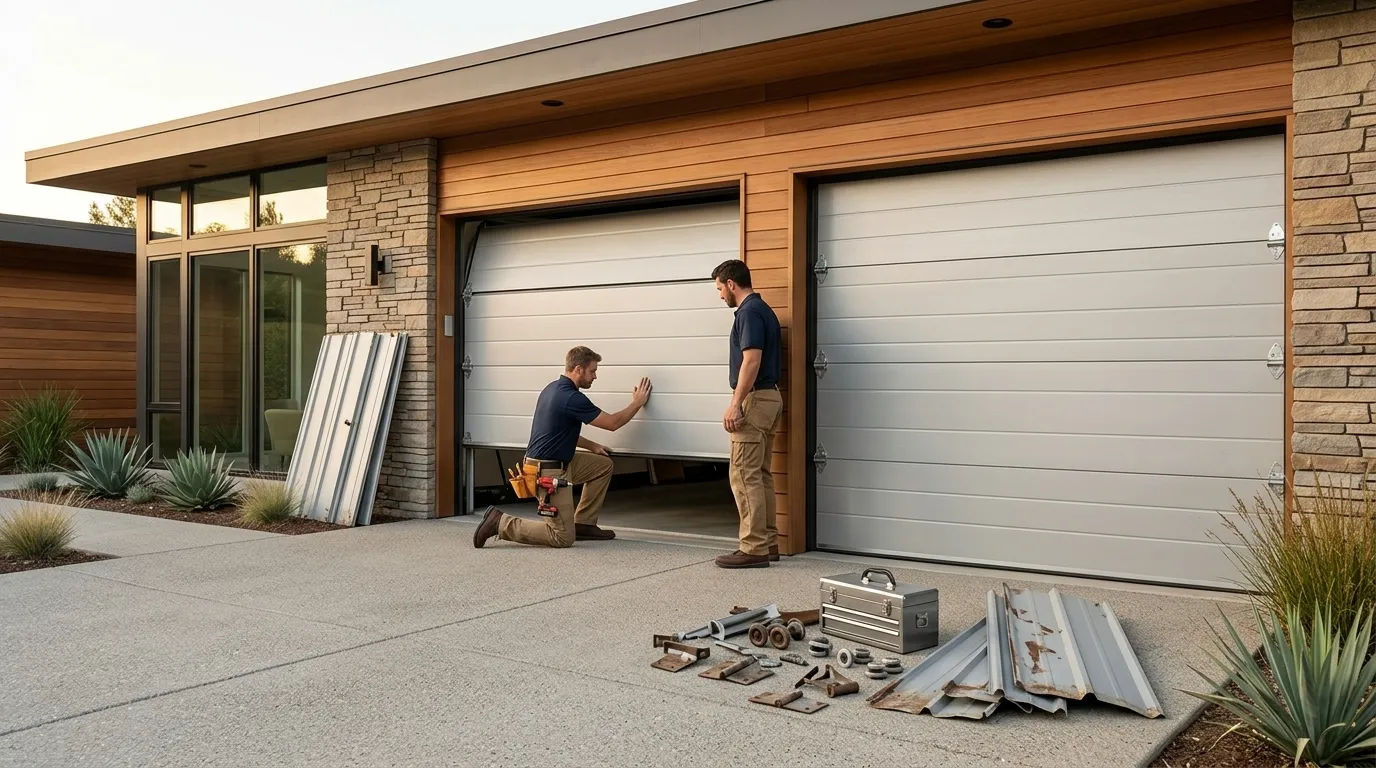
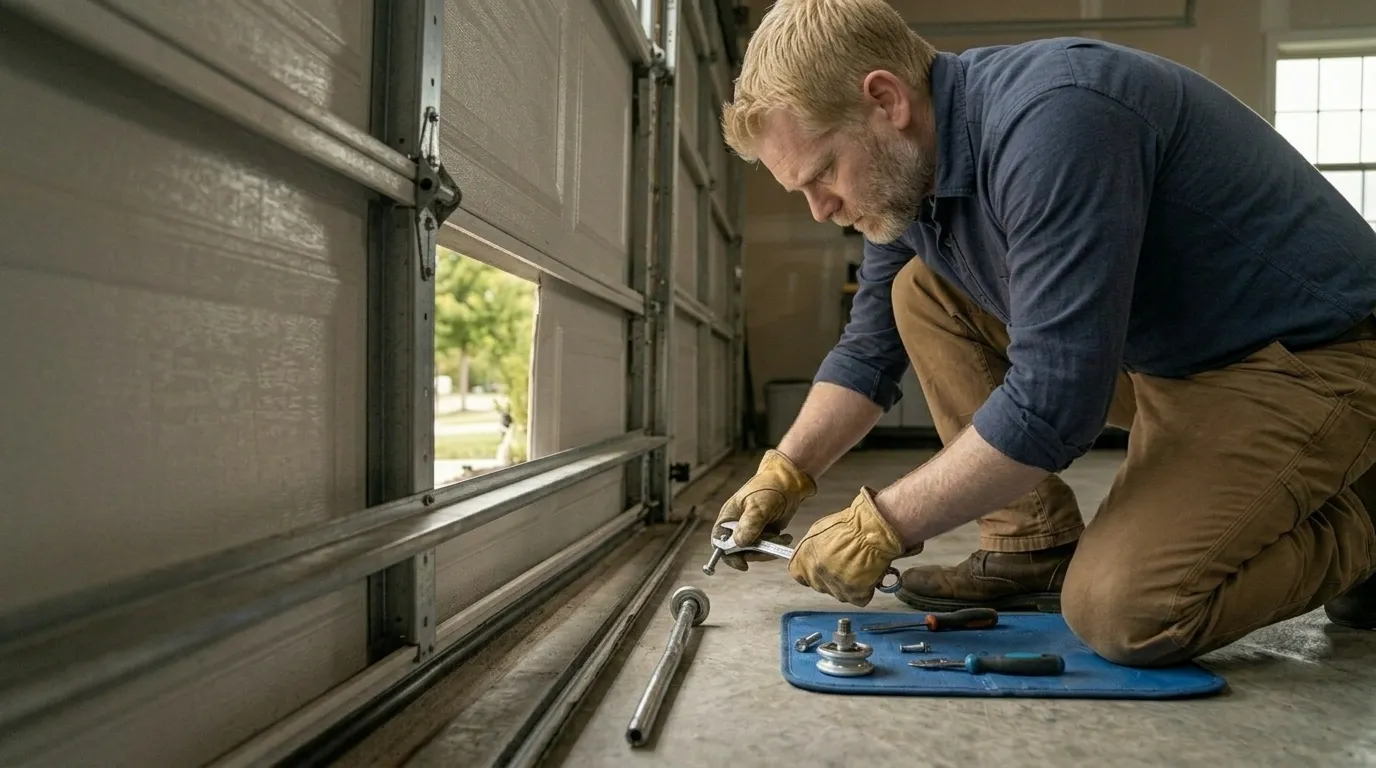
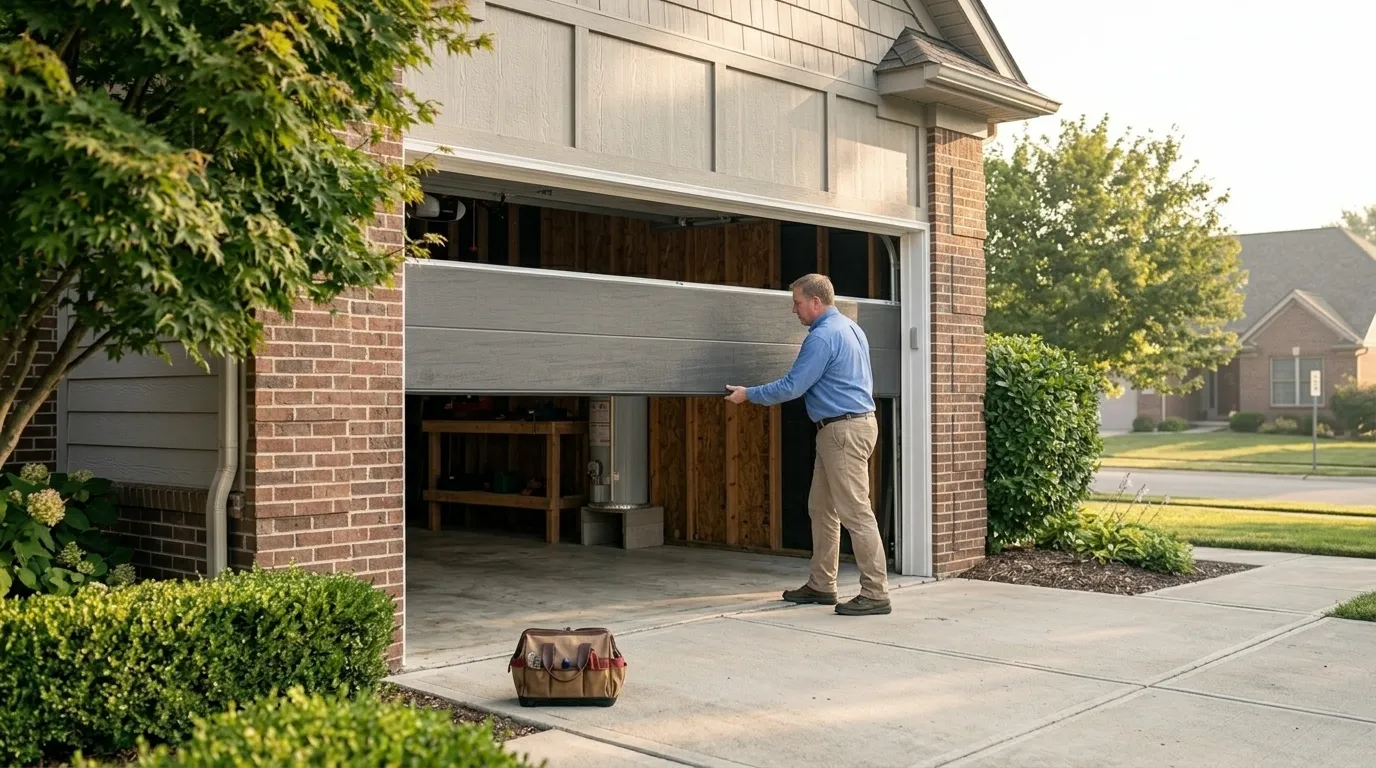
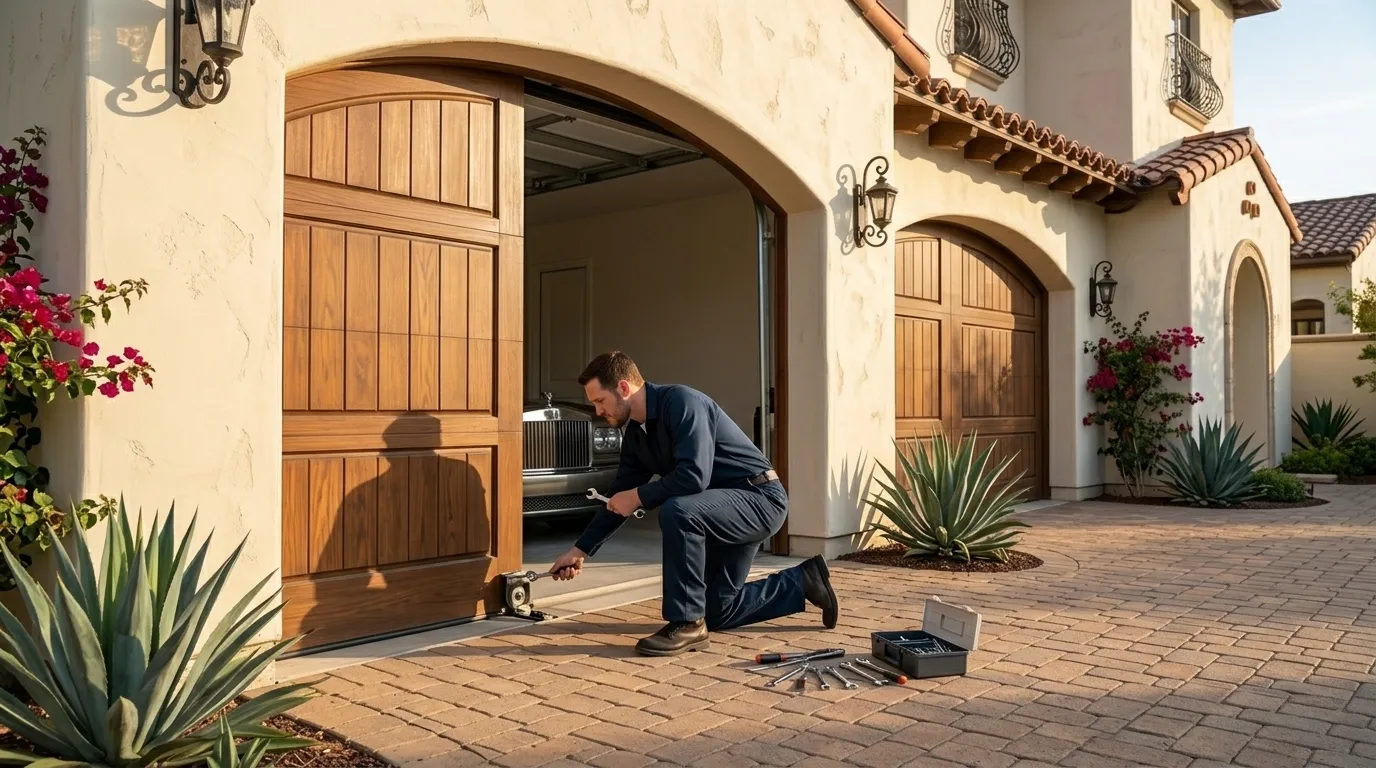
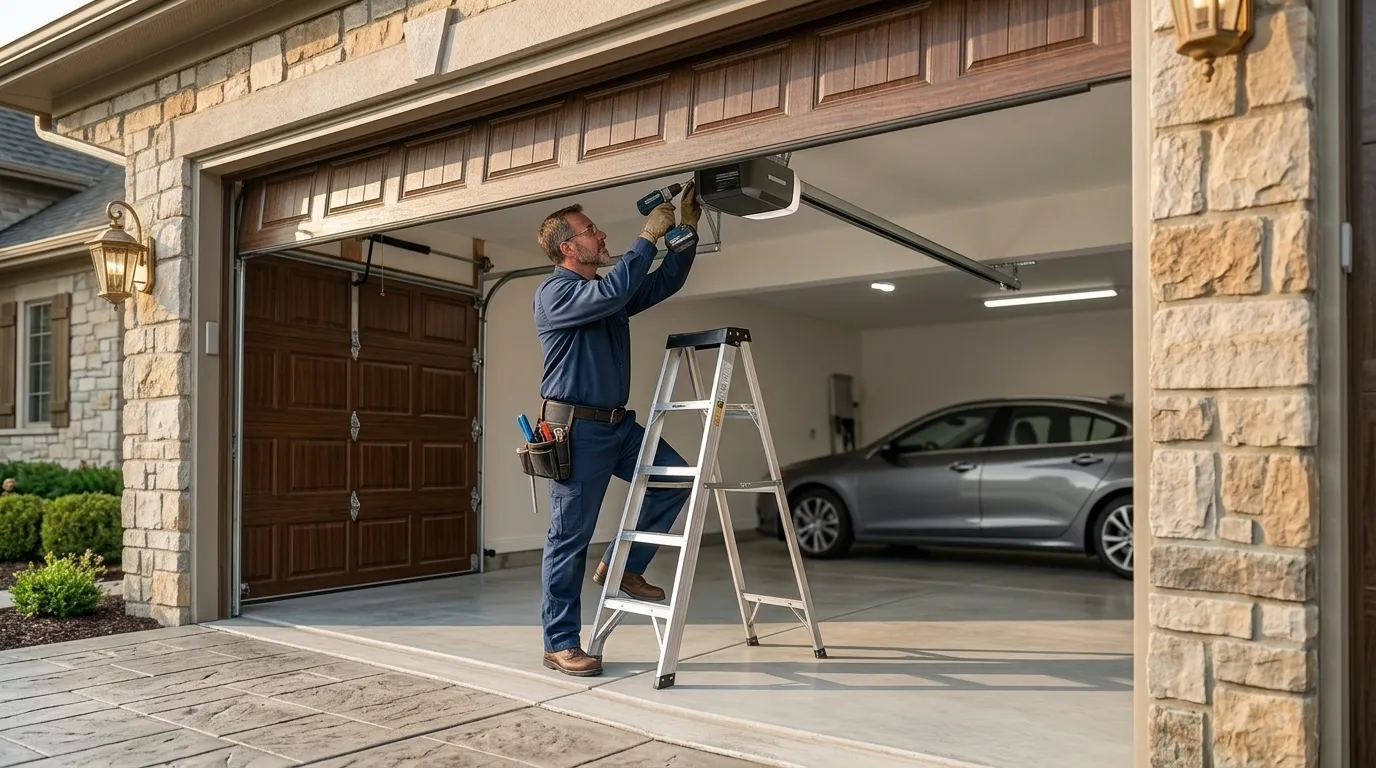
We start by running the door manually, disconnected from the opener, to isolate whether the fault is mechanical or electrical - this alone rules out half the calls where someone assumed they needed a new motor and actually needed a track adjustment. From there it's a check of spring tension against the door's actual weight, not the weight stamped on decades-old paperwork, since panels get swapped over the years. Track alignment gets checked with a level, not by eye, because a quarter-inch of drift at the top of a 7-foot track shows up as binding at the bottom. Rollers and hinges get inspected for pitting, which on a coastal property shows up faster than most manufacturers' service intervals assume. If the opener's logic board is the actual point of failure - not the motor, not the chain - we'll say so and won't sell you a spring job to mask an electrical fault. One limitation worth being upfront about: if a part is obsolete for a specific door make from this era, we may need to source a compatible replacement rather than an exact match, and that can add a day or two versus a same-day fix.