24/7 Emergency Service Open 7 days · 7am–8pm Serving Miami, FL & nearby
(786) 358-3031
Miami, FL

Why a Garage Door Goes Off Track Here in Miami

Miami's 1953-2005 housing stock and mild temperate climate create specific track problems. Here's what actually knocks a door off its rails and what it costs to fix.

Why a Garage Door Goes Off Track Here in Miami

What Is Going On

A door goes off track when the rollers stop riding inside the steel channel the way they're supposed to. Sometimes it's one roller popped loose at a bent spot. Sometimes the whole track has pulled away from the bracket and the door is dragging sideways instead of moving straight up. Either way, the door usually still looks fine at rest - it's only when it moves that you see the panel skew or hear the grinding.

Most of the time this isn't a sudden thing. A roller wears down over years, the track flexes a little more each cycle, and eventually a bracket that was never quite tight lets go. In houses built here between 1953 and 2005 - median around 1976 - a lot of that original track and bracket hardware is still doing the job it was installed to do decades ago, on steel that's had a long time to fatigue. That's the starting point for almost every off-track call we get: not a freak accident, but hardware that finally ran out of give.

A door can also jump track in one motion, usually from an impact - a car bumper, a stray basketball, a kid leaning a bike against the panel. That kind of off-track problem looks the same as the slow kind but has nothing to do with age.

How Local Conditions Play In

Miami sits in a mild temperate band, so the tracks and brackets here aren't fighting the freeze-thaw cycle that cracks mounting screws loose in colder cities. That's a real advantage - less expansion and contraction stress on the hardware year to year.

But mild doesn't mean static. Humidity and heat cycle daily rather than seasonally here, and steel brackets fastened into wood framing decades ago still expand and contract a little with that, just on a shorter clock. Over a house built in the 1960s or 70s - which describes a lot of the stock across the named areas in this service territory, from blocks near Little Havana and Allapattah a couple miles west and north of downtown, out toward Westchester and Kendall - that daily flex adds up to loosened lag screws and slightly widened bracket holes long before anyone notices a problem.

So the pattern we see isn't dramatic weather damage. It's slow loosening: a bracket screw backs out a sixteenth of an inch a year, the track shifts a hair off plumb, and one day a roller finally rides off the edge instead of staying inside the channel. The climate here doesn't cause dramatic track failure - it just doesn't stop the slow kind either.

What to Look At First

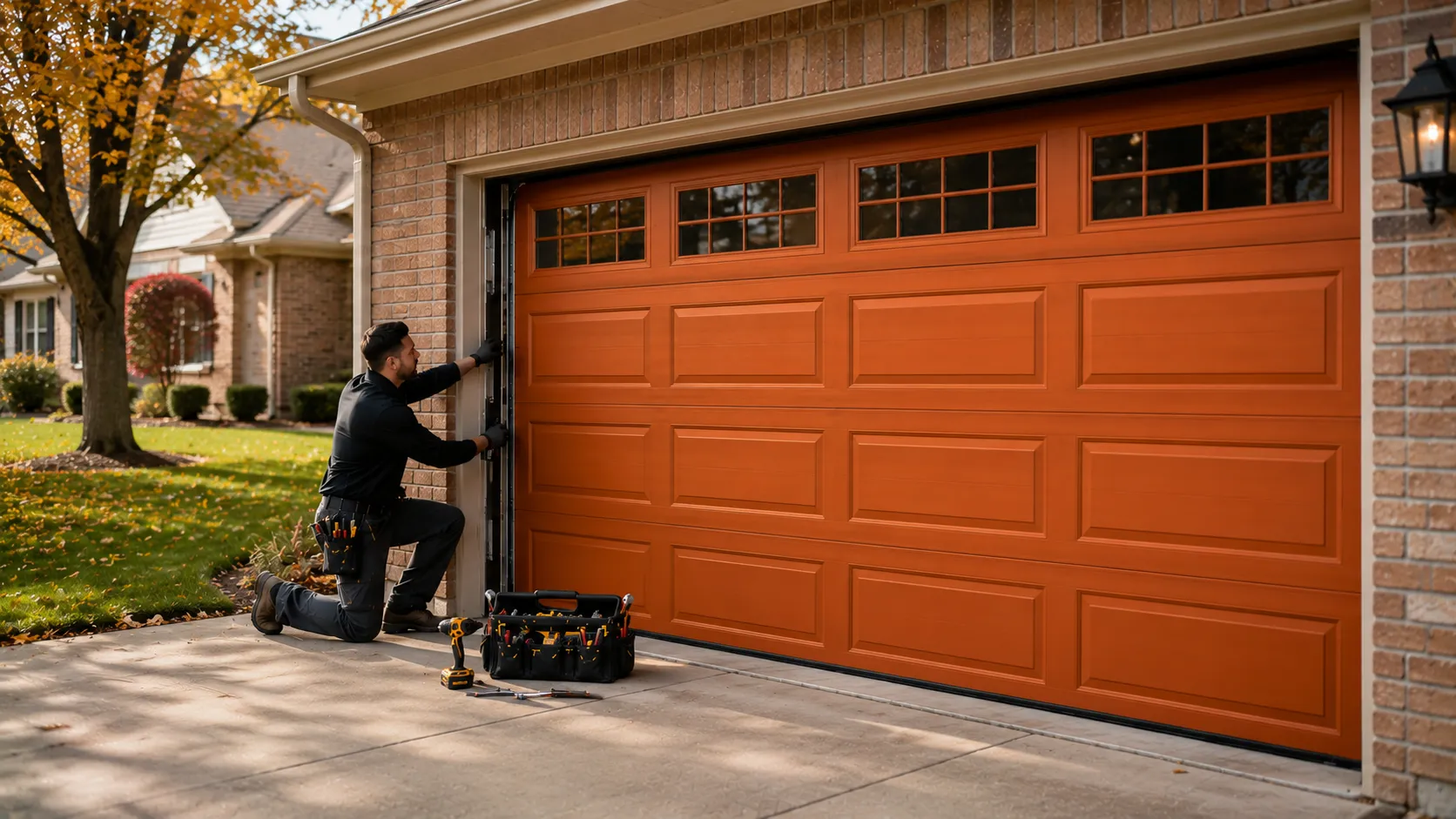
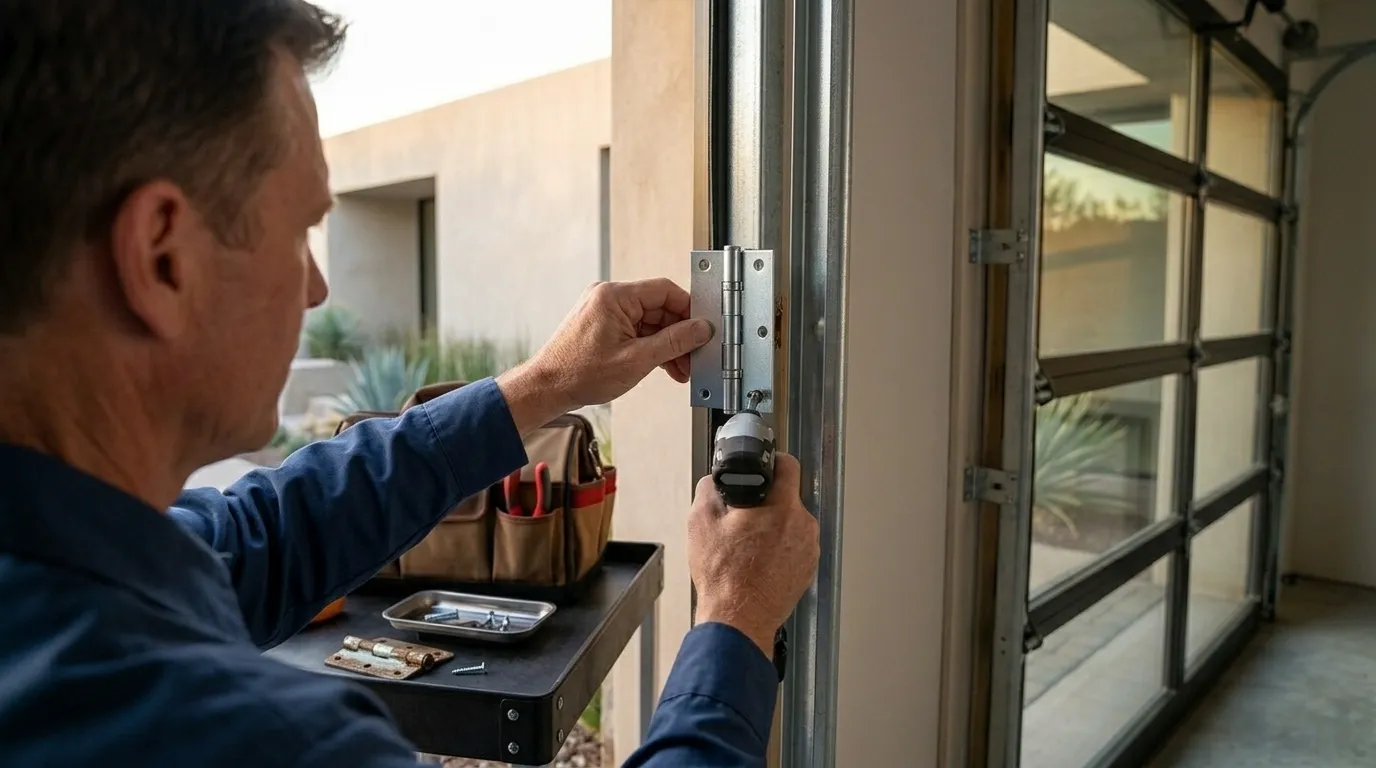
Before assuming the worst, look at three things. First, the brackets holding the vertical track to the door frame - check if any lag screws have backed out or if the wood around them looks chewed up from years of vibration. Second, look at the horizontal track up near the ceiling, where it meets the curved section; this is where age-thinned steel in older homes tends to spread apart under the door's weight. Third, check the rollers themselves. If they're the original steel ones - common in houses from that 1953-2005 build range - they wear a groove that gets rounder and less able to grip the track over time.

A door that's slightly off track but otherwise moving can sometimes be walked back into place and the brackets retightened, cheap and quick. A door that's badly bent, twisted, or where the track itself has pulled away from the frame is a different job - at that point we're replacing hardware, not adjusting it.

One honest limit: if the track is bent more than a few degrees out of true, we don't try to bend it back. Rehanging new track costs less in the long run than fighting rust and metal fatigue on something that's already failed once.
The Cost of This Job

A simple off-track call - rollers reseated, brackets retightened - is one of the cheaper repairs we run. Replacing a section of bent track or a full set of worn rollers costs more, and a job where the bracket has torn out of old wood framing (more common in the older end of the 1953-2005 range) usually means replacing wood backing too, not just hardware.

With median household income across this service area at $71,020, most owners we talk to want to know upfront whether they're looking at a twenty-minute fix or a half-day job before committing. That's a fair question, and it's one we can usually answer over the phone once we know how the door is behaving - grinding, hanging crooked, or fully derailed are three different price conversations.

Across the 183,376 owner-occupied houses in this service area, we see the same handful of track failures over and over, which is part of why pricing here tends to fall into predictable bands rather than wild swings. We don't guess on the phone for anything that sounds like a bent panel or a spring involved - that needs eyes on it first.

How it works

From “it’s stuck” to “it’s fixed”

Tell us what’s wrong - Miami garage door service

Tell us what’s wrong

Describe the symptom - won’t open, loud bang, opener runs but the door won’t move.

On-site diagnosis - Miami garage door service

On-site diagnosis

A technician tests the door under power and by hand and finds what actually failed.

Clear, up-front plan - Miami garage door service

Clear, up-front plan

You get the fix that’s needed and what drives the cost - before any work starts.

Repaired & tested - Miami garage door service

Repaired & tested

The repair is done, the door is set true and tested, and the work area left clean.

Next step

Serving Miami, FL - tell us what your door’s doing and we’ll take it from there.

How we work

What to expect

Diagnosis firstEvery visit starts by finding what actually failed - not a pre-written parts list.
The right part for the doorSprings and openers matched to the door’s weight and age, so the fix holds up.
Straight answersWhen a repair makes more sense than a replacement - or the reverse - you hear it plainly.
Clean, careful workTension released safely, hardware set true, the door tested under power before we leave.
Questions

Frequently asked

Straight answers about garage door repair in Miami. Still unsure? Ask us directly.

Can I fix an off-track garage door myself?

If the door is just slightly out of the channel and the cables and springs look untouched, sometimes yes - but if a spring is under tension or the track is bent, that's not a DIY situation. Springs store enough force to cause serious injury, and a bent track usually needs to be swapped, not muscled back into shape.

Why does this keep happening to the same door?

Repeat off-track problems usually mean the root cause was never fixed - a bracket that's still loose, a roller that's still worn, or a track that's slightly bent but still technically working. Reseating the door without addressing the underlying part just buys you a few more months before it happens again.

Is this covered by my homeowner's insurance?

That depends on your policy and the cause - impact damage from a vehicle is a different claim than gradual wear from age. We're not the right people to answer coverage questions, but we can give you a written estimate that describes the damage plainly enough to hand to an adjuster.

Ready to get your garage door sorted?

Tell us what it’s doing and where you are in Miami - we’ll take it from there.

Request a QuoteCall