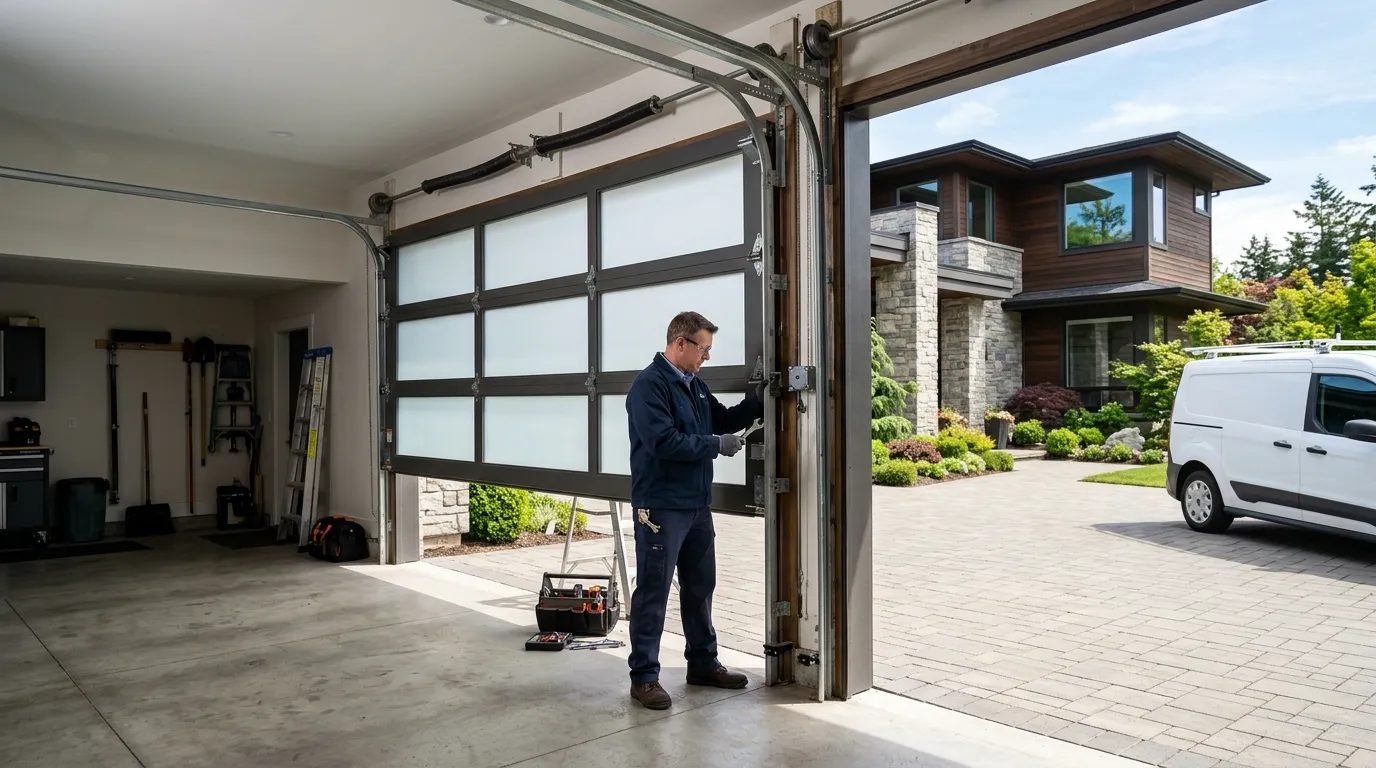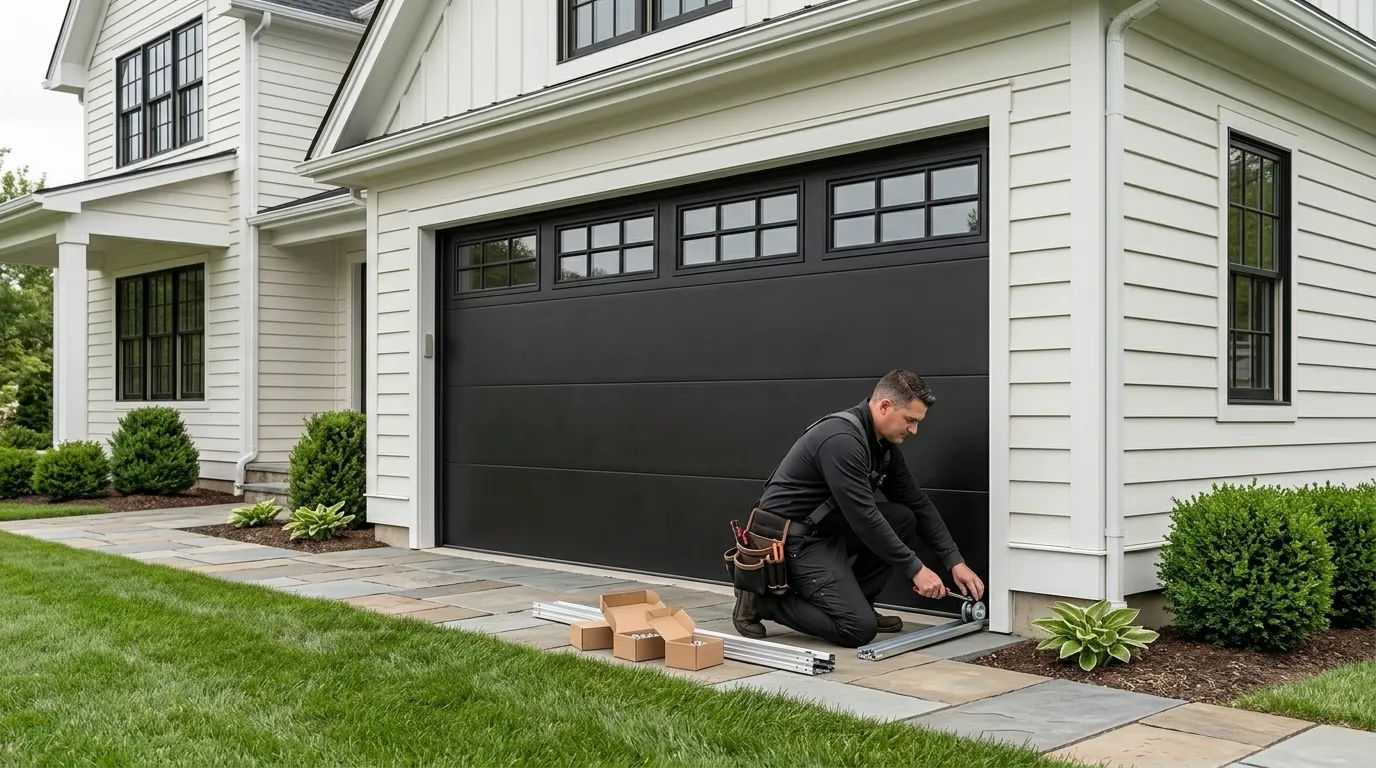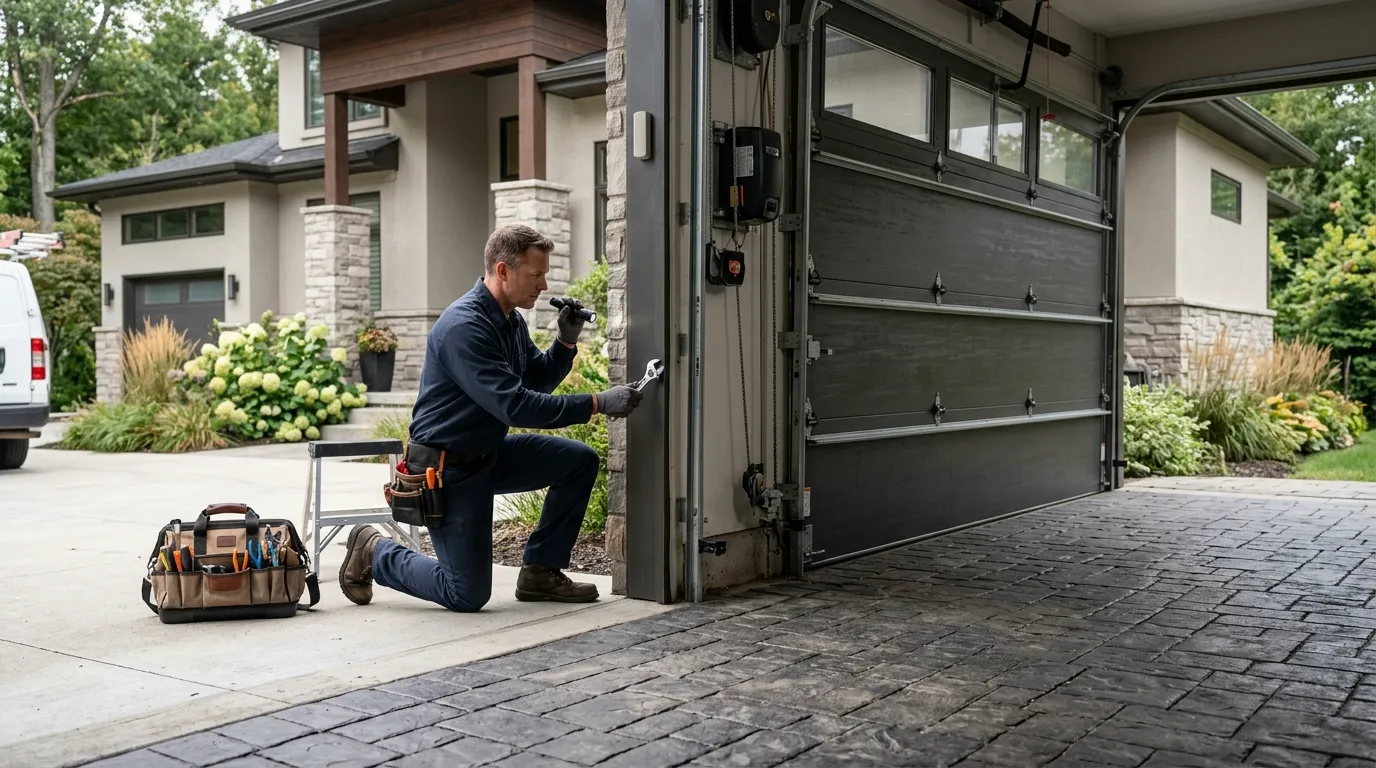
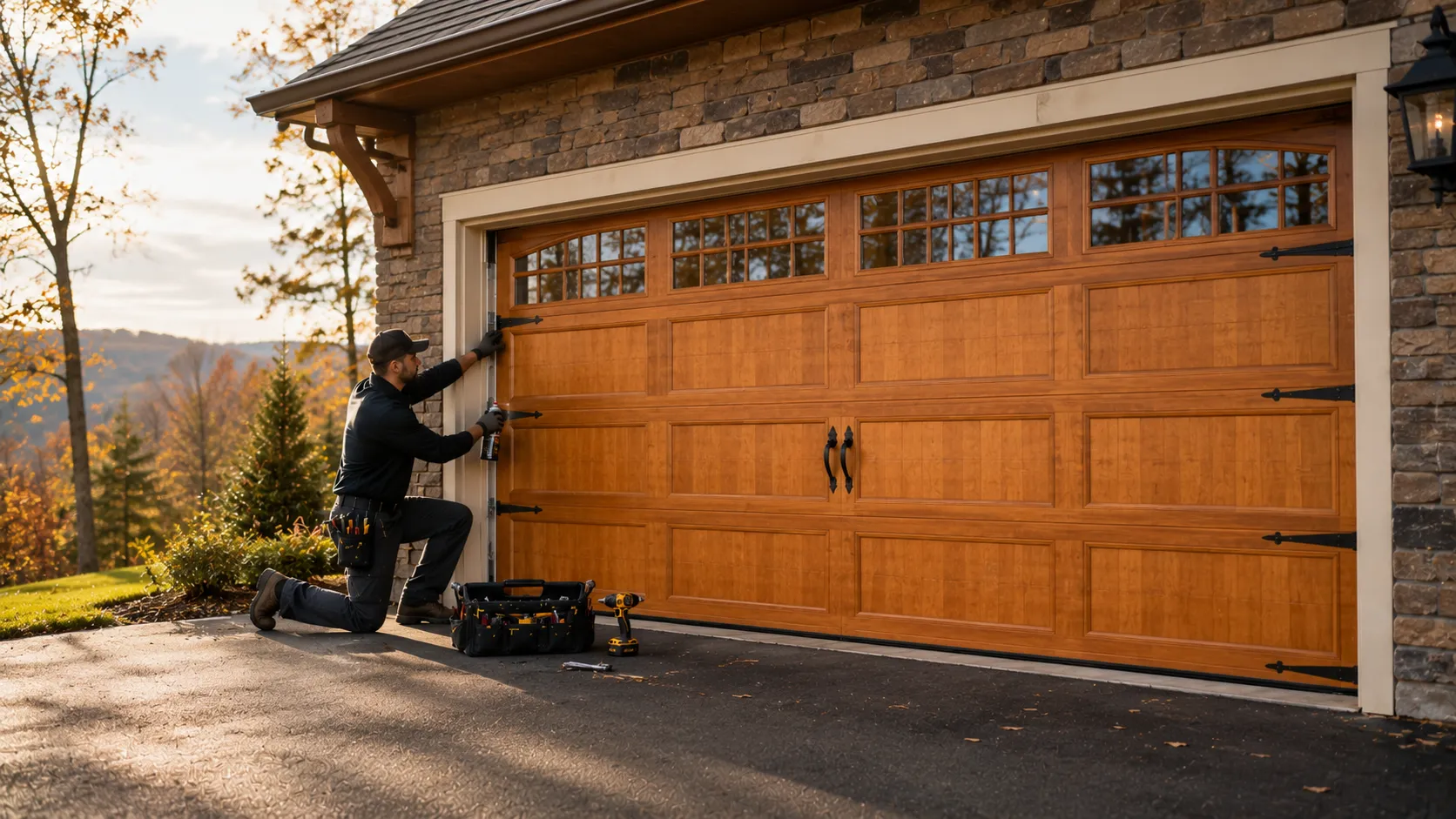
Common Jobs Here
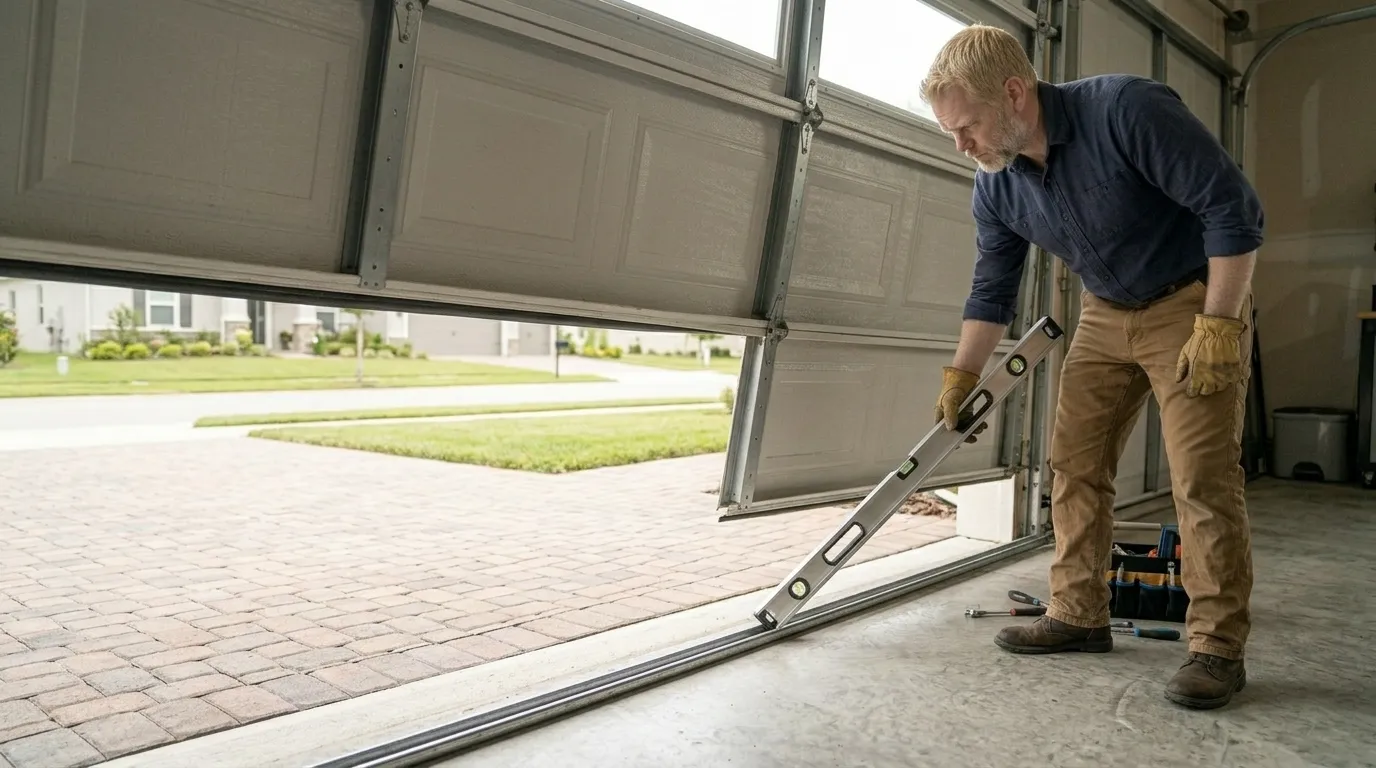
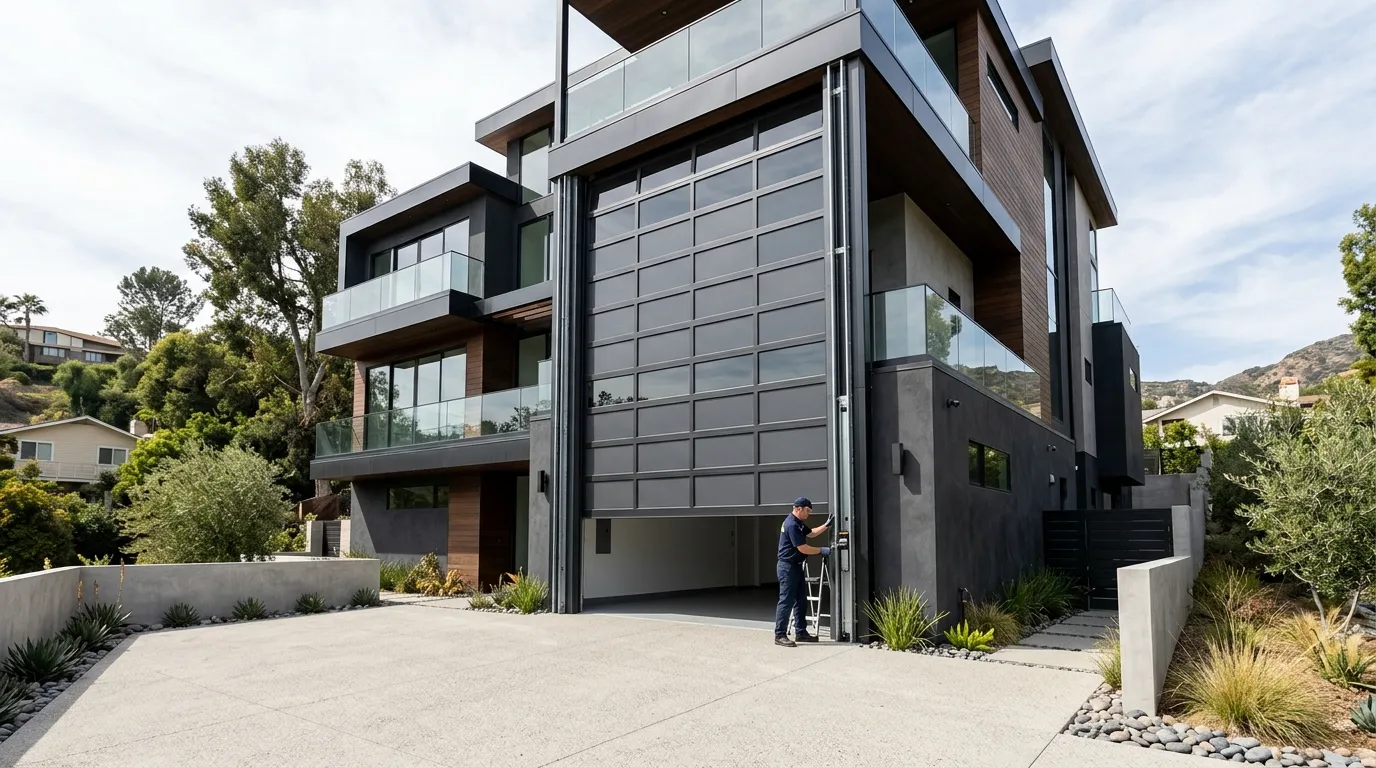
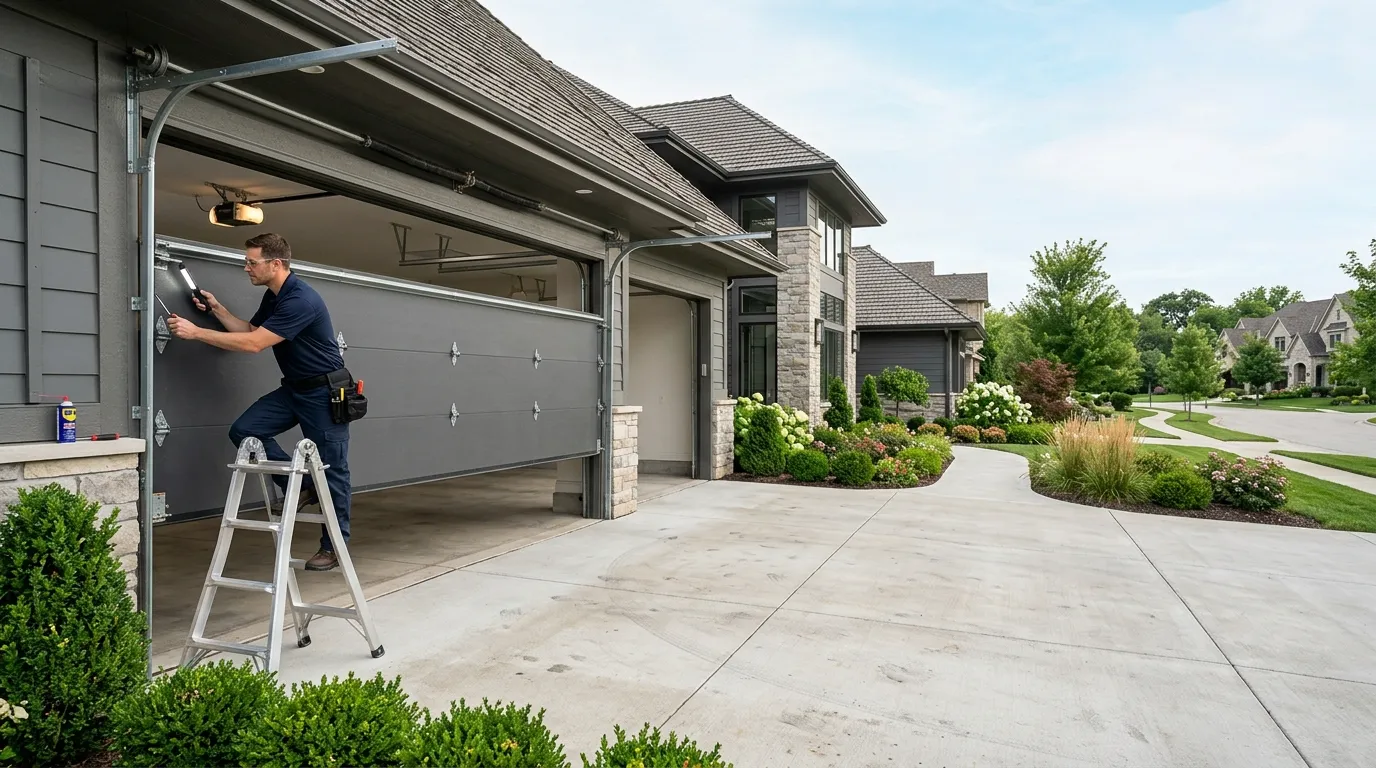
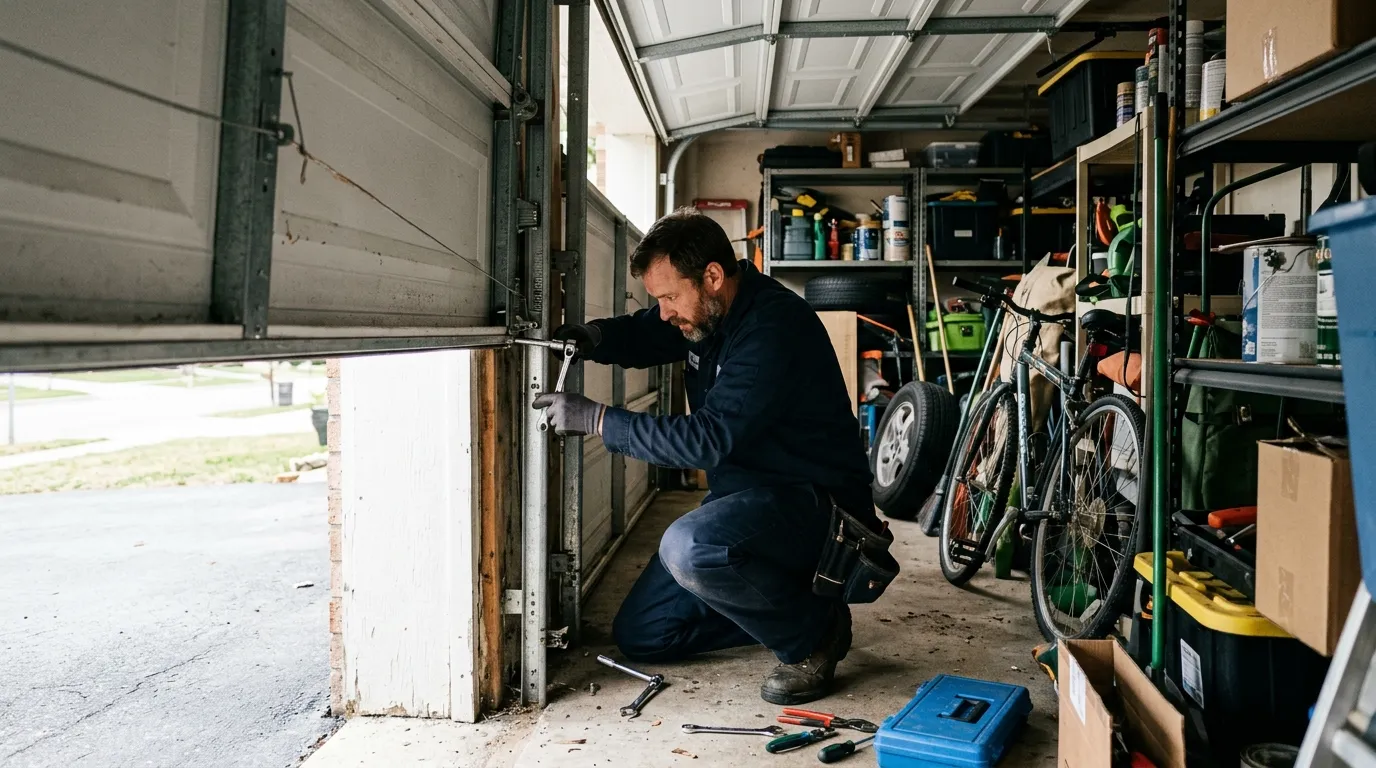
Pinecrest's housing stock centers on 1969, noticeably later than the wider service area's 1976 median. That earlier build era matters for garage doors specifically: a lot of these houses went up with the extension-spring setups and lighter steel sections common through the late 1960s, before torsion springs became the standard fix on new construction. We see more original hardware still in place here than in the newer pockets of the coverage area - sometimes the door itself has been swapped over the decades but the track and header bracket are original 1969 stock, sitting on lag bolts that have had fifty-plus years to work loose in the wood. Add the mild, humid climate this whole region shares and you get galvanized hardware that looks fine on the outside but has surface rust creeping into the coil winds. The common calls out of Pinecrest are spring replacement on older extension setups, track realignment where the original bracket has shifted, and opener swaps where a unit installed decades after the house was built is now itself at the end of its life.
What the Housing Means for Your Door
With roughly 5,999 households in Pinecrest and a median income of $192,477, this is one of the higher-income pockets in the coverage area - well above the service-area median of $71,020. That tends to show up in the calls: more requests for insulated steel or wood-composite panel doors, more owners who want a full opener upgrade with battery backup rather than a like-for-like swap, and less tolerance for a door that's merely functional but ugly. It also means the original 1969-era single doors on some of these lots are increasingly getting replaced outright rather than patched, since the labor to keep 1960s hardware alive on a wider door opening can cost close to a full replacement anyway. We'll tell you straight when a repair isn't worth it - if your spring, cable, and rollers are all near end of life on the same visit, a new door is usually the better dollar.